
What is Data Science? An Easy Guide for Beginners
Data science explained

If you’ve ever wondered how Netflix knows what show to recommend, how banks detect fraud in real-time, or how self-driving cars make decisions, then you’ve seen Data Science in action.
Data Science is one of the most exciting fields today. But what does it really mean, and how do people become data scientists? This guide will break it down in the simplest way possible.

What is Data Science?
At its core, Data Science is the practice of turning raw data into useful insights.
Think of it as storytelling with data. A data scientist collects information, cleans it, analyzes it, and builds models to help businesses and organizations make smarter decisions.
Simple definition:
Data Science = Data + Statistics + Programming + Business Understanding
The Data Science Workflow
Data science is not just about building fancy machine learning models, it follows a structured process.
1. Collect Data – From databases, sensors, websites, surveys, or even tweets.
- Example: Netflix collects data on what you watch and when you pause.
2. Clean Data – Remove duplicates, fill in missing values, fix errors.
- Example: A dataset may list “Kenyaa” instead of “Kenya.” That needs fixing.
3. Explore & Analyze – Look at patterns, trends, and correlations.
- Example: Customers aged 18–25 prefer mobile banking apps.
4. Build Models – Use machine learning to predict or classify outcomes.
- Example: Predict which customers are likely to unsubscribe from a service.
5. Communicate Results – Share findings through dashboards, charts, or reports.
- Example: Presenting a fraud detection model’s accuracy to the bank’s team.

Key Tools & Skills in Data Science
You don’t need to be an expert to start, but here are the core tools most data scientists use:
- Programming Languages: Python, R, SQL
- Libraries: Pandas, NumPy, Scikit-learn, TensorFlow, PyTorch
- Visualization Tools: Matplotlib, Seaborn, Tableau, Power BI
- Databases: MySQL, MongoDB
- Other Skills: Statistics, problem-solving, communication
Don’t worry, beginners usually start with Python and Pandas and build up from there.

Types of Data Science Projects
Data science projects come in many flavors. Here are three common ones:
1. Predictive Modeling
- Predict stock prices, sales trends, or customer churn.
- Example: Predict whether a student will pass an exam based on study hours.
2. Classification
- Assign labels to data.
- Example: Spam email detection (spam vs. not spam).
3. Clustering
- Group similar items together.
- Example: Market segmentation (grouping customers by shopping habits).
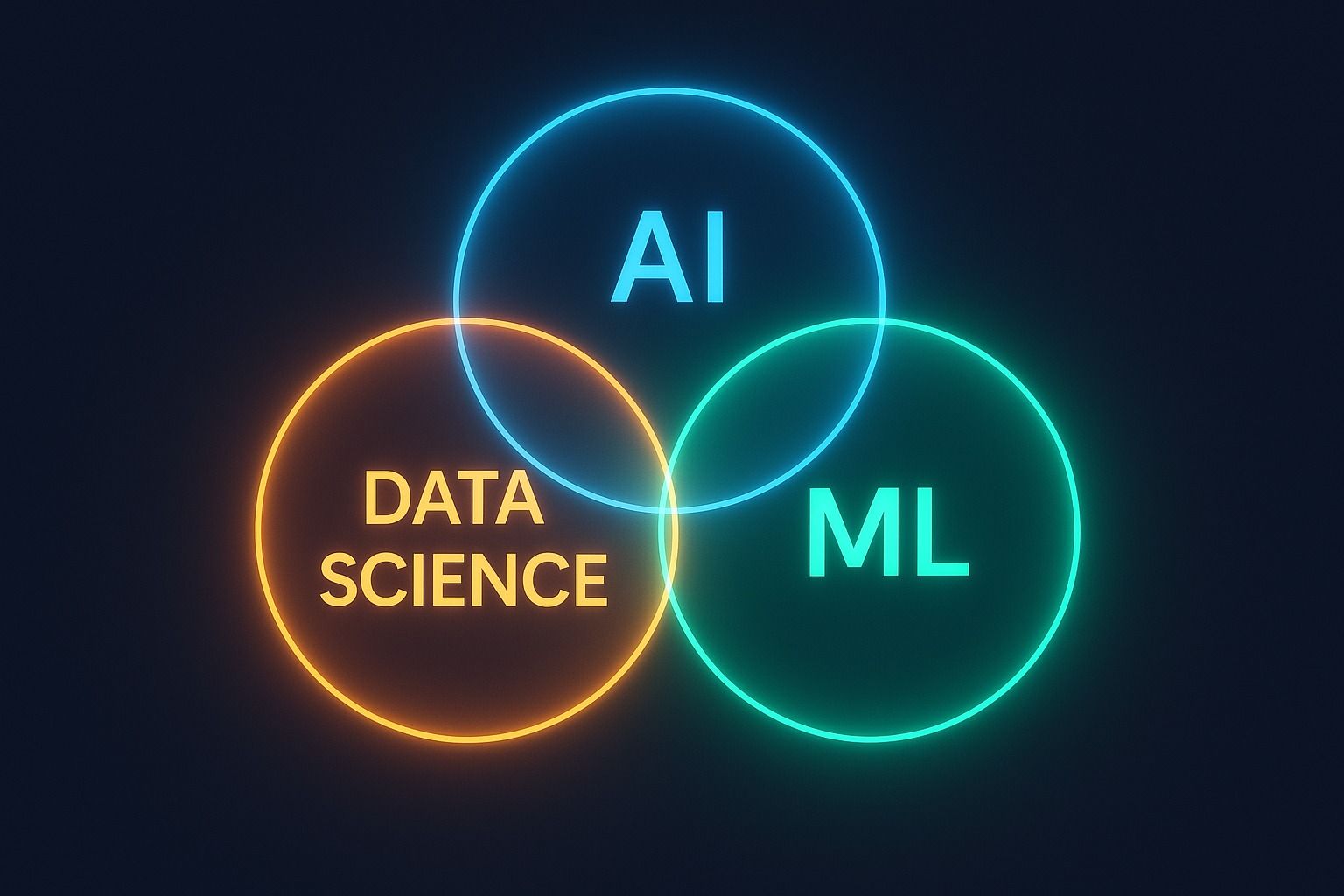
Data Science vs. AI vs. Machine Learning
People often confuse these terms. Here’s a simple breakdown:
- Data Science: The overall process of working with data.
- Machine Learning (ML): A branch of AI that teaches computers to learn from data.
- Artificial Intelligence (AI): The broader field of making machines “think” like humans.
Example:
- Data Science: Collects and analyzes customer reviews.
- ML: Builds a model that predicts whether a review is positive or negative.
- AI: Uses ML + NLP to create a chatbot that automatically replies to reviews.
Real-World Applications of Data Science
Entertainment: Netflix & YouTube recommendations
Banking: Fraud detection in transactions
Healthcare: Predicting disease outbreaks, medical image analysis
Transport: Self-driving cars, route optimization (Uber, Bolt)
Retail: Personalized shopping recommendations

How to Start Learning Data Science
If you’re just starting, here’s a simple roadmap:
Learn Python → Focus on Pandas, NumPy, Matplotlib.
Learn Statistics Basics → Mean, median, standard deviation, probability.
Work on Projects → Start with Kaggle datasets (Titanic, House Prices).
Build a Portfolio → Share projects on GitHub, write articles (like this one!).
Stay Curious → Read blogs, follow data scientists, join communities.
Final Thoughts
Data Science is not just about coding, it’s about curiosity, problem-solving, and telling stories with data. Whether you want to work in healthcare, finance, or even sports, data science skills will open countless opportunities.
So, the next time Netflix recommends your new favorite show, you’ll know the magic behind it is Data Science.
Get Sasa by email
Generative AI, Africa now. One edition, no more than once a week.