The Power of AI: How Vibe Coding Is Redefining Software Creation
Vibe coding redefines software creation
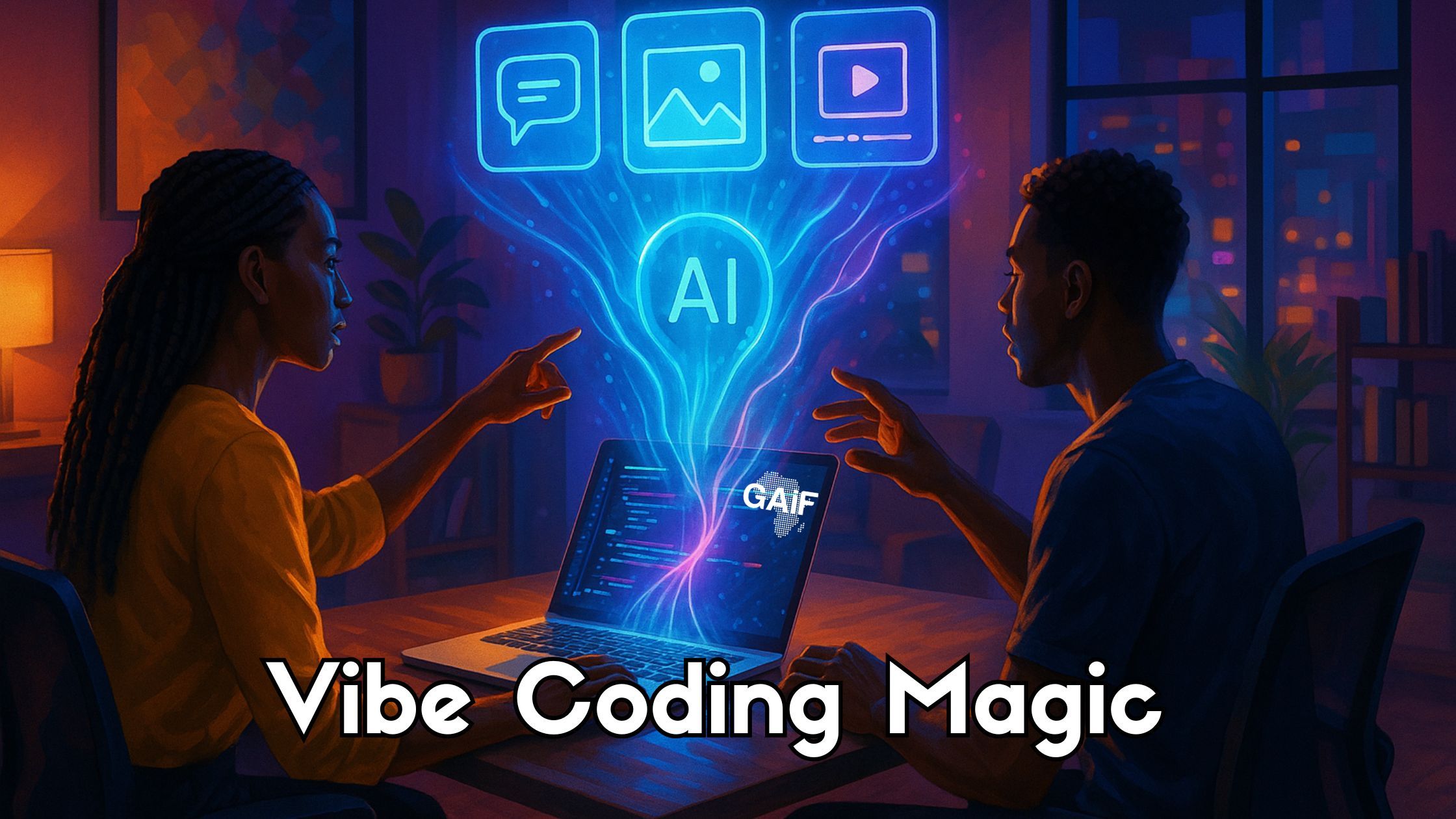
"Imagine building an app just by describing it. No boilerplate, no configs, just your idea, and AI does the rest. That’s not the future. That’s now."
Introduction
AI has changed everything, from the way we search to how we write. But one of its most exciting revolutions is quietly happening in software development.
Let me introduce you to a trend I’ve been following (and experimenting with): vibe coding.
Yes, you read that right. It's the art of building applications using vibes and natural language, with a little help from AI tools like Lovable.dev and Bolt. And honestly? It feels like magic.
What Is Vibe Coding?
Vibe coding is a form of prompt-driven development. Instead of writing out long blocks of code, you describe what you want, literally in plain English and the AI builds it for you.
It’s coding through collaboration, not commands.
You’re no longer limited by your syntax knowledge. Your role shifts from coder to creative director, guiding the AI as your co-builder.
Here’s what that looks like:
- You describe your idea (“I want a budgeting app with categories and weekly insights”)
- The AI generates the UI
- The backend logic is scaffolded
- You test, tweak, and deploy—all without ever opening a terminal
Tools That Make It Happen
Lovable.dev
Lovable.dev focuses on emotionally intelligent app design. It’s not just about functionality—it’s about feeling. You describe your app idea, and Lovable.dev generates the UI and logic tailored to the emotional context of the user experience.
Example:
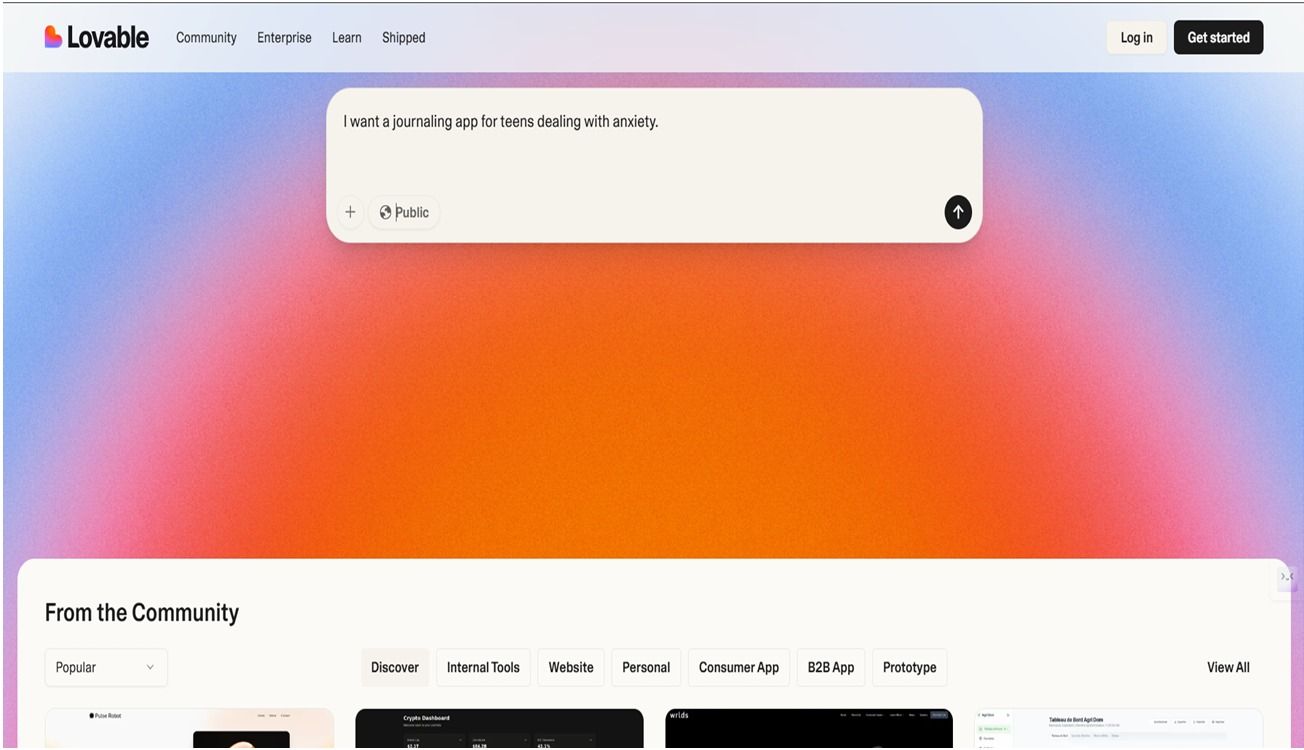
“I want a journaling app for teens dealing with anxiety.”
Output
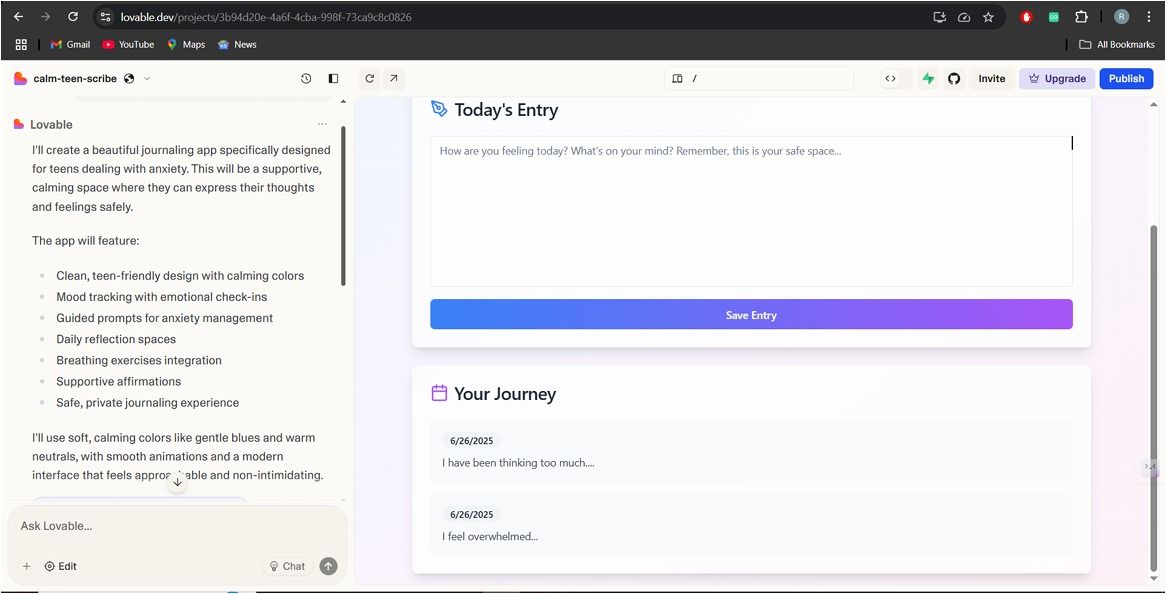
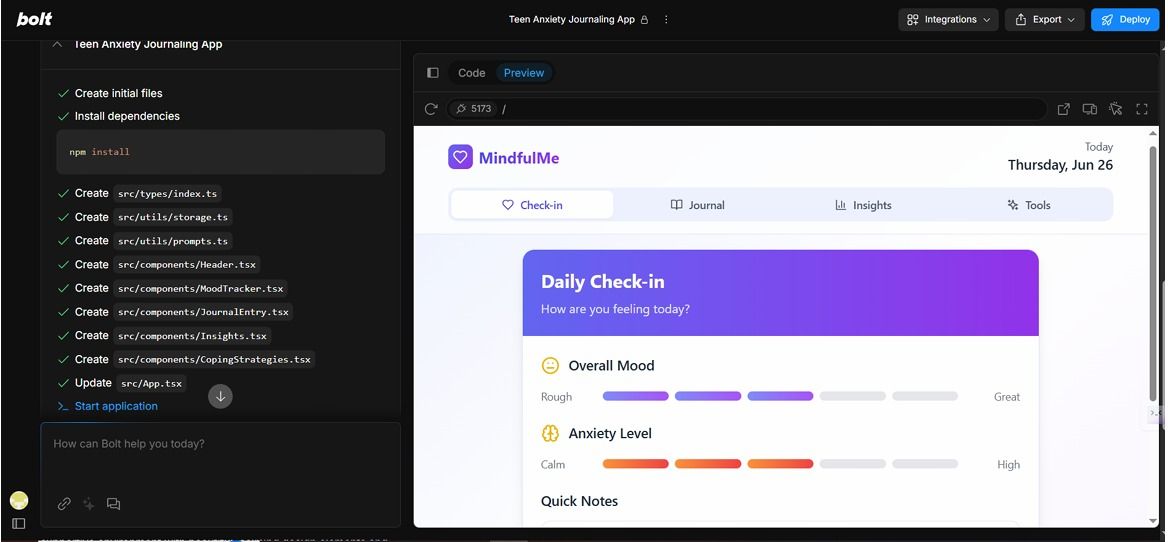
Lovable.dev doesn’t just generate input fields, it suggests calming colors, soft visuals, and even guided prompts that match the vibe of the audience.
Bolt
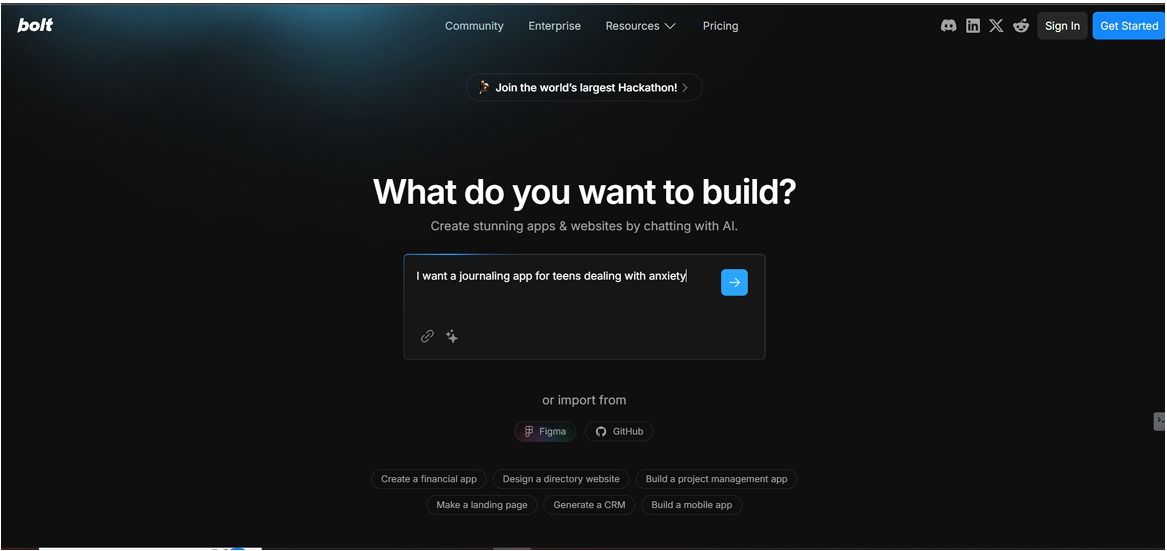
Bolt goes further: it builds full-stack apps from scratch.
You give it a single sentence prompt, and it creates:
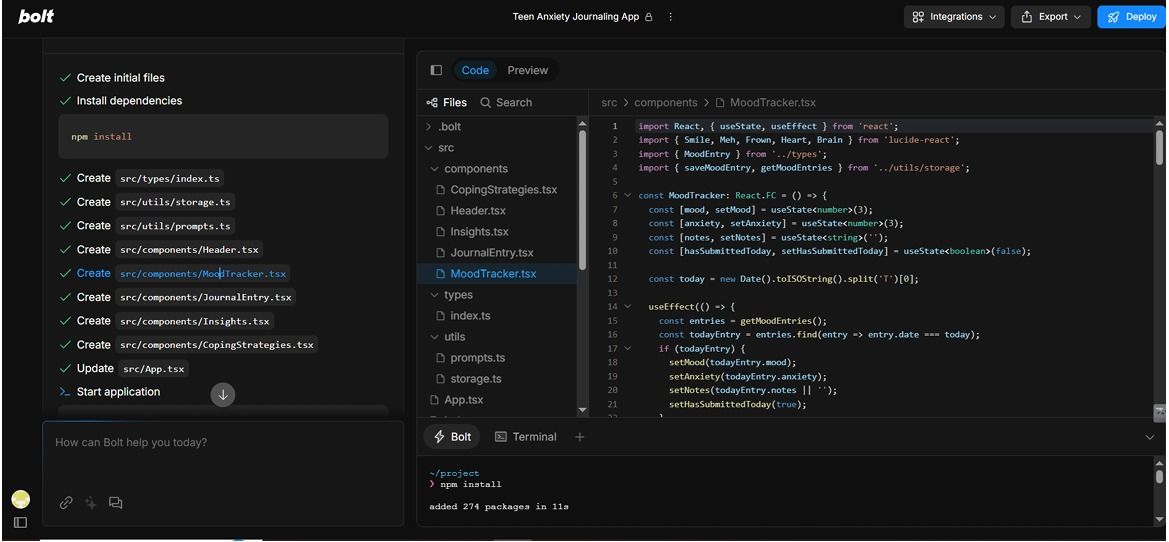
- A React frontend
- A Node.js or Supabase backend
- Connected API logic
- Deployment-ready code
Input
Output
a). Code
b). Interface
Why This Matters
The power of AI is in democratizing creation.
With vibe coding:
- Designers can become developers
- Founders can build MVPs without funding
- Freelancers can deliver faster
- Students can learn by creating, not just reading docs
You don’t need to know how to build a login system—you just need to say, “Add user auth.” The AI takes care of the rest.
This isn’t about cutting corners. It’s about amplifying creativity.
Real-World Scenarios
- A startup founder with no tech team builds their MVP
- A UI/UX designer brings their vision to life without touching a single div
- A developer saves hours of setup time and focuses on solving real problems
- A solopreneur builds and launches a web app in a weekend
But Let’s Be Real…
No tool is perfect. Vibe coding has its challenges:
- The AI can misinterpret prompts
- Complex logic still needs tweaking
- You still need to review and clean up code
So no, it won’t fully replace traditional coding yet. But it’s getting us closer to a place where anyone can build.
Final Thoughts
Vibe coding shows us what AI is truly capable of: not just automation, but collaboration.
As someone who loves experimenting with new tools and pushing boundaries, this feels like a creative breakthrough. The barrier between imagination and execution is finally dissolving.
If you're a developer, designer, or even just someone with an idea you owe it to yourself to try this out.
Because honestly? Coding has never felt more human.
Get Sasa by email
Generative AI, Africa now. One edition, no more than once a week.