
Day 14: Activation Functions Explained
Powering neural networks
Introduction
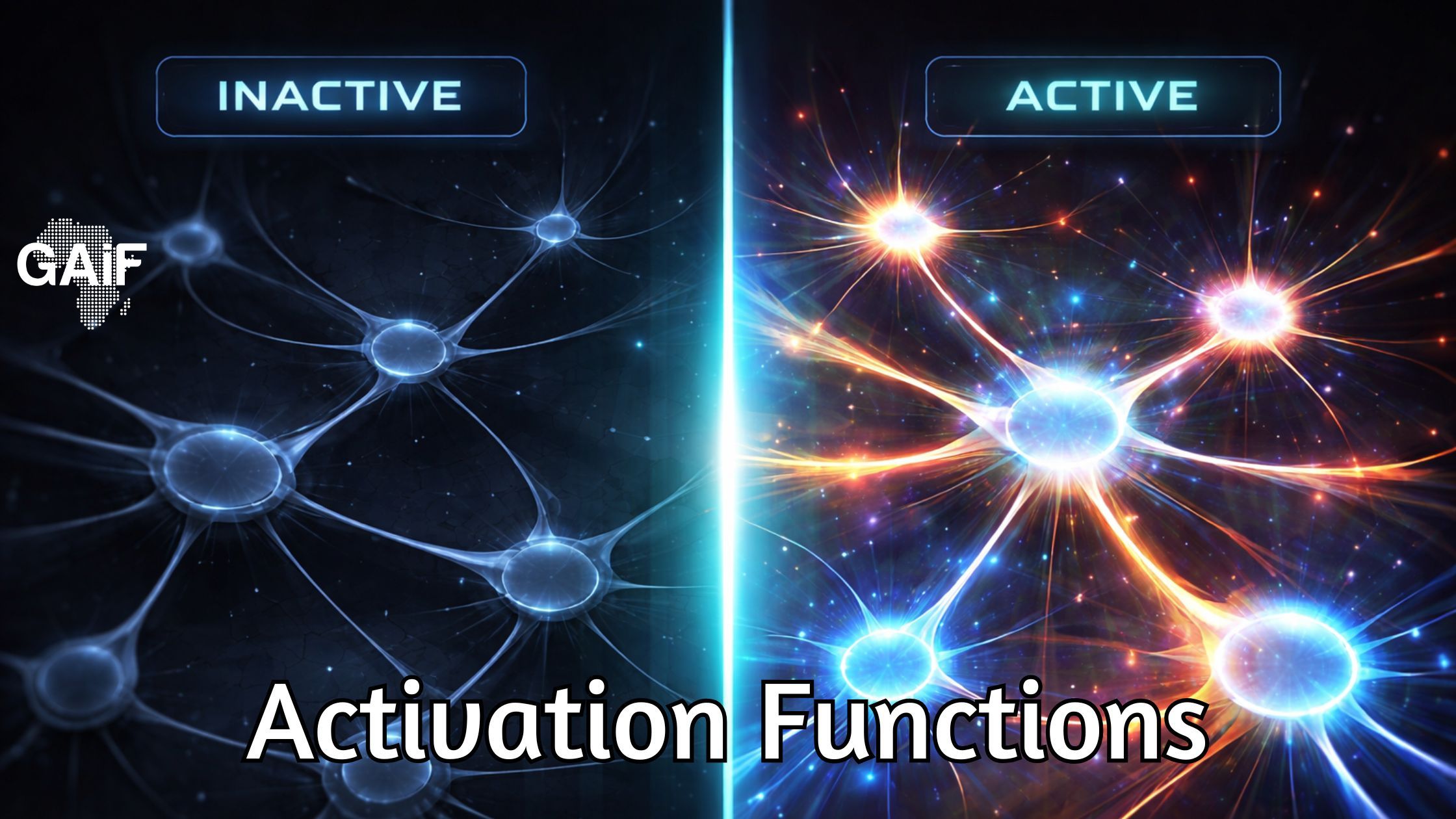
Activation functions are a critical component of neural networks. They determine whether a neuron should be activated and allow the network to learn complex patterns in data.
Without activation functions, neural networks would behave like simple linear models, regardless of how many layers they contain. This would severely limit their ability to solve real-world problems such as image recognition or language processing.
What Is an Activation Function?
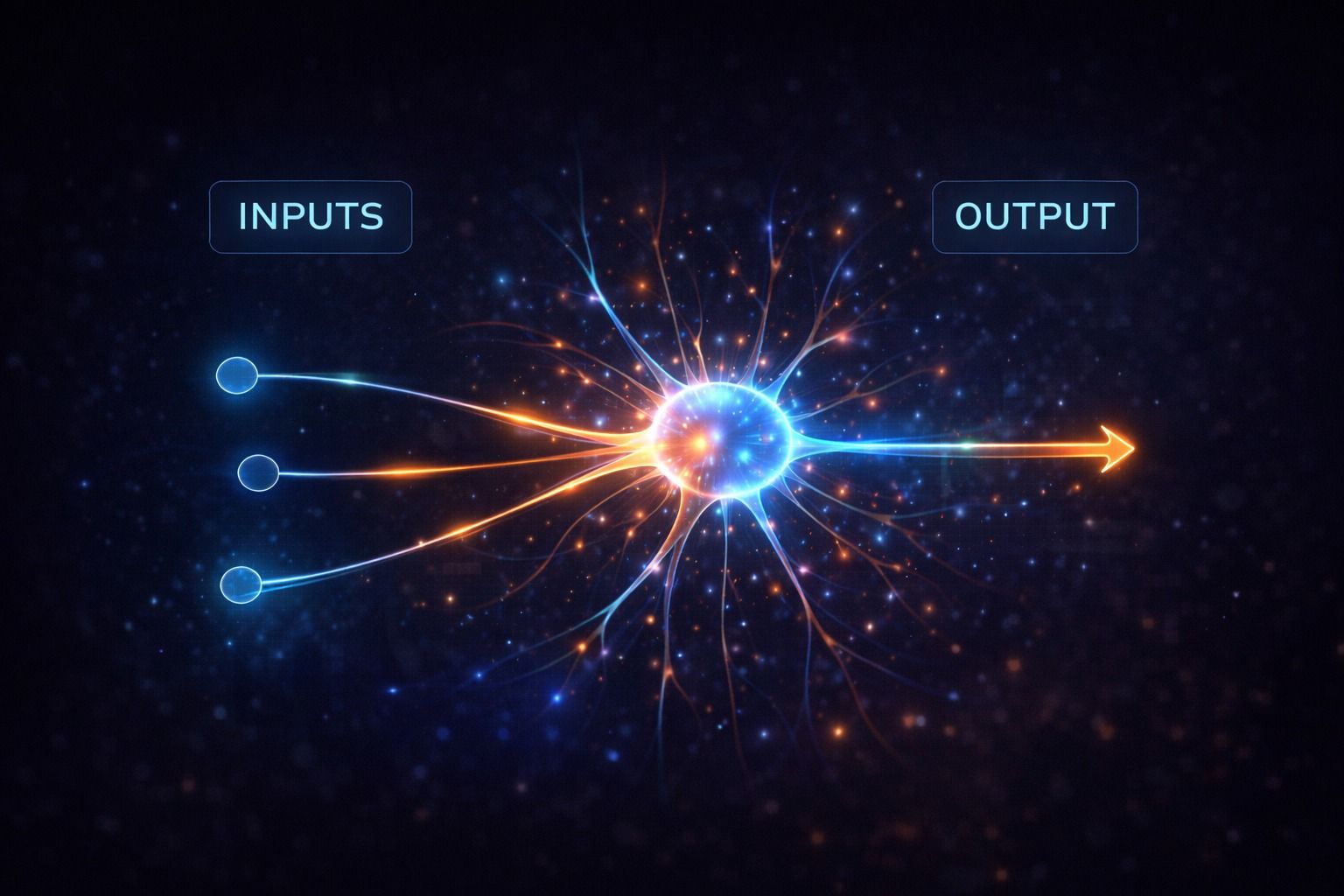
An activation function is a mathematical function applied to the output of a neuron. It transforms the weighted sum of inputs into a form that can be passed to the next layer.
In simple terms, it decides:
- Whether a neuron should “fire”
- How strongly it should pass its signal forward
Why Activation Functions Are Important
Activation functions introduce non-linearity into neural networks.
Most real-world data is non-linear, meaning relationships between variables are not straight lines. Without non-linearity, a neural network cannot model complex relationships, no matter how many layers it has.
Activation functions enable neural networks to:
- Learn complex patterns
- Solve classification and regression problems
- Handle real-world data effectively
Common Activation Functions
1. ReLU (Rectified Linear Unit)
ReLU is the most widely used activation function in deep learning.
Formula:
f(x) = max(0, x)
Key Characteristics:
- Outputs 0 for negative inputs
- Outputs the input itself for positive values
- Simple and computationally efficient
Advantages:
- Fast computation
- Reduces vanishing gradient problem
Limitations:
- Can lead to “dead neurons” if values become permanently zero
2. Sigmoid Function
The sigmoid function maps values between 0 and 1.
Formula:
f(x) = 1 / (1 + e⁻ˣ)
Key Characteristics:
- Produces probability-like outputs
- Commonly used in binary classification
Advantages:
- Smooth and easy to interpret
Limitations:
- Can cause vanishing gradients
- Slower training for deep networks
3. Tanh (Hyperbolic Tangent)
Tanh maps values between -1 and 1.
Key Characteristics:
- Centered around zero
- Often performs better than sigmoid in hidden layers
Advantages:
- Stronger gradients than sigmoid
Limitations:
- Still suffers from vanishing gradient problem
4. Softmax Function
Softmax is typically used in the output layer for multi-class classification.
Key Characteristics:
- Converts outputs into probabilities
- Ensures all probabilities sum to 1
Use Case:
Image classification (e.g., classifying digits or objects)
How Activation Functions Work in a Network
In a neural network:
- Inputs are multiplied by weights
- A weighted sum is calculated
- The activation function is applied
- The result is passed to the next layer
This process allows the network to progressively learn more complex representations of data.

Choosing the Right Activation Function
The choice of activation function depends on the task:
- ReLU → Default choice for hidden layers
- Sigmoid → Binary classification output
- Softmax → Multi-class classification output
- Tanh → Sometimes used in hidden layers
Selecting the appropriate activation function can significantly impact model performance.
Advantages of Activation Functions
- Enable non-linear modeling
- Improve learning capacity of neural networks
- Help networks converge during training
- Allow deeper architectures to function effectively
Limitations of Activation Functions
- Some functions suffer from vanishing gradients
- Improper choice can slow down training
- Certain functions may lead to inactive neurons
Conclusion
Activation functions are essential for enabling neural networks to learn and model complex relationships in data. By introducing non-linearity, they transform simple models into powerful tools capable of solving real-world problems.
Understanding activation functions is a key step toward mastering deep learning and building effective neural network models.
Get Sasa by email
Generative AI, Africa now. One edition, no more than once a week.