
Deep Learning Explained.
Deep learning fundamentals
Introduction
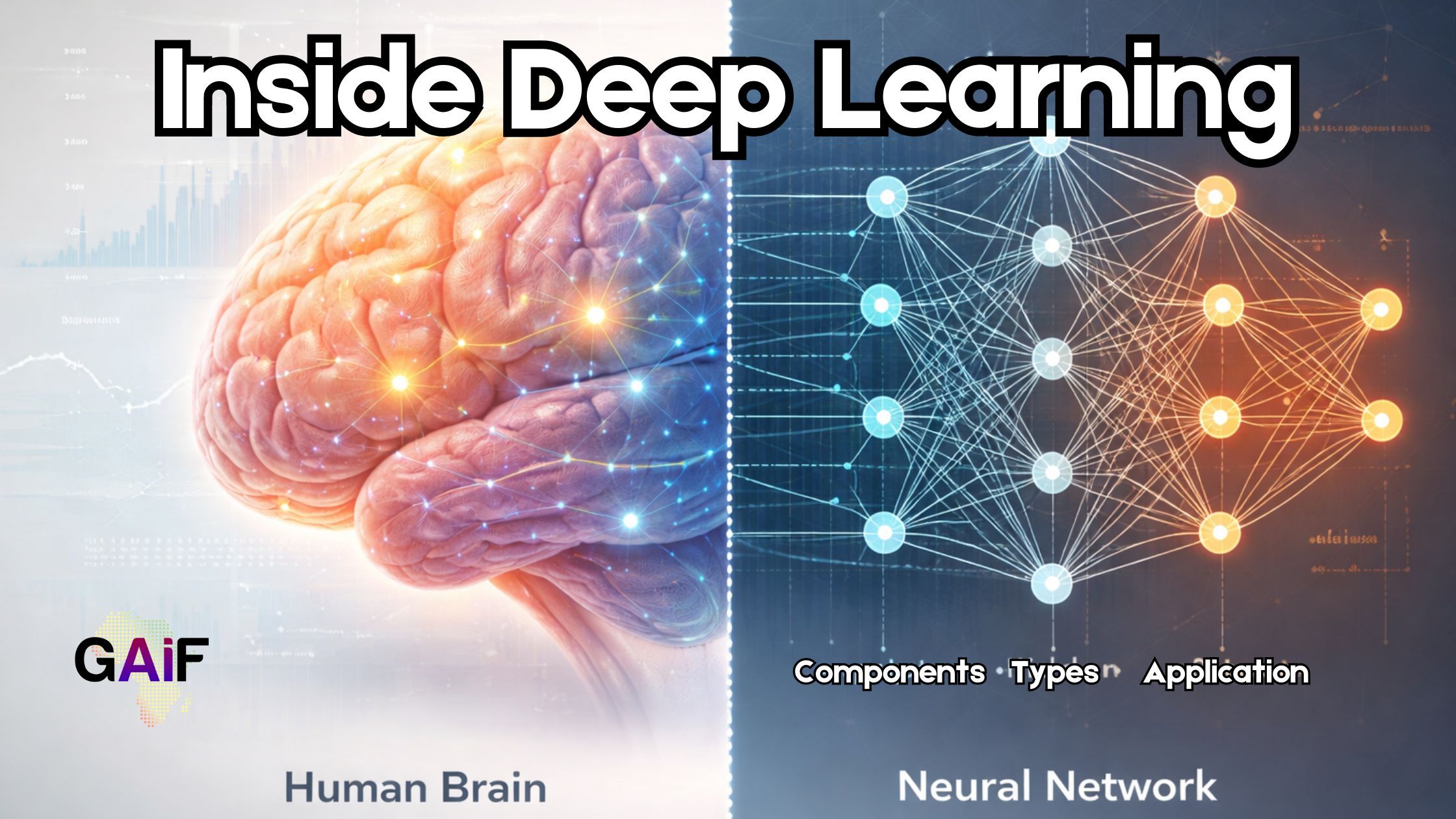
Deep Learning is a specialized branch of machine learning that uses artificial neural networks with multiple layers to model complex patterns in data. It is inspired by the structure and function of the human brain and is particularly effective in solving problems involving images, text, audio, and large-scale data.
Deep learning has driven many of the major breakthroughs in artificial intelligence, including speech recognition, computer vision, and natural language processing.
What Is Deep Learning?
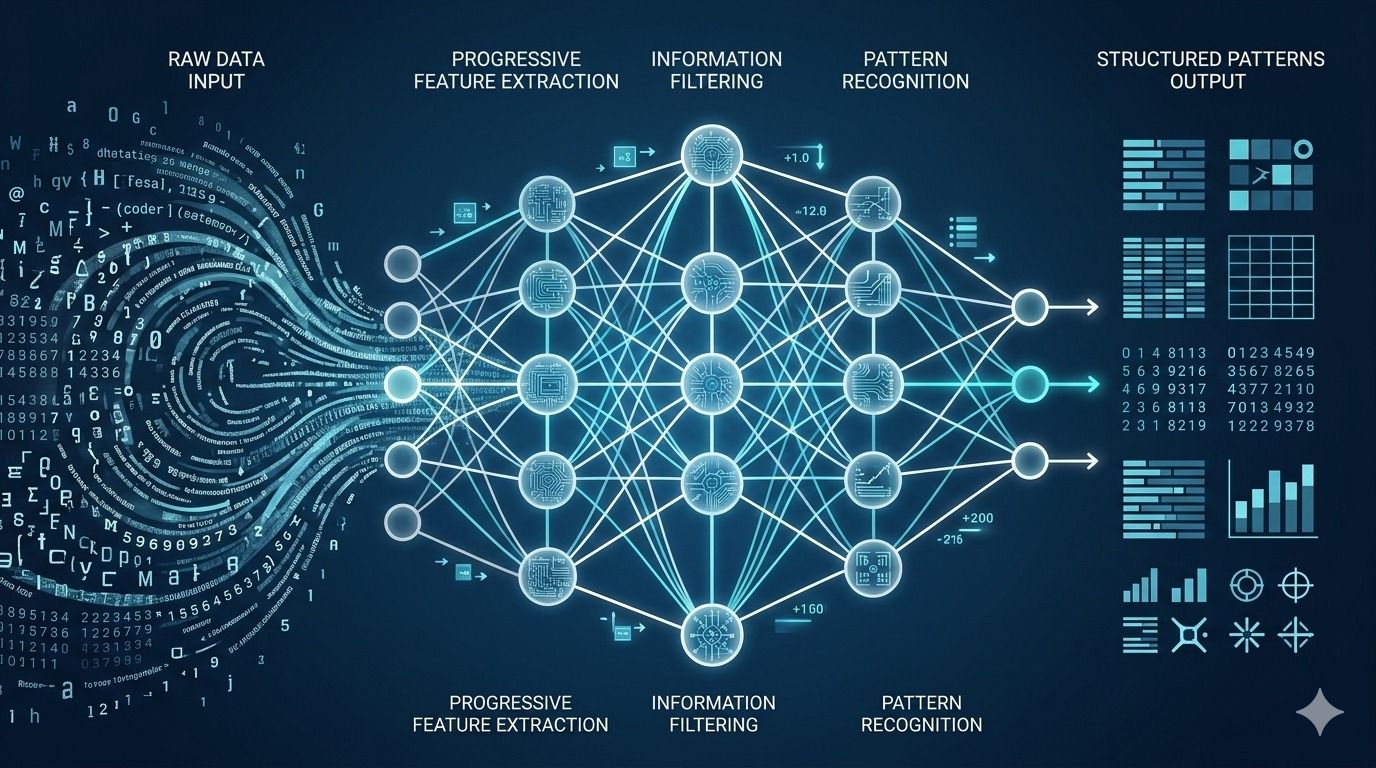
Deep learning is a subset of machine learning that relies on deep neural networks, that is networks composed of multiple hidden layers between the input and output layers.
The term “deep” refers to the number of layers in the network. Traditional machine learning models may use one or two layers, while deep learning models can use dozens or even hundreds.
These multiple layers allow the system to automatically learn hierarchical representations of data, from simple features to highly complex abstractions.
How Deep Learning Works
Deep learning models process information through layers of artificial neurons.
Each neuron:
- Receives input values
- Applies weights to those inputs
- Sums the weighted inputs
- Passes the result through an activation function
- Produces an output
The network adjusts its weights using an optimization algorithm such as gradient descent to minimize error during training. This process is repeated across many training examples until the model learns meaningful patterns.
Key Components of Deep Learning
1. Artificial Neural Networks (ANNs)
The foundation of deep learning systems. They consist of:
- Input layer
- Hidden layers
- Output layer
2. Activation Functions
Activation functions introduce non-linearity, allowing the network to learn complex patterns. Common examples include:
- ReLU (Rectified Linear Unit)
- Sigmoid
- Softmax
3. Loss Function
Measures how far the model’s predictions are from the actual values.
4. Backpropagation
An algorithm used to update weights by calculating gradients of the loss function.
Types of Deep Learning Models
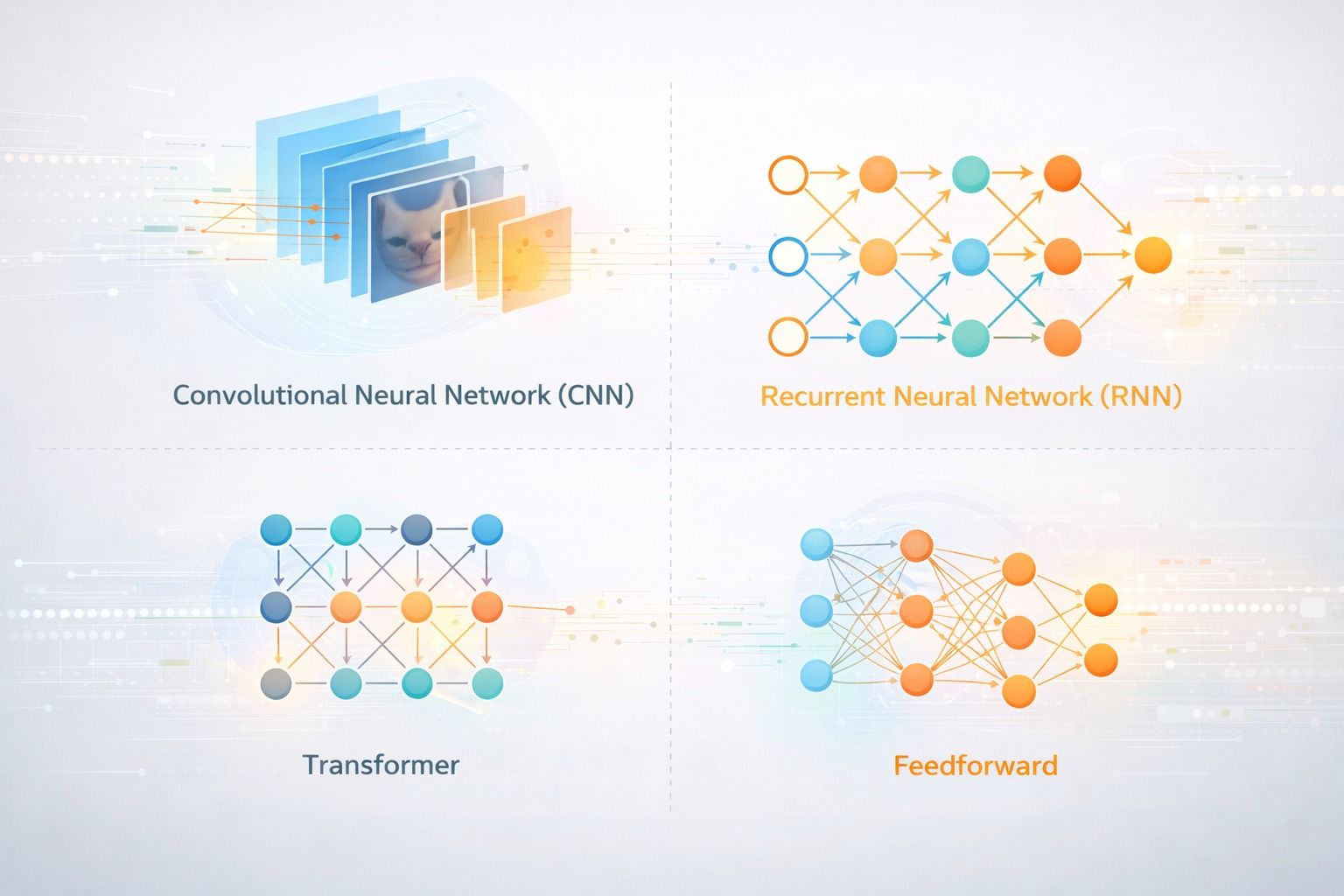
1. Feedforward Neural Networks
Information moves in one direction from input to output.
2. Convolutional Neural Networks (CNNs)
Primarily used for image processing and computer vision tasks. They detect patterns such as edges, textures, and shapes.
3. Recurrent Neural Networks (RNNs)
Designed for sequential data such as text and time-series data.
4. Transformers
Modern architectures used in natural language processing and large language models.
Applications of Deep Learning
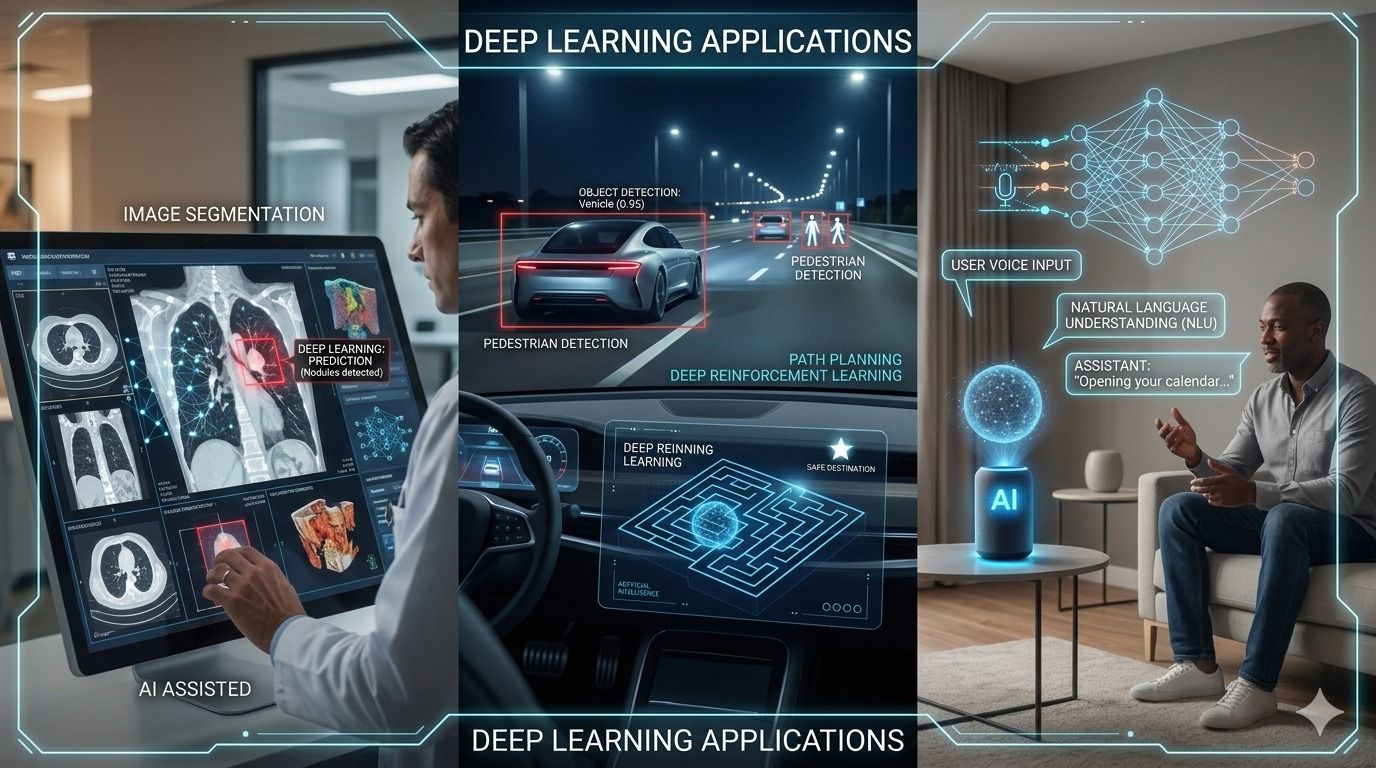
Deep learning is widely applied in:
- Image recognition systems
- Speech recognition
- Machine translation
- Medical image analysis
- Fraud detection
- Autonomous vehicles
- Chatbots and language models
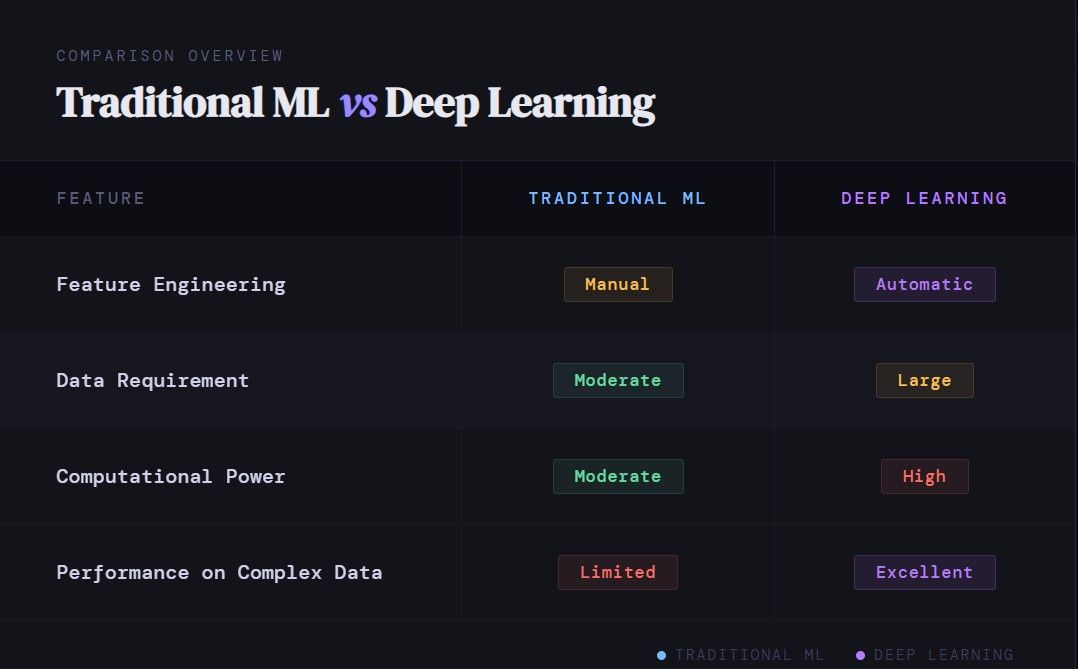
Its ability to automatically extract features from raw data makes it especially powerful for large and unstructured datasets.
Advantages of Deep Learning
- High accuracy in complex tasks
- Automatic feature extraction
- Scales well with large datasets
- Capable of handling unstructured data
Limitations of Deep Learning
- Requires large amounts of data
- Computationally intensive
- Training can be time-consuming
- Models may lack interpretability
Deep Learning vs Traditional Machine Learning
Conclusion
Deep learning is a powerful extension of machine learning that enables systems to learn complex patterns directly from raw data. Its layered neural network architecture allows it to perform tasks that were once considered extremely difficult for machines.
As computing power increases and data becomes more abundant, deep learning continues to shape the future of artificial intelligence across industries.
Get Sasa by email
Generative AI, Africa now. One edition, no more than once a week.