
Reinforcement Learning Explained
Decision-making through feedback
Introduction
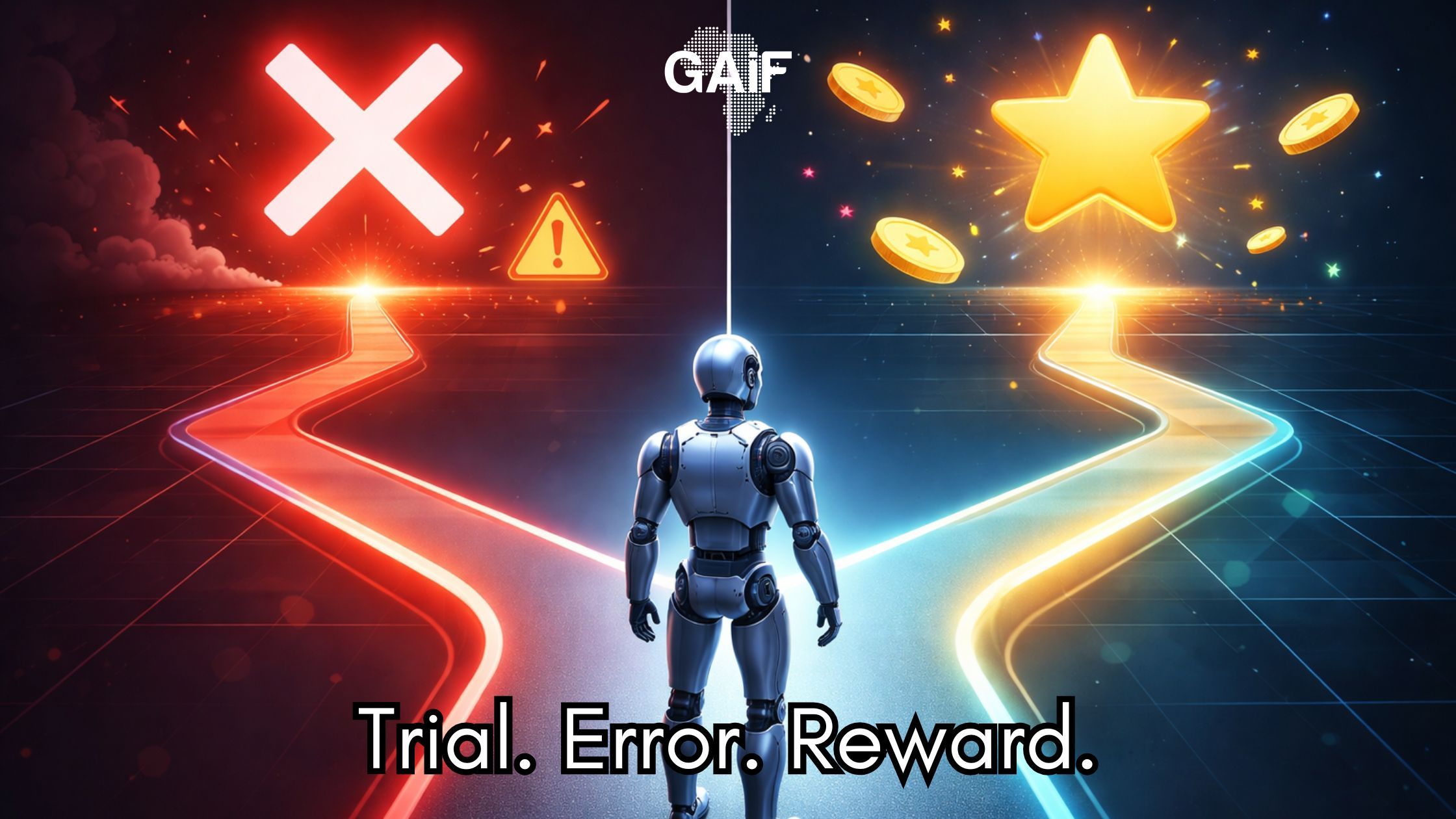
Reinforcement Learning (RL) is a type of machine learning in which an agent learns to make decisions by interacting with an environment. Instead of learning from labeled examples, the agent learns through trial and error. It receives rewards or penalties based on its actions and gradually improves its decision-making strategy over time.
Reinforcement learning is inspired by behavioral psychology, where learning occurs through rewards and consequences.
What Is Reinforcement Learning?
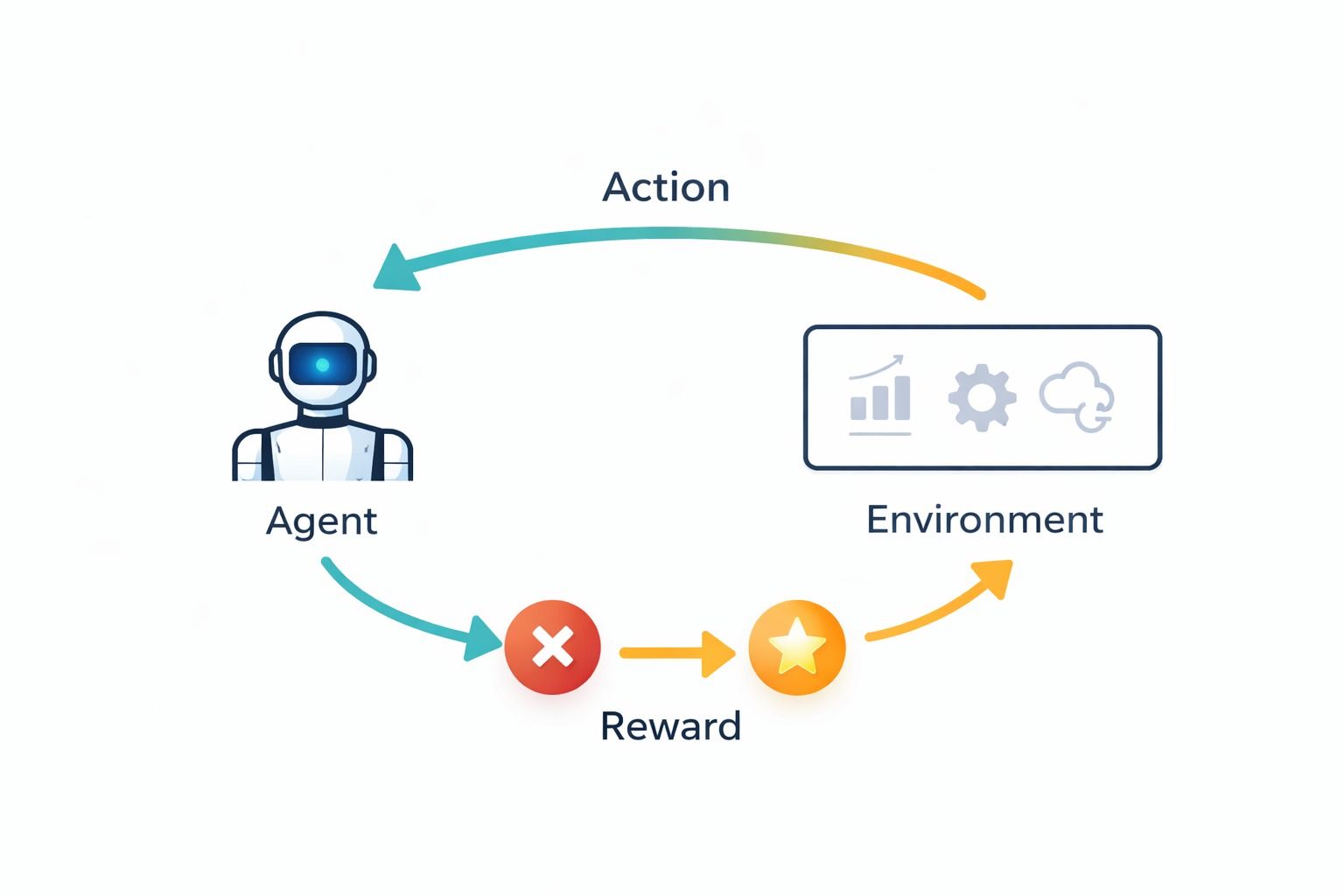
Reinforcement learning is a learning paradigm where an agent takes actions in an environment to maximize cumulative reward.
Unlike supervised learning, where correct answers are provided, reinforcement learning does not receive explicit instructions. Instead, it discovers optimal behavior by exploring different actions and learning from feedback.
Key Components of Reinforcement Learning
Reinforcement learning systems consist of four main elements:
1. Agent
The learner or decision-maker. The agent interacts with the environment and chooses actions.
2. Environment
The external system with which the agent interacts. It provides feedback in the form of rewards or penalties.
3. Action
The choices the agent can make at any given time.
4. Reward
A numerical signal that tells the agent how good or bad its action was. The goal is to maximize total reward over time.
How Reinforcement Learning Works
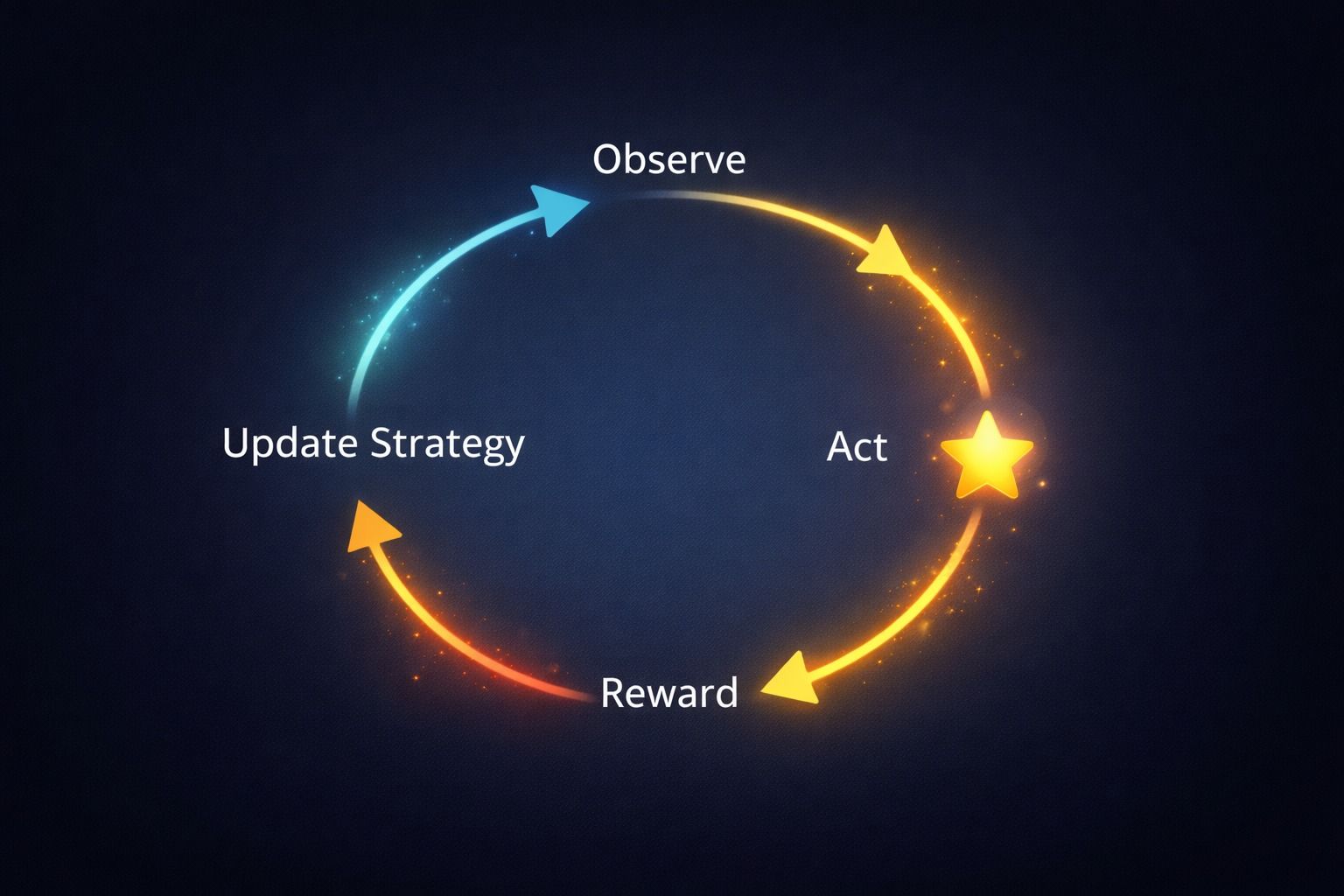
The process follows a cycle:
1. The agent observes the current state of the environment.
2. It selects an action.
3. The environment responds with a new state and a reward.
4. The agent updates its strategy based on the reward received.
Over many interactions, the agent learns which actions lead to higher long-term rewards.

Important Concepts in Reinforcement Learning
Policy
A policy defines the strategy the agent uses to decide actions based on the current state.
Value Function
A value function estimates how good a particular state or action is in terms of expected future rewards.
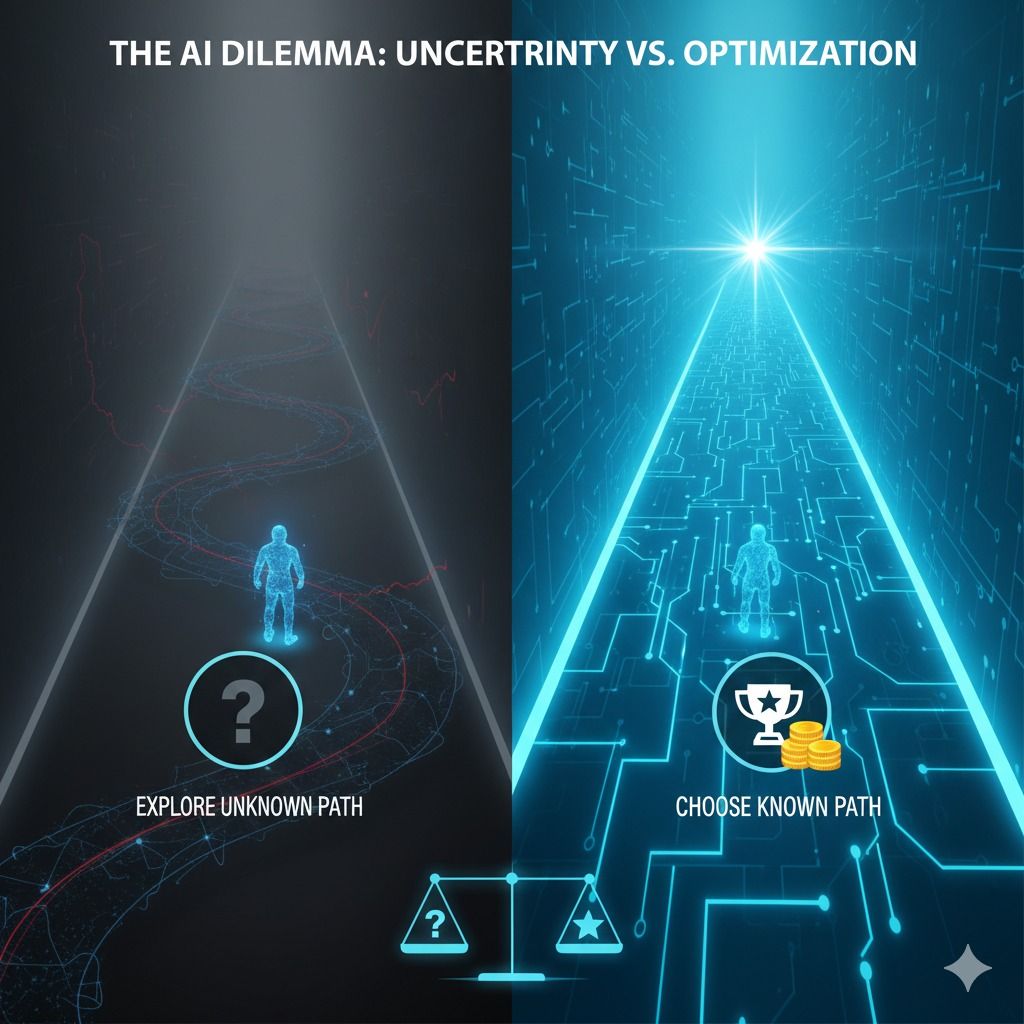
Exploration vs. Exploitation
Exploration means trying new actions to discover better rewards.
Exploitation means choosing known actions that give high rewards.
Balancing these two is crucial for effective learning.
Types of Reinforcement Learning
a). Model-Free Reinforcement Learning
The agent learns directly from experience without understanding how the environment works internally.
Examples include:
Q-Learning
Deep Q Networks (DQN)
b). Model-Based Reinforcement Learning
The agent builds a model of the environment and uses it to plan future actions.

Real-World Applications
Reinforcement learning is used in many advanced systems, including:
- Game-playing systems
- Robotics and automation
- Autonomous vehicles
- Recommendation systems
- Resource management systems
It has been particularly successful in complex decision-making environments where sequential actions matter.
Advantages of Reinforcement Learning
- Suitable for complex decision-making problems
- Learns optimal long-term strategies
- Does not require labeled datasets
- Adapts to dynamic environments
Limitations of Reinforcement Learning
Requires large amounts of training data or simulations
Computationally expensive
Can be unstable during training
Designing effective reward functions can be challenging
Conclusion
Reinforcement learning represents a powerful and flexible approach to machine learning. By learning through interaction and feedback, agents can develop intelligent strategies for complex, sequential decision-making tasks.
As AI continues to advance, reinforcement learning plays a key role in robotics, gaming, automation, and real-world optimization problems.
Get Sasa by email
Generative AI, Africa now. One edition, no more than once a week.