
Unsupervised Learning Explained
AI learning on its own

Introduction
Unsupervised learning is a type of machine learning in which a model learns patterns from data without predefined labels or outputs. Unlike supervised learning, where the correct answers are provided during training, unsupervised learning allows the algorithm to explore the data on its own and identify hidden structures, relationships, or groupings.
This approach is especially useful when working with large datasets where labeling data manually is expensive, time-consuming, or impractical.
How Unsupervised Learning Works
In unsupervised learning, the dataset contains only input features and no target variable. The algorithm analyzes the data to discover similarities, differences, or patterns based on the structure of the data itself.
For example, if a system is given customer purchase data without any categories, it can group customers with similar buying behavior together. These groupings are created purely from patterns found in the data, not from prior instructions.
Common Unsupervised Learning Tasks
1. Clustering
Clustering involves grouping data points that are similar to each other. Each group is called a cluster. Objects in the same cluster share similar characteristics, while objects in different clusters are more distinct.
Clustering is widely used in:
- Customer segmentation
- Market research
- Image grouping
- Social network analysis
2. Dimensionality Reduction
Dimensionality reduction reduces the number of features in a dataset while preserving as much important information as possible. This helps improve model performance, reduce noise, and make data easier to visualize.
It is commonly used in:
- Data visualization
- Feature selection
- Speeding up machine learning models
3. Anomaly Detection
Unsupervised learning can identify unusual or rare data points that differ significantly from the rest of the dataset. These anomalies may represent errors, fraud, or unexpected events.
Applications include:
- Fraud detection
- Network security monitoring
- Fault detection in systems
Popular Unsupervised Learning Algorithms
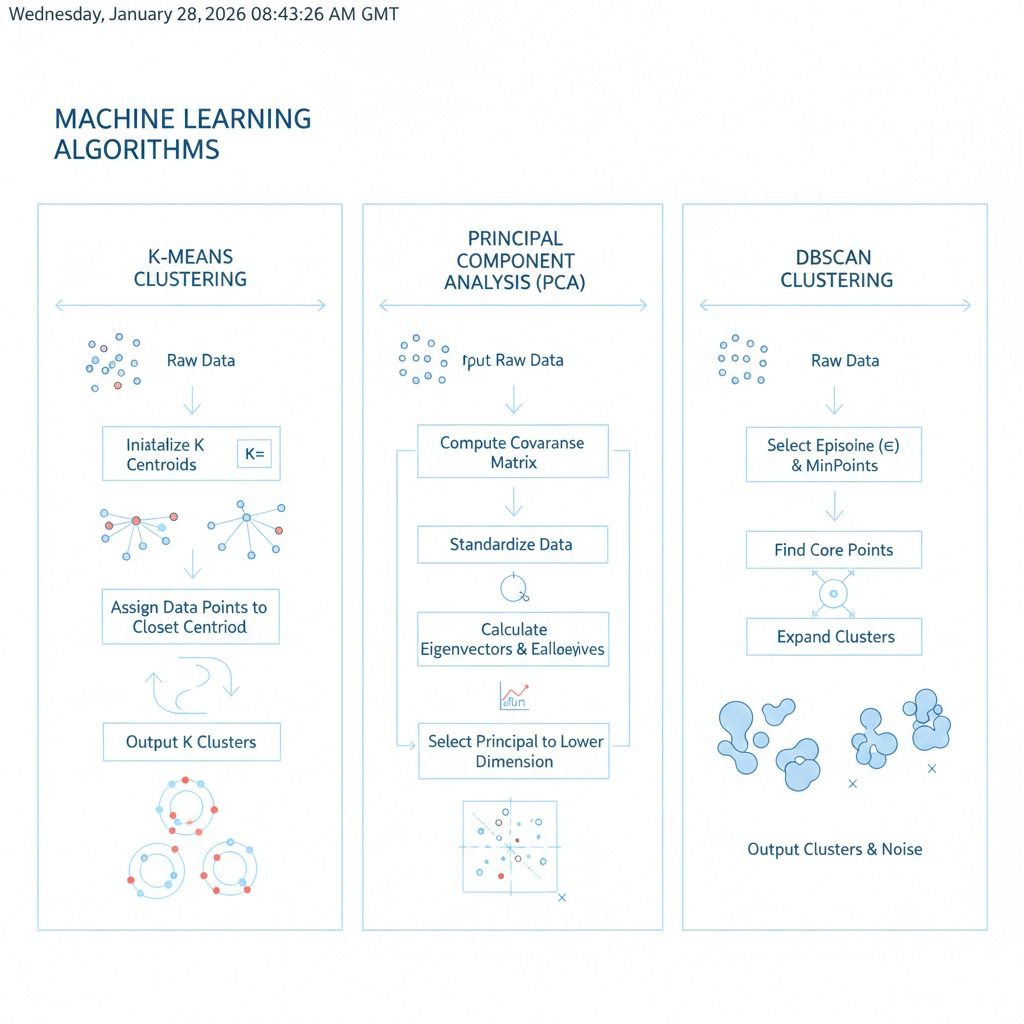
Some widely used unsupervised learning algorithms include:
- K-Means Clustering – Groups data into a fixed number of clusters based on similarity
- DBSCAN – Detects clusters of varying shapes and identifies noise
- Hierarchical Clustering – Builds clusters step by step in a tree-like structure
- Principal Component Analysis (PCA) – Reduces data dimensionality while retaining key information
- Latent Dirichlet Allocation (LDA) – Used for topic modeling in text data
Real-World Applications of Unsupervised Learning
Unsupervised learning is used across many industries, including:
- Recommendation systems (grouping users with similar preferences)
- Customer behavior analysis
- Risk management and fraud detection
- Image and video analysis
- Market basket analysis
These applications benefit from the ability of unsupervised learning models to uncover patterns that may not be immediately visible to humans.
Advantages of Unsupervised Learning
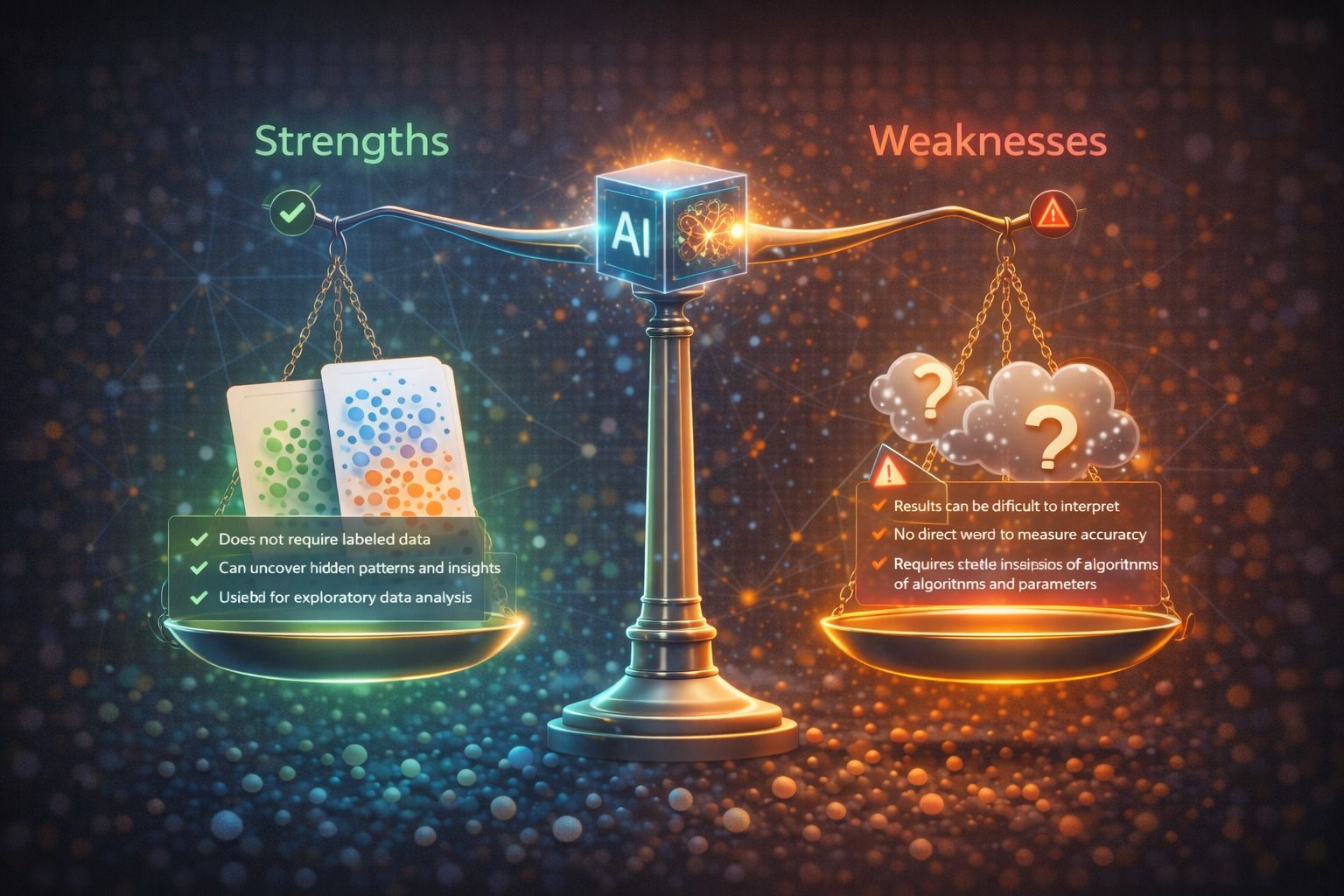
- Does not require labeled data
- Can uncover hidden patterns and insights
- Useful for exploratory data analysis
- Scales well for large datasets
Limitations of Unsupervised Learning
- Results can be difficult to interpret
- No direct way to measure accuracy
- Requires careful selection of algorithms and parameters
- Outputs may not always align with real-world meaning
Conclusion
Unsupervised learning plays a crucial role in modern artificial intelligence by enabling systems to learn directly from raw, unlabeled data. It is particularly valuable for discovering patterns, grouping information, and gaining insights from complex datasets. As data continues to grow in size and complexity, unsupervised learning remains an essential tool for data-driven decision-making.
Get Sasa by email
Generative AI, Africa now. One edition, no more than once a week.