
Supervised Learning Explained
Understanding ML foundations
Introduction
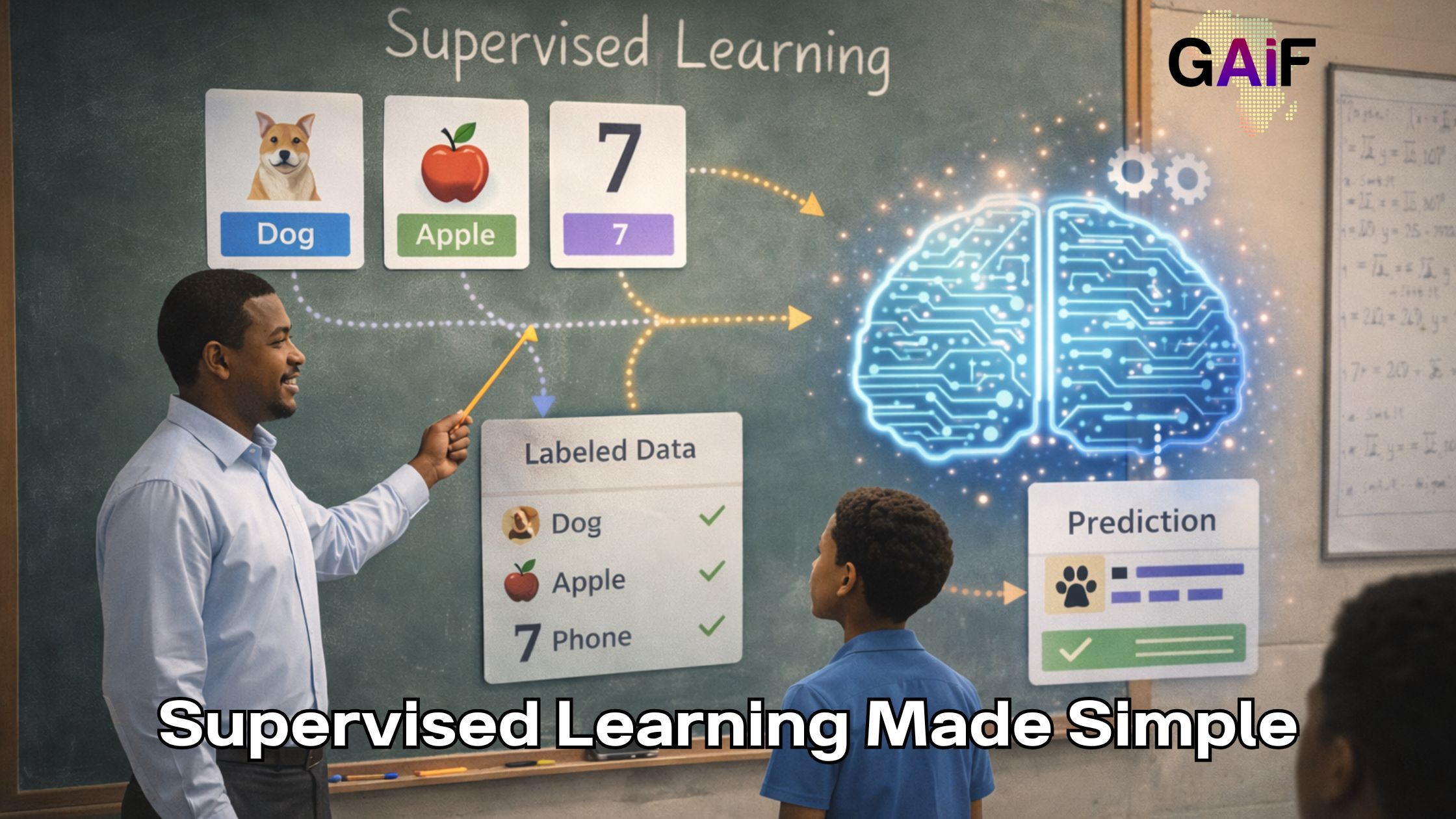
Supervised learning is one of the most widely used approaches in Machine Learning. It is the foundation behind many everyday technologies such as spam detection, facial recognition, and speech-to-text systems.
In simple terms, supervised learning teaches machines by example, much like a student learning with the guidance of a teacher.
This article explains what supervised learning is, how it works, common algorithms, real-world applications, and its advantages and limitations.
What Is Supervised Learning?
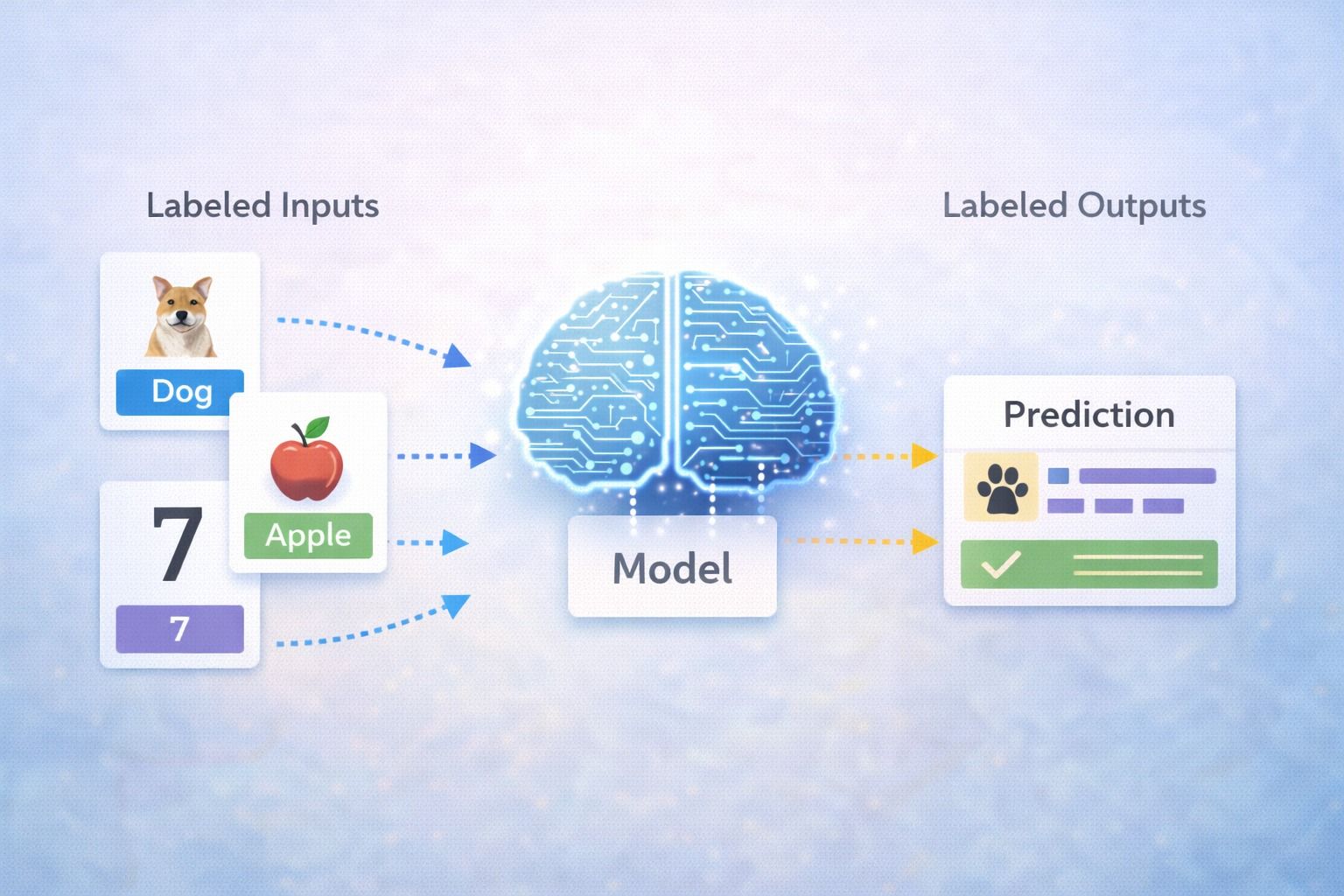
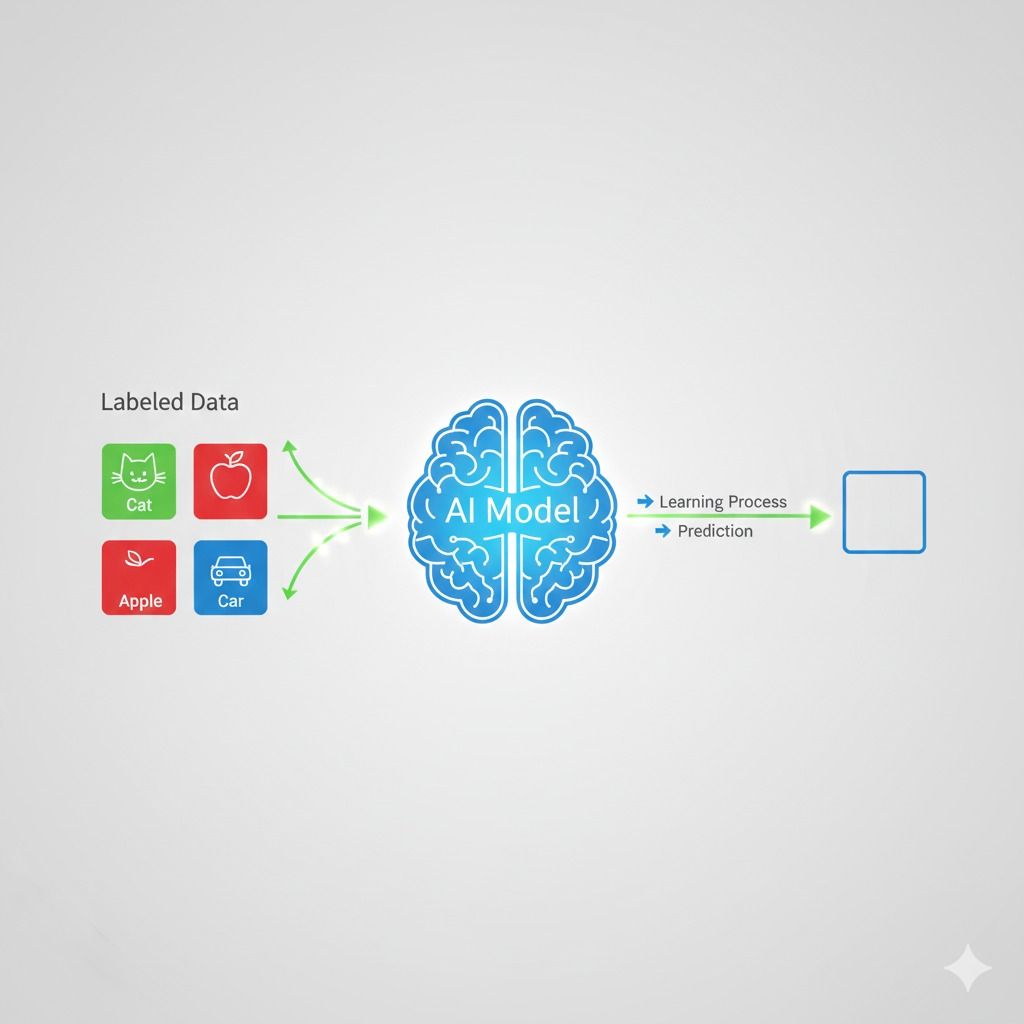
Supervised learning is a type of machine learning where a model is trained using labeled data.
This means that every example in the training dataset comes with the correct answer. The model learns the relationship between the input data and the expected output and uses this knowledge to make predictions on new, unseen data.
Simple definition
Supervised learning is a method where machines learn from examples that already have correct answers.
How Supervised Learning Works
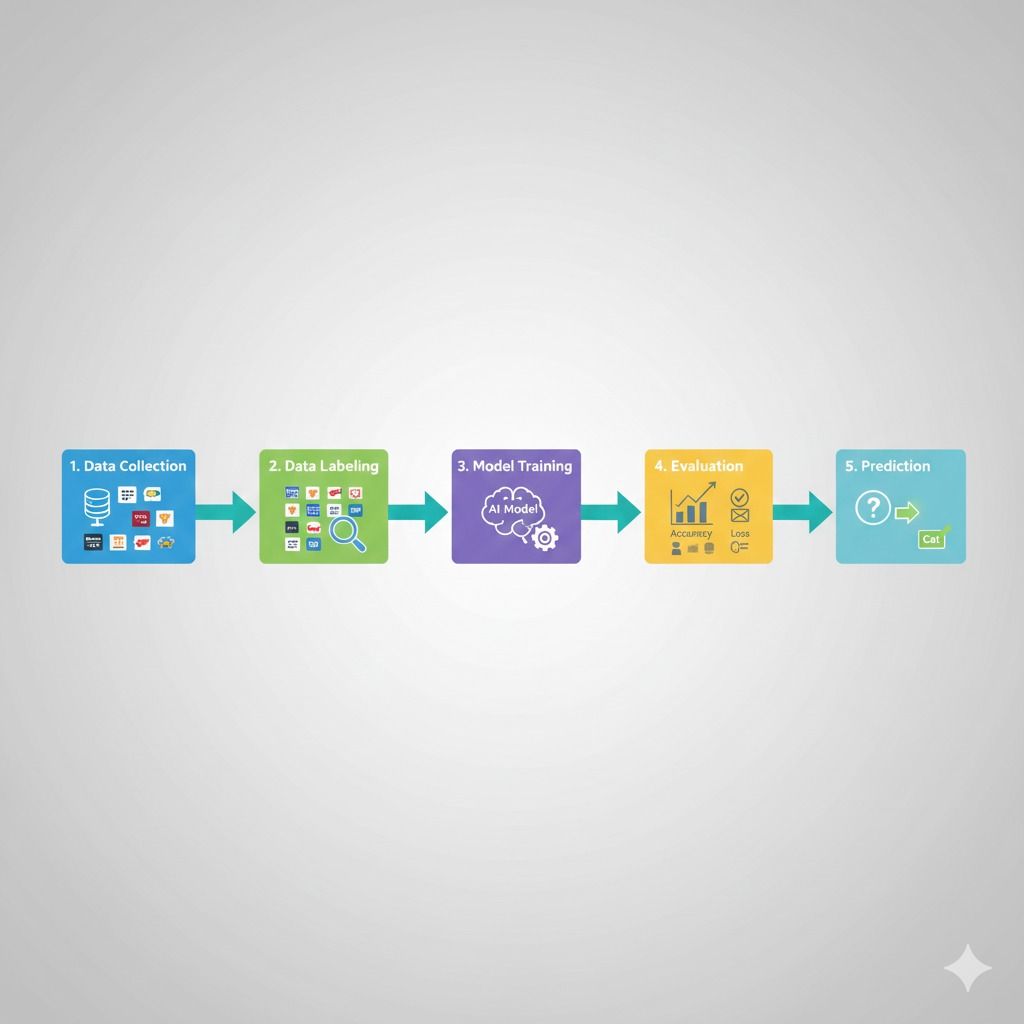
The supervised learning process follows a clear sequence:
- Data Collection
A dataset is gathered where each data point has an input and a known output.
- Data Labeling
Each example is tagged with the correct result.
Example: An email is labeled as “spam” or “not spam.”
- Model Training
The algorithm studies patterns in the data and learns how inputs map to outputs.
- Model Evaluation
The model is tested using new data to measure how accurately it makes predictions.
- Prediction
Once trained, the model can make predictions on real-world data.
Types of Problems Solved with Supervised Learning
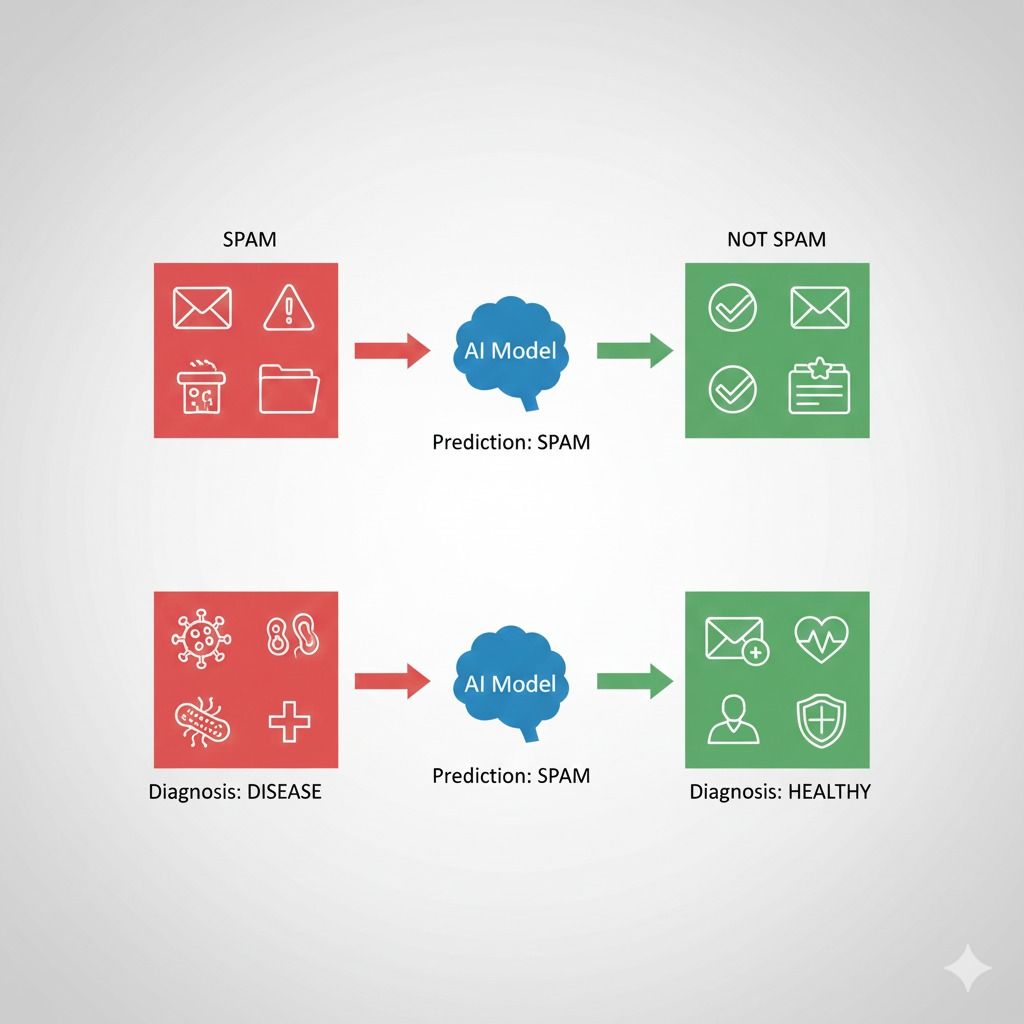
Supervised learning is mainly used for two types of tasks.
Classification
The model predicts a category or label.
Examples include:
- Spam vs. not spam emails
- Fraudulent vs. legitimate transactions
- Disease present vs. not present
Regression
The model predicts a numerical value.
Examples include:
- House price prediction
- Temperature forecasting
- Sales revenue estimation
Common Supervised Learning Algorithms
Some of the most widely used supervised learning algorithms include:
- Linear Regression – Predicts continuous values
- Logistic Regression – Used for binary classification
- Decision Trees – Makes decisions using rule-based splits
- K-Nearest Neighbors (KNN) – Classifies based on similarity
- Support Vector Machines (SVM) – Finds the best boundary between classes
- Naive Bayes – Uses probability theory for classification
- Neural Networks – Handles complex patterns in large datasets

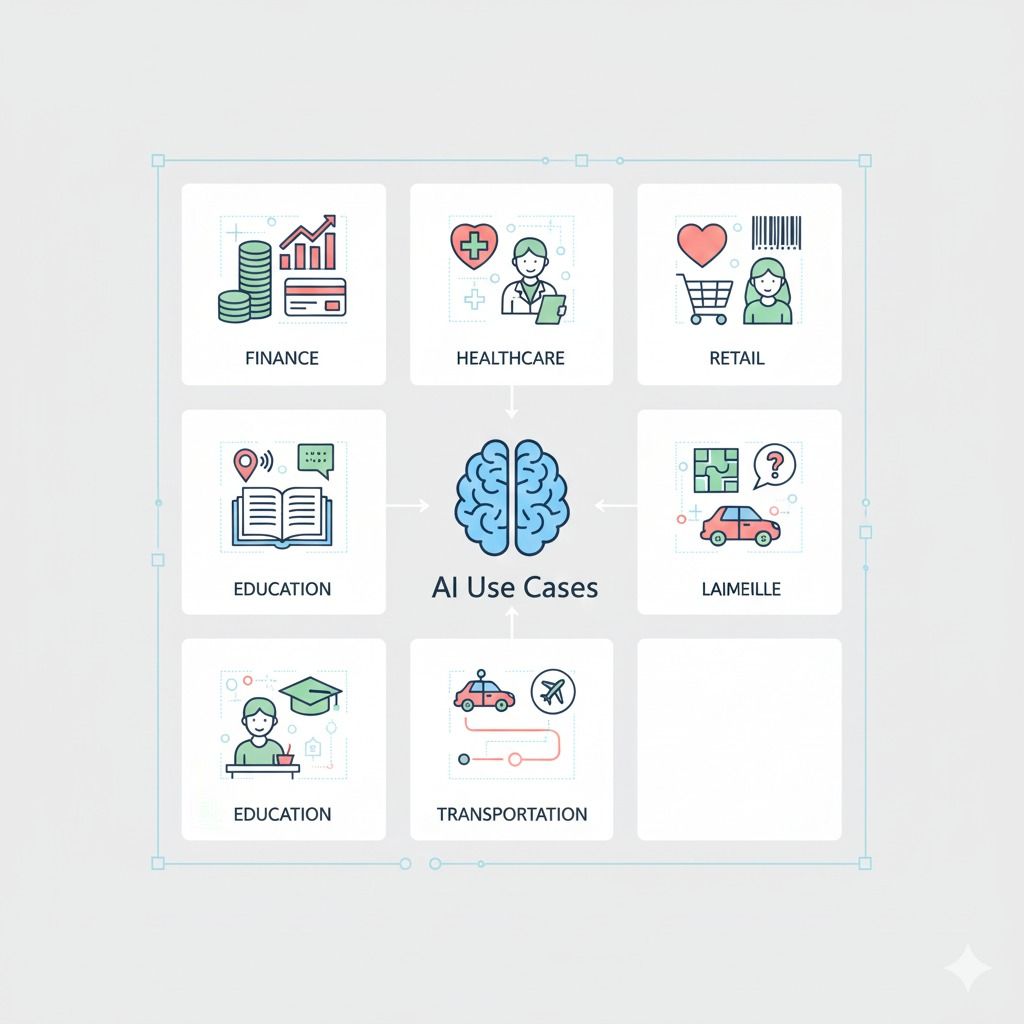
Real-World Applications
Supervised learning is already embedded in many systems people use daily.
- Email filtering – Classifying spam and legitimate emails
- Healthcare – Diagnosing diseases from medical data
- Finance – Credit scoring and fraud detection
- Retail – Predicting customer buying behavior
- Education – Automatic grading systems
- Transportation – Traffic sign recognition in autonomous vehicles
Advantages of Supervised Learning
Supervised learning offers several benefits:
- Produces highly accurate models when good-quality labeled data is available
- Easy to evaluate performance using clear metrics such as accuracy and precision
- Works well for both simple and complex problems
- Results are often easier to interpret compared to unsupervised methods
Limitations of Supervised Learning
Despite its strengths, supervised learning has some challenges:
- Requires large amounts of labeled data, which can be expensive and time-consuming to create.
- Performance depends heavily on data quality.
- Can struggle with new or unseen situations if training data is limited.
- Risk of overfitting, where the model learns the training data too well but performs poorly on new data.
When Should You Use Supervised Learning?
Supervised learning is best used when:
- You already have historical data with correct labels.
- You want to make predictions or classifications.
- You need measurable performance.
- You are building systems such as recommendation engines, diagnostic tools, or forecasting models.
Conclusion
Supervised learning is the backbone of modern Machine Learning. By learning from labeled examples, machines can recognize patterns, make predictions, and automate decision-making across many industries.
Understanding supervised learning is an essential step for anyone starting a career in Artificial Intelligence or Data Science. It provides the foundation for more advanced topics such as deep learning, reinforcement learning, and intelligent systems.
Before exploring complex models, mastering supervised learning ensures a strong and reliable entry point into the world of AI.
Get Sasa by email
Generative AI, Africa now. One edition, no more than once a week.