
How AI Agents Work Behind the Scenes: A Clear Technical Breakdown
How AI agents really work
AI agents have become one of the most talked about concepts in modern artificial intelligence. They power autonomous workflows, research assistants, task runners, and even complex business automations. But despite the hype, very few explain how these agents actually operate internal
Now let us break this down step by step.
1. What Is an AI Agent ?
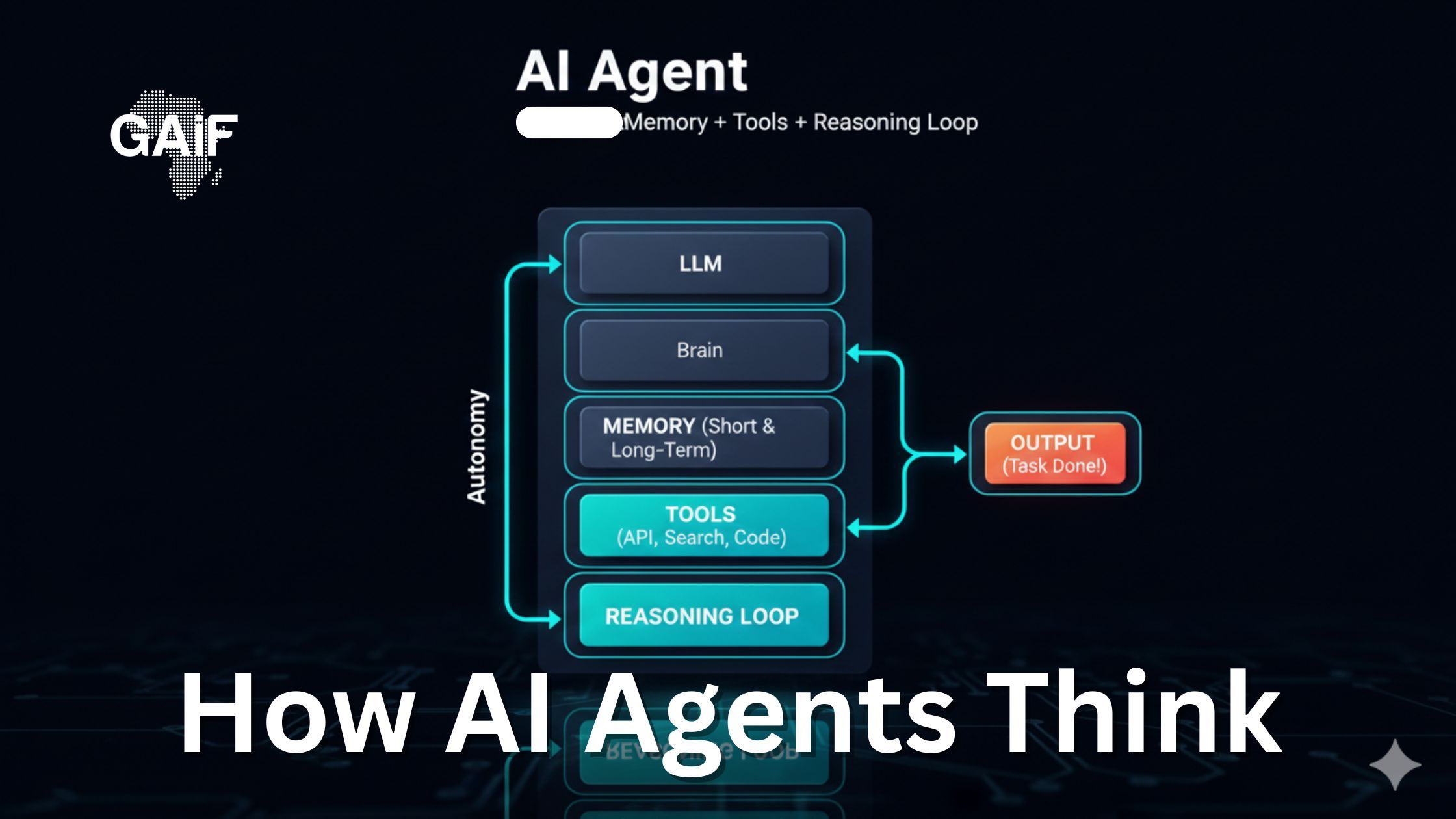
An AI agent is a system that can understand a goal, decide what action to take, perform that action, and evaluate the result.
In short:
Agent = LLM + Memory + Tools + Reasoning Loop
It’s not just a chatbot, It’s an AI that acts.
2. The Core Building Blocks of an AI Agent
A. The LLM (Brain of the Agent)
The large language model handles:
reasoning
planning
understanding instructions
generating actions
It gives the agent “intelligence,” but the agent itself is more than just the model.
B. Memory (Short-Term + Long-Term)
Agents need memory to avoid repeating mistakes or forgetting tasks.
Two common types:
Short-term memory
Stores the current task context.
Long-term memory
Often implemented through:
- vector databases
- embedding stores
- document indexes
This allows the agent to recall past tasks or knowledge.
Example:
If a user says “continue where we left off yesterday,” memory lets the agent resume.
C. Tools (The Agent’s “Hands”)
The agent uses external tools to execute actions the LLM alone cannot perform, such as:
- browsing the web
- running calculations
- querying a database
- sending an email
- interacting with APIs
Tools convert language decisions into real-world actions.
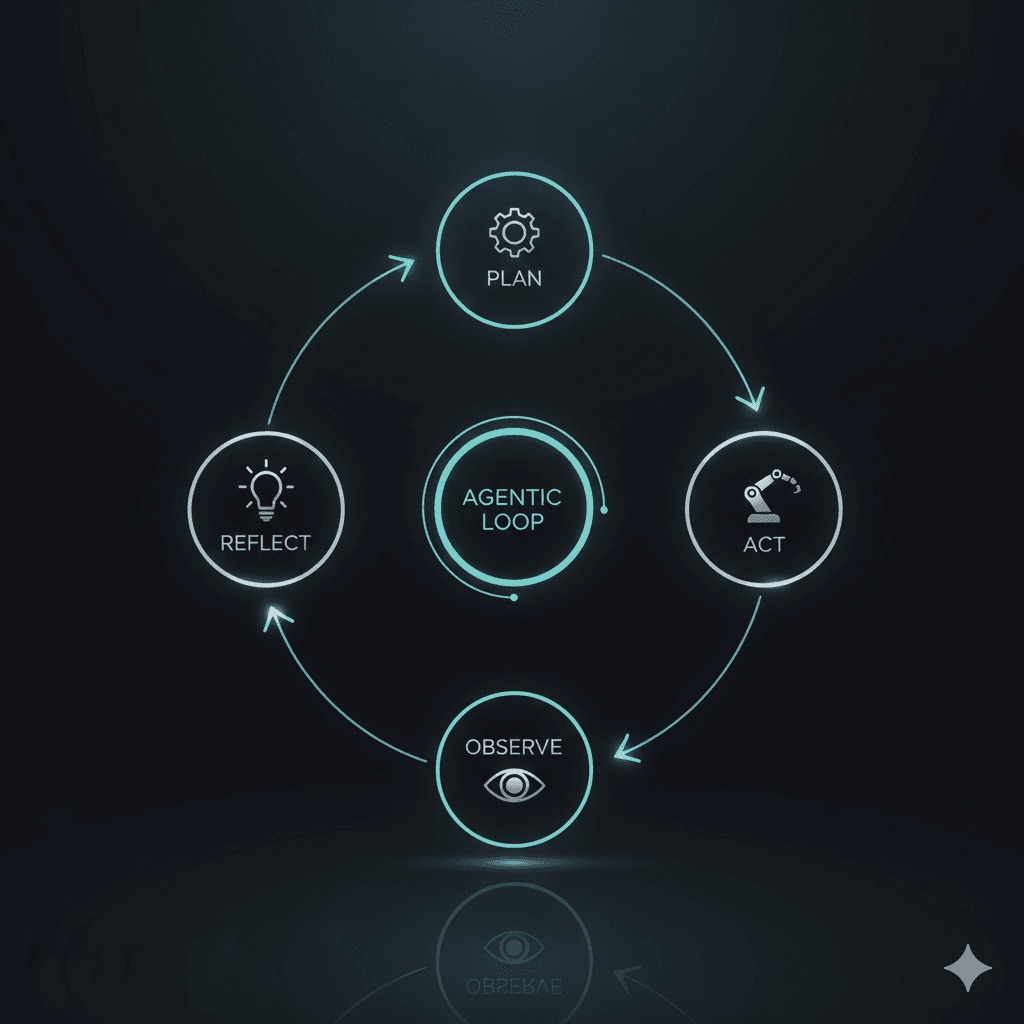
D. The Reasoning + Action Loop (The Heart of the System)
This is the internal cycle that makes an agent autonomous.
It follows four steps:
1. Plan
The agent decides what steps it needs to take.
(LLM creates a plan.)
2. Act
The agent chooses a tool and executes an action.
3. Observe
It checks the result:
- Did the tool return data?
- Did the task succeed?
4. Reflect
It updates memory and decides the next action.
Then the loop repeats.
This loop is called:
ReACT (Reason + Act)
or Agentic Loop

3. What Happens Behind the Scenes During a Single Task?
Let’s walk through a simple example:
“Find the best laptop under $700 and summarize the top 3.”
Here’s what happens internally:
Step 1: Goal Understanding
The LLM interprets:
- Task: research
- Budget constraint: $700
- Deliverable: summary
Step 2: Planning
The agent creates its internal plan:
- Search the web
- Extract top options
- Compare specs
- Write a summary
Step 3: Tool Selection
The agent picks the right tools:
Web search tool
Data parser
Summarizer
Step 4: Actions
Each action is executed one at a time.
Action 1:
“Search for laptops under $700.”
→ Tool returns results.
Action 2:
“Extract specs.”
→ Agent parses data.
Action 3:
“Score the laptops.”
→ Agent compares features.
Step 5: Reflection
The agent checks if the goal is met.
If not, it loops again.
Step 6: Final Output
LLM generates the final summary.

4. A Mental Model Diagram (Text Version)
You can include this in your article to help readers visualize.
USER GOAL
↓
[LLM: Understand request]
↓
[Planner: break into steps]
↓
[Agent Loop]
├── Decide next action
├── Pick tool
├── Execute tool
├── Read result
└── Update memory
↑ ↓
└────────┘ (loops until done)
↓
[LLM: Final answer]
↓
OUTPUT

5. Why AI Agents Are So Powerful
A. They handle multi-step tasks
Unlike chatbots, agents can:
research
plan
decide
retry
correct themselves
B. They integrate with the real world
Through tools, they:
fetch data
automate workflows
write code
interact with APIs
C. They improve with memory
An agent becomes better over time if designed well.
6. Real Applications of AI Agents
- Business & Productivity
- Research
- Engineering
- Customer Support
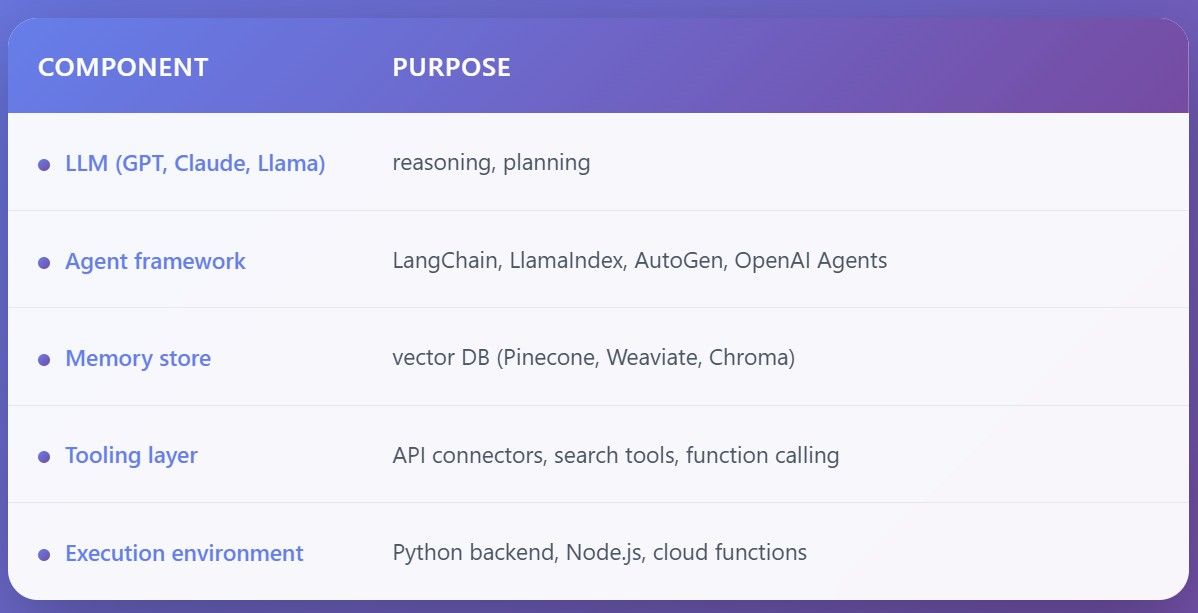
7. The Technical Stack Behind Most Agents
A standard agent system includes:
8. The Future of AI Agents
Trends happening now:
- better long-term memory
- multi-agent collaboration
- autonomous business workflows
- self-improving agents
- energy-efficient models
Everything is moving toward systems that behave more like digital employees, not just chatbots.
Conclusion.
AI agents are powerful because they reason, act, observe, and improve — all through a structured loop powered by LLMs, memory, and real-world tools. They represent the next stage of AI: systems that can complete tasks autonomously, not just generate text.
Get Sasa by email
Generative AI, Africa now. One edition, no more than once a week.