Bias in AI Systems and How to Mitigate It
Understanding bias in AI
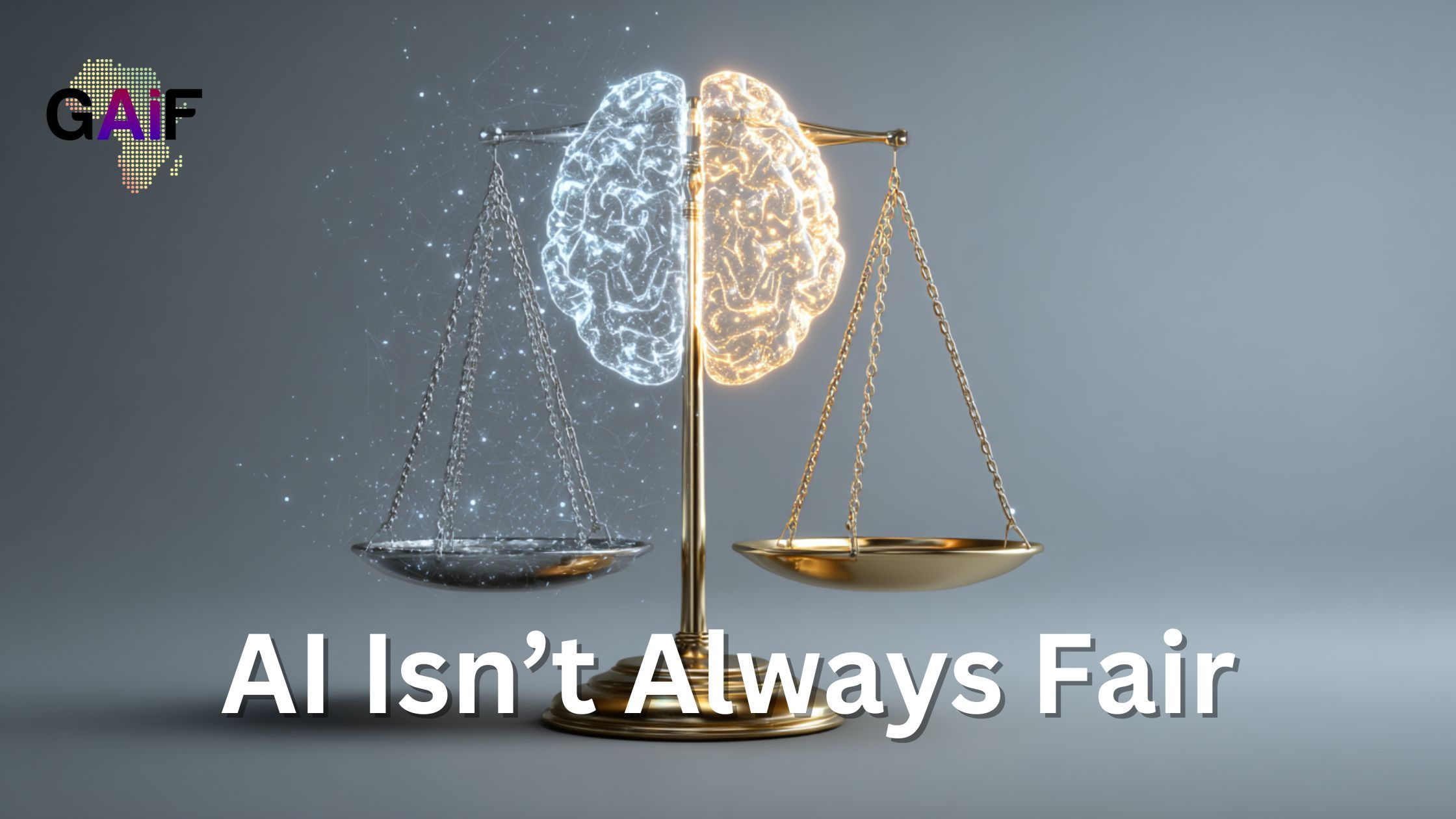
Artificial Intelligence (AI) is becoming part of our daily lives, from recommending videos on social media to helping doctors detect diseases. However, AI systems are not always perfect. Sometimes, they make unfair or incorrect decisions. This problem is known as AI bias.
What is Bias in AI?
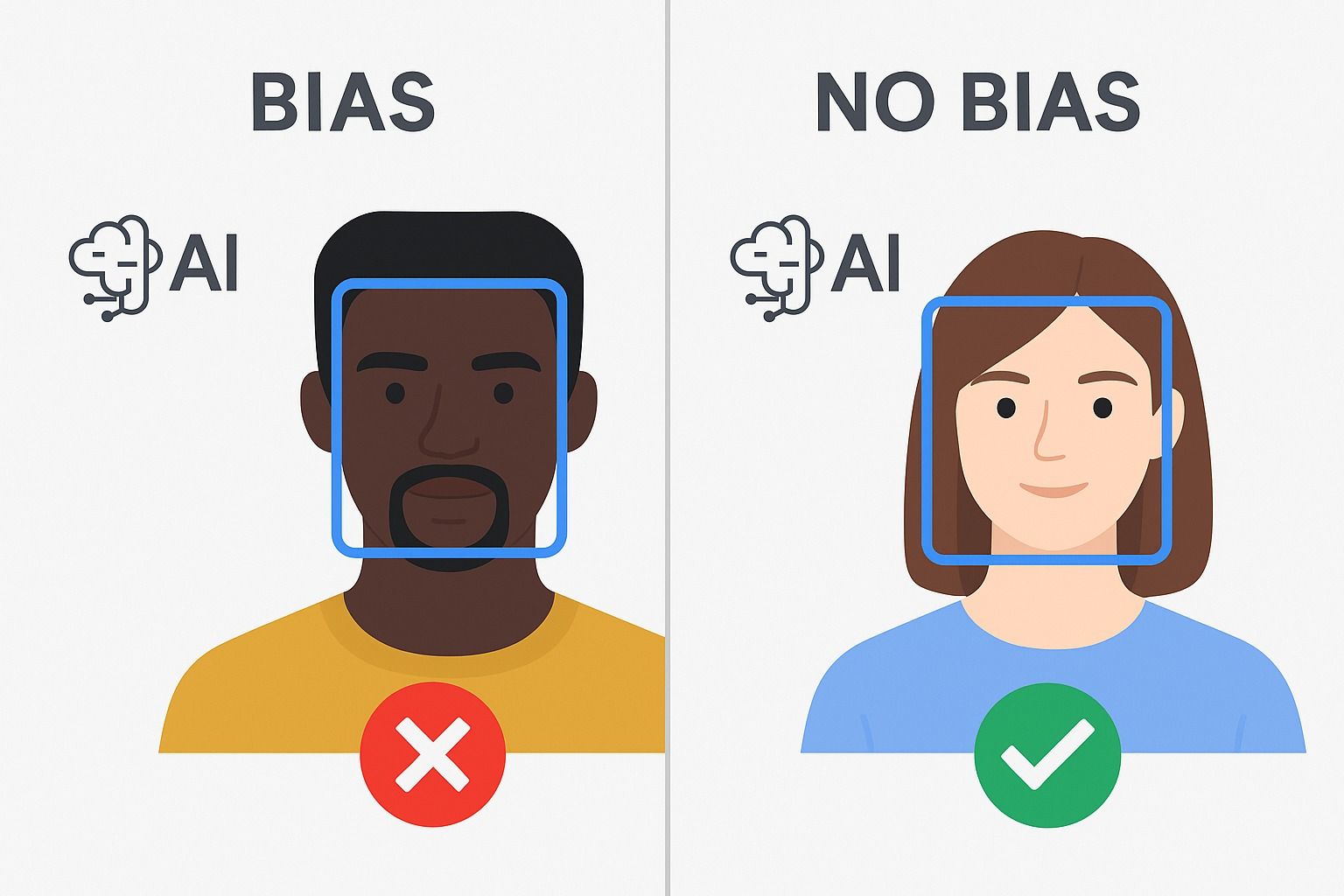
Bias in AI happens when a system consistently makes unfair judgments or predictions about a certain group of people or situations. It occurs when the data used to train an AI system is not representative or contains stereotypes.
For example:
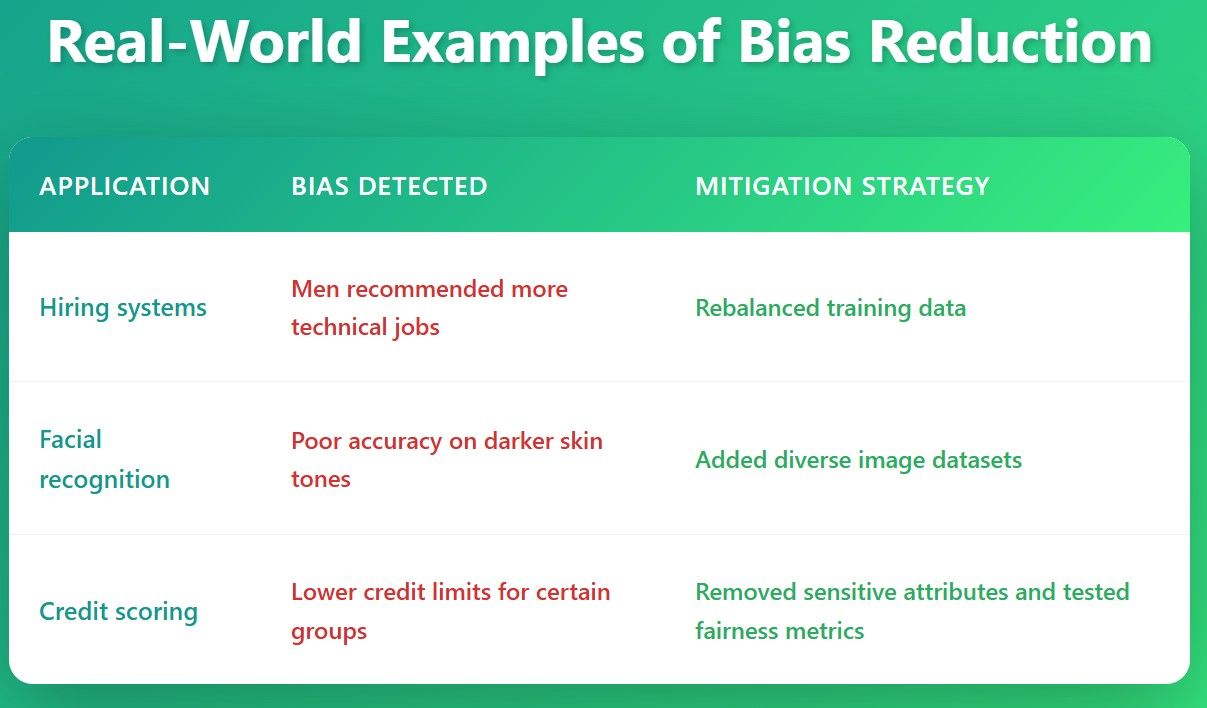
- If a facial recognition model is trained mostly on light-skinned faces, it may struggle to recognize darker-skinned faces.
- A job recommendation system trained on past hiring data may suggest fewer tech jobs to women if the historical data was biased against hiring women.
Why Does AI Bias Happen?
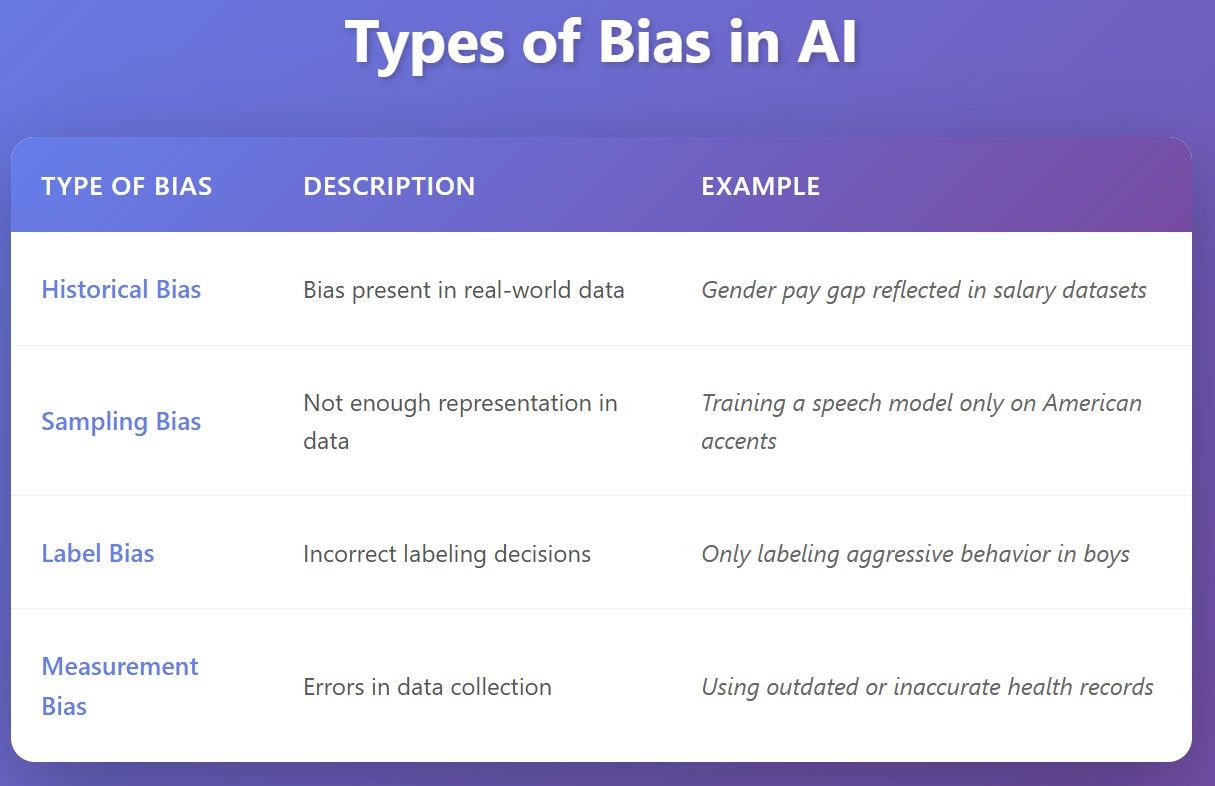
Bias usually appears because of issues at different stages of the AI development process:
1. Biased Training Data
AI learns from examples. If the examples are biased, the AI will learn the same bias.
Example: A dataset with mostly male names in leadership roles teaches the model that leaders are usually men.
2. Data Imbalance
If one group has more data than another, AI performs better on that group.
Example: Medical AI trained mostly on data from adults may perform poorly on children.
3. Human Bias
People collecting data or designing systems may unintentionally add their own assumptions.
4. Flawed Algorithms
Some models treat features in ways that favor certain groups, even if unintentionally.
Effects of AI Bias
AI bias can lead to serious consequences:
- Discrimination in hiring, loans, or policing
- Reduced trust in technology
- Inaccurate predictions, especially in healthcare and education
- Social inequality, where one group benefits more than others

How to Mitigate (Reduce) AI Bias
Bias cannot be removed completely, but it can be greatly reduced by using good practices:
1. Use Diverse and Representative Data
Ensure the training dataset includes different genders, ages, races, and backgrounds.
More diversity = more fairness.
2. Data Cleaning and Preprocessing
Remove incorrect, duplicate, or biased entries before training the model.
3. Regular Auditing
Test AI systems frequently using fairness metrics to detect bias early.
4. Algorithmic Fairness Techniques
Use fairness-aware machine learning methods such as:
- Re-weighting data to treat underrepresented groups fairly
- Adversarial debiasing, which trains the AI to avoid using sensitive attributes like race or gender
5. Human-in-the-loop Decision Making
Do not let AI make critical decisions alone. Human experts should review recommendations in sensitive scenarios like hiring or healthcare.
6. Transparency and Explainability
Use explainable AI tools that show why a model made a specific prediction. This helps detect hidden bias.
7. Ethical Guidelines and Policies
Organizations must follow ethical AI standards and legal frameworks to protect users.
Conclusion
AI has the power to improve our world, but only if it is fair and trustworthy. Bias in AI systems usually comes from the data and assumptions used to build them. By using balanced datasets, testing models regularly, and applying ethical design principles, we can build AI that benefits everyone.
The future of AI should not be biased, it should be inclusive, transparent, and accountable.
Get Sasa by email
Generative AI, Africa now. One edition, no more than once a week.