Adapt or Fade: Why AI Isn’t Coming for Your Job—It’s Already Here
How to stay valuable in the AI era.
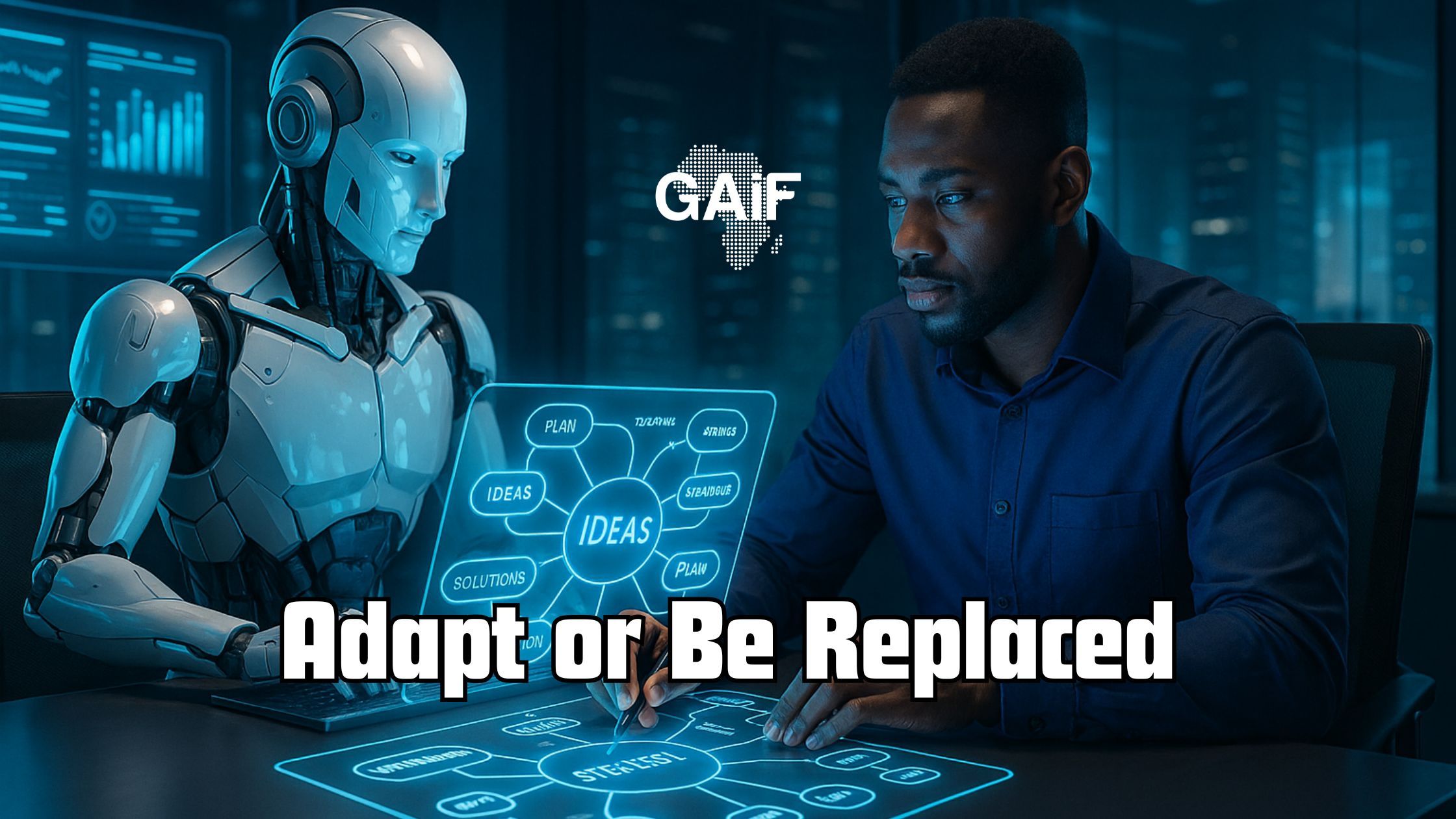
Elon Musk once said, “If AI can do your job, eventually there may be no need for you.”
It sounds harsh. But it’s the reality we’re waking up to—whether we like it or not.
Artificial Intelligence isn’t some distant vision of the future. It’s already here, and it’s evolving at breakneck speed.
Sam Altman, the CEO of OpenAI, has been equally candid. He’s openly acknowledged that AI will displace countless roles, particularly those built purely on repetition or technical execution.
So the question isn’t “Will AI take jobs?” anymore.
It’s a different, more personal question:
Will you evolve fast enough to stay valuable?

The Illusion We Were Sold
For quite some time, we were comforted with the same reassuring chorus:
“AI won’t take your job. It will just make it easier.”
But as the months roll by, the cracks in that narrative are getting harder to ignore.
Designers are seeing demand for simple logo work shrinking.
Copywriters are watching AI generate passable drafts in seconds.
Editors are competing with tools that can polish text automatically.
Even developers are feeling the pinch as code assistants get smarter.
The truth is unfolding right before our eyes.

What AI Can’t Replace
Before you panic, here’s the good news:
AI is a remarkable tool. But it has limits.
It can’t:
- Think critically about complex problems
- Tell stories with genuine nuance
- Build trust and real human connection
- Craft long-term strategies
- Lead teams through uncertainty
- Empathize with clients or audiences
These are the skills that remain distinctly—and powerfully—human.
This is where your greatest opportunity lies.

Adaptivity Is Your Superpower
Adaptability is no longer optional—it’s the most important skill you can develop in an AI-powered world. The people who will succeed aren’t those who deny that things are changing, but those who ask themselves: How can I use AI as a lever instead of seeing it as a threat?
These professionals are learning to:
- Automate repetitive tasks that waste time
- Use AI to generate fresh ideas and speed up brainstorming
- Leverage AI tools to enhance the quality and speed of their work
Rather than competing with AI where it excels, they are focused on building and stacking skills that AI simply can’t replicate—like critical thinking, empathy, and human-centered strategy.
To make yourself hard to replace, you don’t need to become a jack of all trades. You need to become a strategic creative—someone whose unique blend of judgment, creativity, and technological skill adds irreplaceable value.
Ask yourself:
What skills naturally complement what I already do?
Where can I contribute insights and value only a human can provide?
How could I integrate AI into my workflows to free up time for deeper, higher-impact work?
If you’re not sure where to begin, here are some ideas:
- If you’re a flyer designer, expand into brand identity or motion design.
- If you work in product design, learn front-end web development.
Start by researching which skills are a natural fit for your current expertise. Reflect on questions like:
What will make me more valuable to my ideal clients?
What services do clients already ask me for that I don’t currently offer?
What skills would fit seamlessly into my creative process?
Once you’ve identified possibilities, make a list of 3–5 complementary skills. Choose one to focus on first, master it thoroughly, then move on to the next.
This is how you keep learning and remain relevant as the landscape evolves.
In the end, AI isn’t coming for your job—it’s coming for the version of you that refuses to adapt. But if you’re willing to grow, learn, and use these tools as allies rather than threats, there has never been a better time to create something extraordinary.
Follow GAiF AI for more insights, tools, and strategies to stay ahead in an AI-powered world.
Get Sasa by email
Generative AI, Africa now. One edition, no more than once a week.