Crisis Response Gets Smarter: AI in Natural Disaster Management Across Africa
How African cities are using AI to predict floods, prevent fires, and save lives.
At 2 a.m. one rainy night in Accra, the sound of the rain was louder than usual. Within an hour, the quiet streets had turned into rivers.
Families scrambled to higher ground, some clutching babies and bags. By sunrise, homes were under water, cars were floating like boats, and lives had changed forever.
This is not just an Accra story. Every rainy season, cities like Lagos, Nairobi, and others across Africa face similar scenes.
Streets turn into waterways, markets burn down overnight, and emergency response arrives when the damage is already done.
The truth is, fighting disasters in many African cities is tough — poor city planning, blocked drainage systems, and delayed emergency services make the situation worse.
But something is changing. Quietly, Artificial Intelligence (AI) is stepping into the scene — not with flashing lights or sirens, but with data, speed, and smart alerts that can save lives and property.
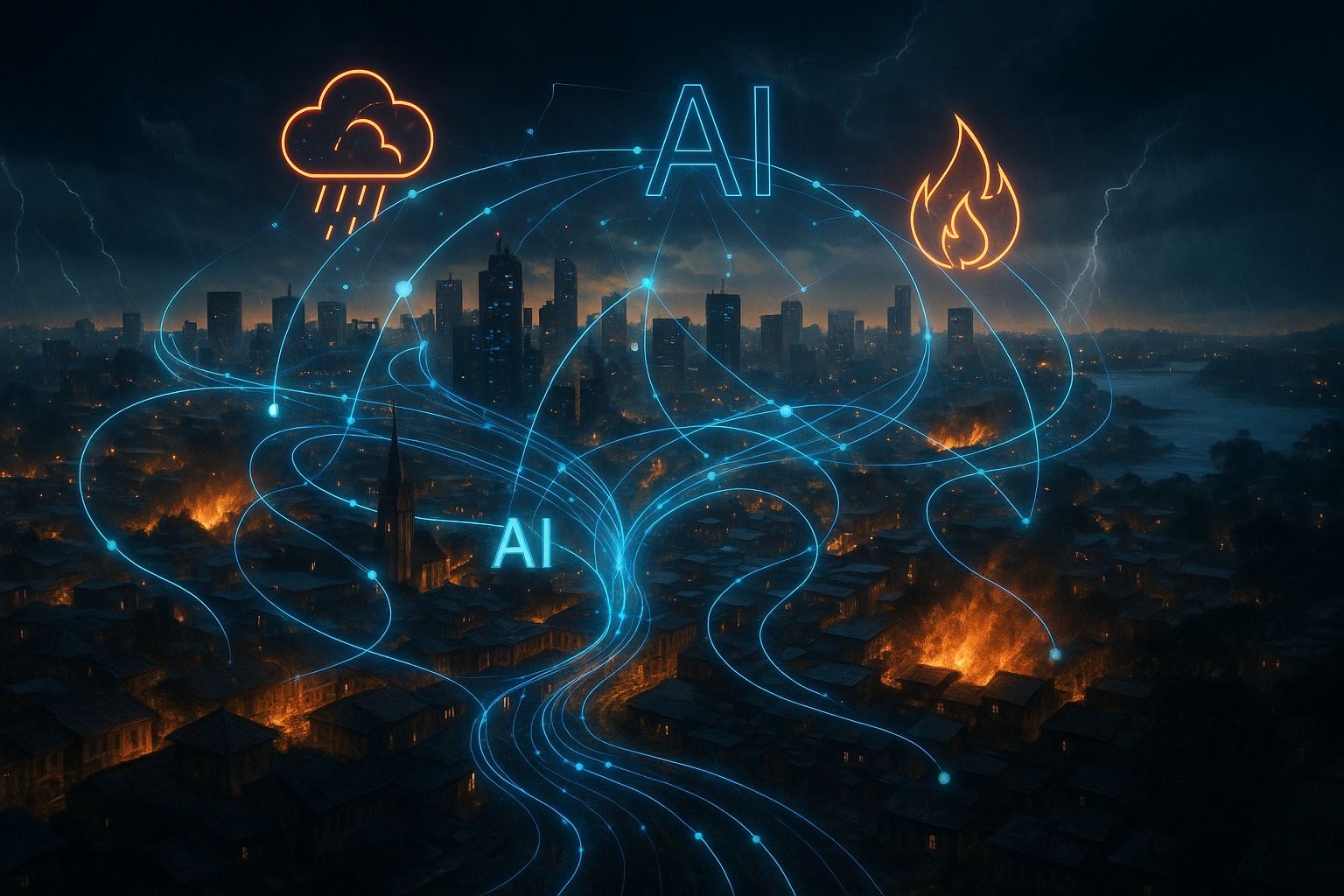
When the Storm Hits: How AI Is Changing Flood Response
Let’s talk about Lagos. Just a few months ago, heavy rains displaced thousands of people. Roads became rivers, and houses went underwater.
One of the biggest challenges wasn’t just the rain — it was not knowing exactly when or where the water would hit hardest.
Today, that’s beginning to shift. AI tools like Google Flood Hub are helping predict where floods are likely to happen — sometimes days in advance.
These systems pull data from satellites, weather stations, and river sensors to send early warnings straight to local authorities and even residents.
Imagine getting a text message on your phone 24 hours before the flood reaches your neighborhood.
That gives families time to move valuables, prepare sandbags, or relocate temporarily. It gives emergency services time to plan their routes and resources. That’s the power of smart disaster response.
When Fire Strikes: Beating the Flames Early
In Nairobi, fires in crowded markets and informal settlements have become almost routine. A single spark in a tightly packed area can spread in minutes, destroying hundreds of shops before firefighters can even arrive.
Startups like Lumkani use small, affordable heat sensors installed in homes and shops. The moment a fire starts, the system automatically alerts neighbors and the fire service, cutting response time dramatically.
Instead of waiting for someone to shout for help, the alarm goes off instantly. Those extra minutes can mean the difference between a burnt-out market and a saved community.
Mapping the Chaos Before It Spreads
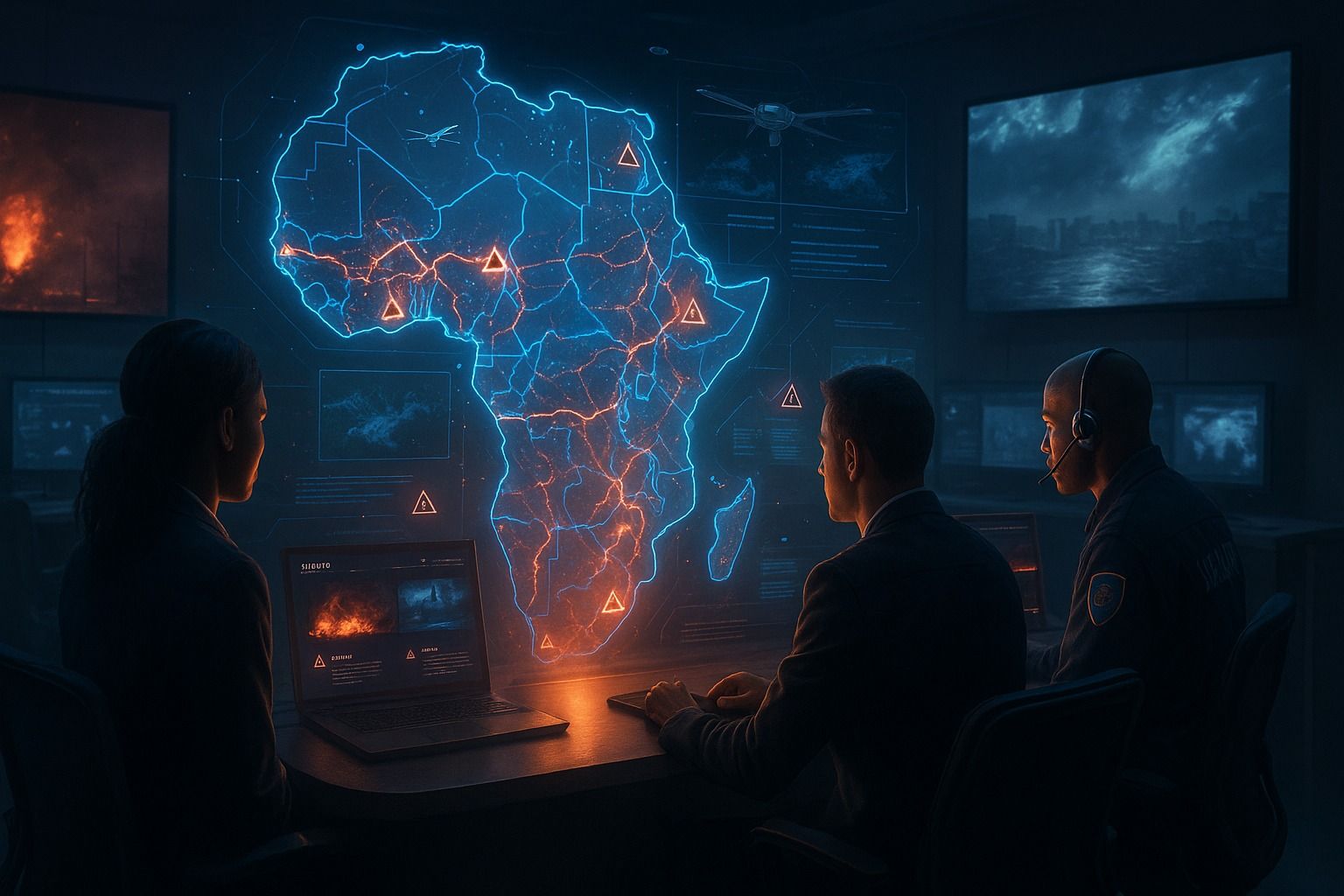
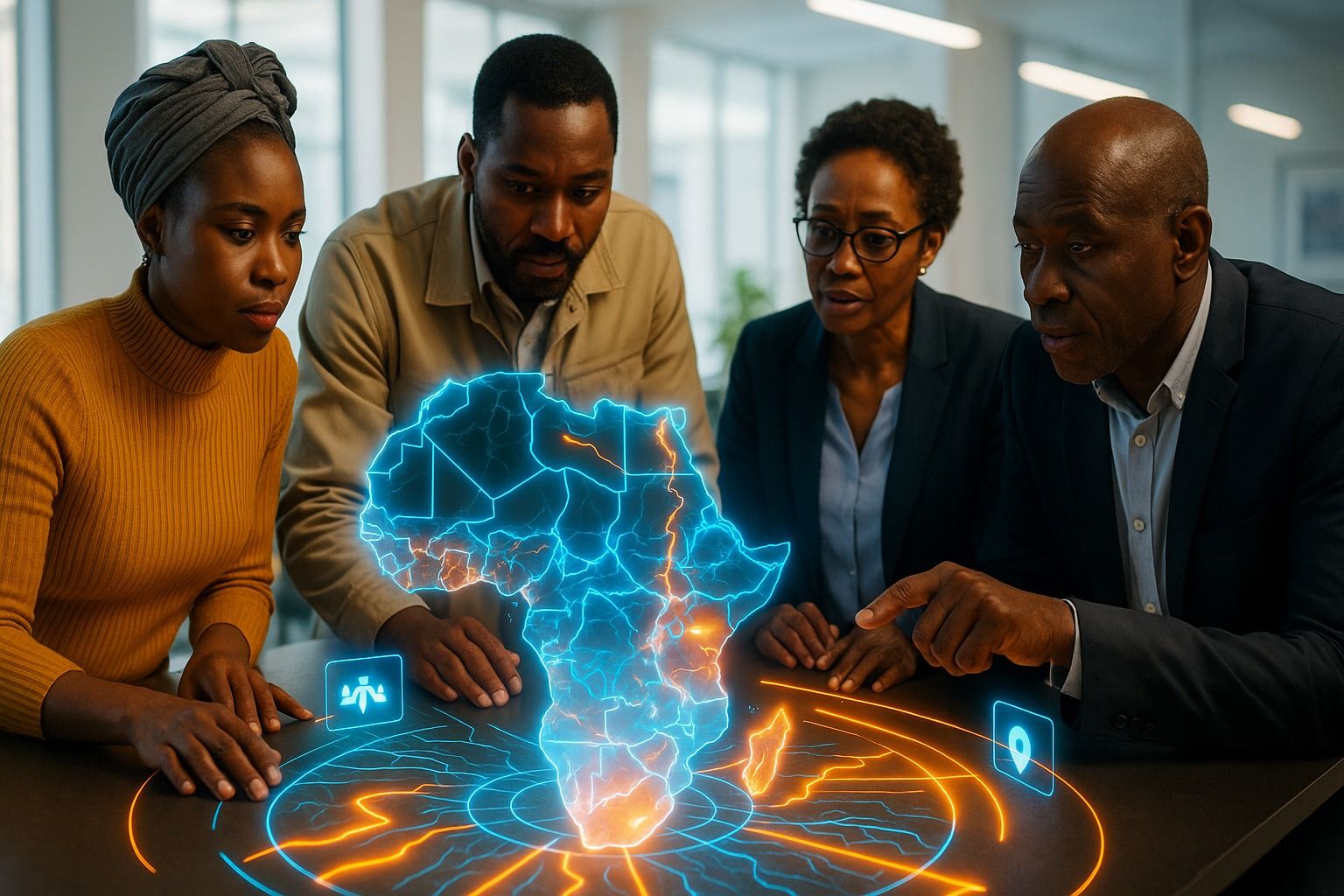
When disaster strikes — flood or fire — knowing where to go and what to do can save lives. AI-powered crisis mapping tools are now being used to turn chaos into clear pictures.
They pull information from drones, satellite images, social media, and sensors to build a live map of what’s happening.
Emergency teams can see which roads are blocked, where help is needed most, and how to reach people faster.
Think of it like a real-time GPS — but for saving lives.

Africa’s Unique Challenge
Let’s be honest: African cities weren’t built with disasters in mind. Many communities are on floodplains.
Drains are too narrow or blocked. Fire trucks can’t reach deep into crowded neighborhoods. And for a long time, the only response was to wait for disaster, then react.
AI doesn’t solve every problem. But it gives us something we never had before: a head start.
- A few hours of warning can save a family’s home.
- A fire alert in seconds can save an entire market.
- A map in real time can save hundreds of lives.
Where We Go from Here
For AI to work, governments, communities, and innovators need to work together. That means:
- Using flood forecasting tools to send early warnings to communities.
- Expanding fire detection in markets and crowded settlements.
- Training local emergency teams to use crisis mapping tools.
- Making sure alerts reach everyone — not just people with smartphones.
Disasters will keep happening. But how we prepare and respond can make the difference between losing everything and saving lives.
A Smarter Future Is Possible
The rain will keep falling. Fires will break out. But Africa doesn’t have to keep losing the same battles.
AI is giving us the power to predict, prepare, and respond faster than ever before. What used to take hours can now happen in minutes. What used to be uncertain can now be mapped clearly.
👉 That’s why at GAiF, we believe AI isn’t just for big tech companies — it’s for every African city, every community, and every family.
The next time disaster strikes, we can be ready — not just hoping for help, but moving smartly and saving lives.
Join GAiF today.
Get Sasa by email
Generative AI, Africa now. One edition, no more than once a week.