Farm Smarter, Not Harder: Inside Africa’s AI Revolution in Animal Care
AI meets Africa’s farmlands
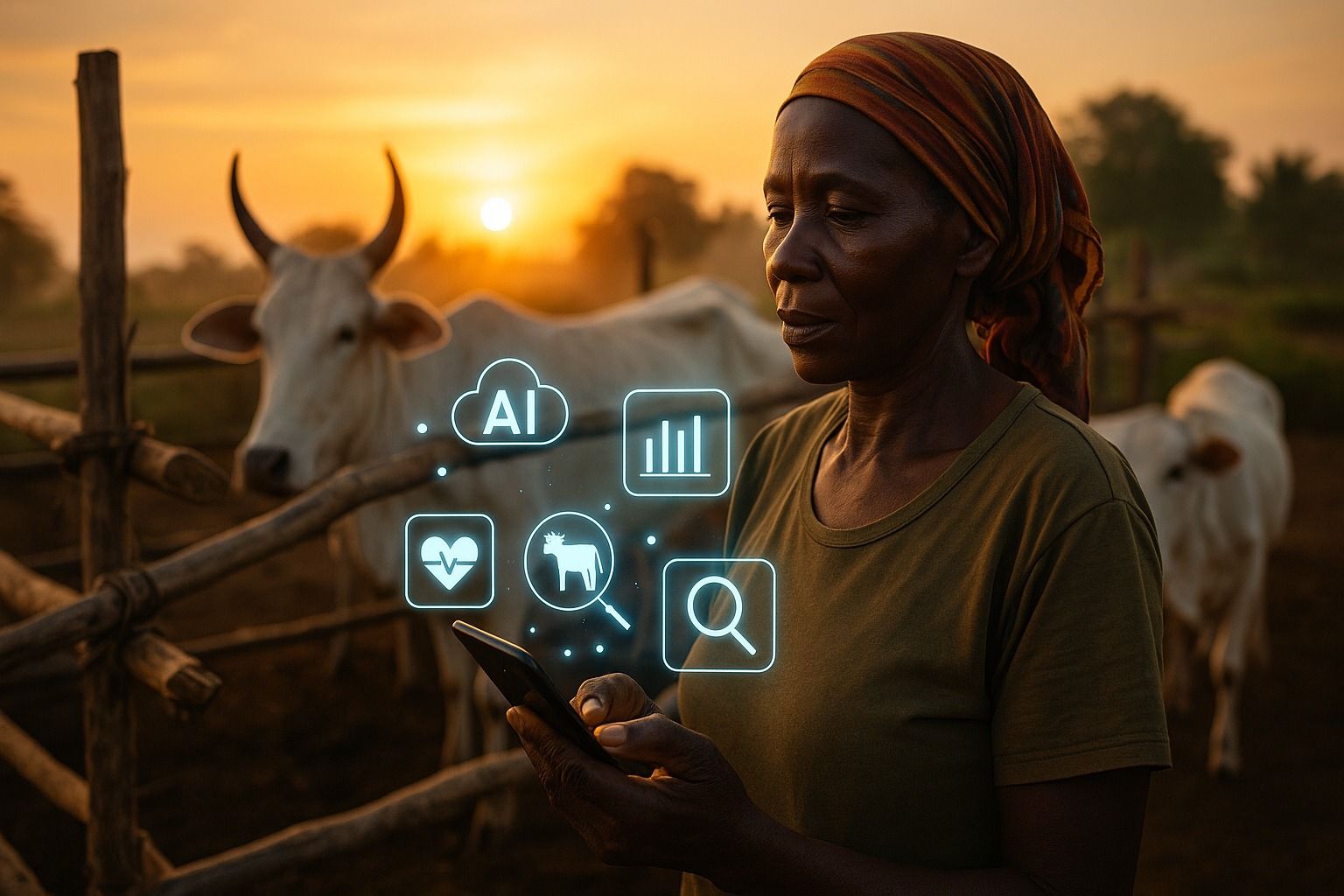
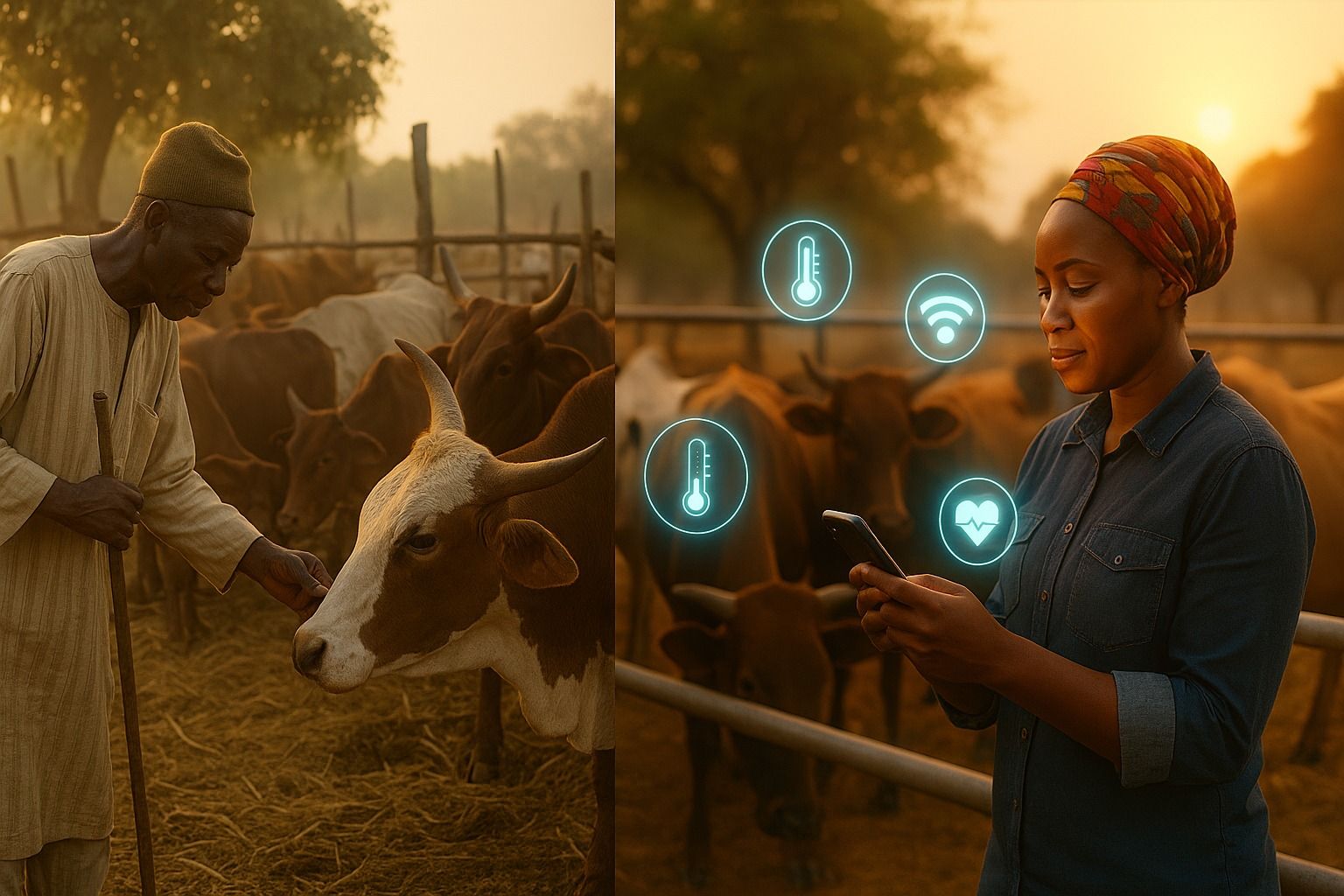
At sunrise in northern Ghana, a farmer named Amina steps into her cattle pen, phone in hand ready for another long day. But before she reaches her animals, her phone buzzes. A notification pops up from a small app she uses: “Cow #17 showing reduced movement and mild temperature increase. Possible early infection.”
Amina doesn’t panic. She’s seen this before. She checks the animal, calls the local vet early, and within hours the problem is under control. Amina smiles — because this time, she caught the problem before it began.
Ten years ago, the average African livestock farmer started his day long before sunrise. With a worn-out torchlight in one hand and a stick in the other, he walked slowly into the pen, scanning each animal with practiced eyes. He listened for strange coughs, watched for limping legs, checked noses for dryness, and touched ears to feel for fever.
It was instinct, built over years of experience and heartbreak. If one goat stayed too quiet, or a cow refused to eat, he knew something was wrong.
By the time clear signs of disease appeared — dull eyes, loss of appetite, strange spots on the skin — it was often too late. A sickness could sweep through an entire herd before help arrived.
Back then, animal care depended mostly on luck, intuition, and prayer. Technology wasn’t part of the picture. Today, artificial intelligence (AI) has become Amina’s quiet partner in the field.
Technology in the Pen
When people hear “AI,” they picture robots, computers, or complex labs — not goats or chickens. But in many parts of Africa, AI is quietly transforming livestock farming. It’s giving farmers eyes and ears they never had before.
Let’s explore how it’s doing that.
1. Tracking Every Step (Literally)
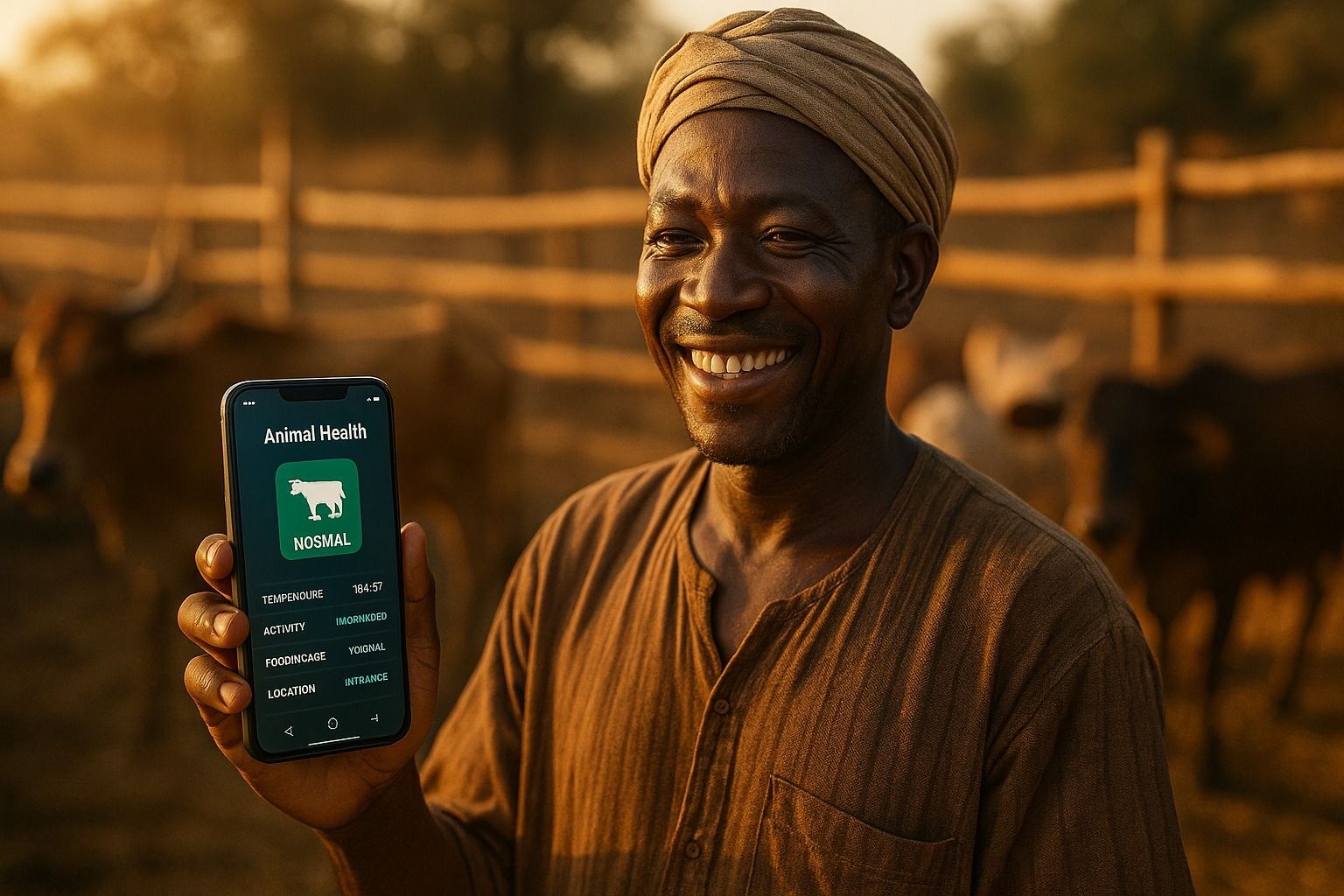
Across Africa, farmers are using tiny devices — ear tags, collars, or chips — to monitor their animals’ movements and health. These sensors collect data on things like body temperature, activity, and location.
In Uganda, a startup called Jaguza Tech uses AI to read signals from smart ear tags and detect illness up to 48 hours before symptoms show. That means fewer surprises, faster treatment, and healthier herds. The same system can also alert farmers if an animal wanders off, helping fight livestock theft — a growing problem in many communities.
In a way, it’s like giving every animal a small fitness tracker — except this one can literally save its life.
2. Early Warnings and Disease Alerts
For years, diagnosing animal diseases in rural areas has been a slow process — sometimes involving long trips, delayed lab results, and painful losses. But AI is changing that.
In Ghana, the government recently introduced a digital tool called EMAi+, which uses AI to collect and analyze animal health data in real time. Farmers and vets can report symptoms, track outbreaks, and receive early warnings before diseases spread.
Elsewhere, researchers in southern Africa are testing automated decision systems that detect unusual patterns in how animals move or feed. If one sheep becomes unusually still, the system flags it instantly. Farmers can then check, treat, or call a vet before things get worse.
This kind of early detection isn’t just convenient — it can mean the difference between losing one animal or an entire herd.
3. Smart Feeding for Smarter Farming
Feeding animals well has always been both an art and a science. Feed too little, and animals weaken; too much, and you waste resources. AI helps strike the perfect balance.
In Nigeria, a company called FarmSpeak created a system called PenKeep, which uses sensors to monitor temperature, air quality, and feeding patterns. The connected app, FS Manager, then analyzes all that data and tells the farmer what adjustments to make — like when it’s too hot for poultry or when to add more feed.
Why Everyone Should Care (Even if You’re Not a Farmer)
You might be thinking, “That’s nice, but I don’t own any cows or chickens.” Fair point — but here’s the twist: what’s happening in the pen actually affects all of us.
When animals stay healthy, food becomes more reliable. The milk in your morning tea, the eggs on your breakfast table, the meat at your favorite restaurant — they all depend on strong, disease-free animals.
And it’s not just about food. Some diseases that start in animals can spread to humans, so catching them early keeps entire communities safer.
AI is also helping farmers use resources wisely. By reducing wasted feed, water, and medicine, the environment benefits too.
Most importantly, millions of families across Africa depend on their livestock to survive. When a farmer loses an animal, they’re not just losing a cow — they’re losing school fees, rent, or their only source of income.
So yes, AI in animal care might sound like “farm talk,” but it’s actually protecting your meals, your health, and the people who keep our markets alive.
A Glimpse Into the Future
The next generation of AI tools will go even further:
- Predicting weather-linked diseases before they strike.
- Recommending personalized feeding plans.
- Connecting farmers directly to vets and suppliers through a single app.
AI in livestock farming is more than a technological story; it’s a human story. It’s about farmers like Amina, who no longer have to lose sleep over sick animals. It’s about communities that can feed themselves better and dream bigger.
Challenges Along the Way
Of course, it’s not all smooth. Many farmers still face hurdles:
The cost of devices and data subscriptions can be high.
Internet connections in rural areas are often unreliable.
Farmers need training to trust and use these tools effectively.
Data privacy and maintenance remain big questions.
But as more organizations invest in local innovation — and as mobile coverage expands — these barriers are starting to fall.
At GAiF, we’re passionate about stories like this — where technology meets real life, creating solutions that matter. Join our community to learn how Africans are using AI to solve everyday challenges, from the farm to the city and beyond.
Get Sasa by email
Generative AI, Africa now. One edition, no more than once a week.