
AI and African Parenting: Smart Tools for Raising Tech-Savvy Kids
Smart parenting, African style

My mornings always start the same: the alarm goes off at 5:30 a.m., and I roll out of bed already thinking about the long list of tasks ahead. I’m a mother, a full-time professional, and an entrepreneur trying to build a side business. Add to that raising a six-year-old with boundless energy, and you’ll understand why I sometimes feel like twenty-four hours are simply not enough.
By the time I’ve prepared breakfast and gotten my daughter dressed for school, I’m already checking emails in between braiding her hair. My husband’s work schedule keeps him away most evenings, so much of the daily parenting falls on me—school assignments, personal grooming, and of course, keeping her entertained and safe.
When I was growing up, safety meant my parents keeping a close eye on me, knowing the neighbors, and limiting how far I could wander from home. Learning was centered around classrooms, textbooks, and the occasional storybook. Entertainment? Mostly TV shows at fixed times—and certainly no internet.
But unlike my parents, who only had to worry about us running around the neighborhood, my biggest challenge is digital.
Now, my daughter holds a tablet with ease, swiping through apps before I can even unlock my own phone. She picks up my phone and, within seconds, is watching her favorite cartoons on YouTube. She asks questions Alexa is quick to answer. It amazes me, but it also frightens me. Today’s parenting requires vigilance, creativity, and—thankfully—technology.
This is where AI has become my silent co-parent.

Morning: Safe Screens
Before school, she likes to watch cartoons or play games. In the past, I worried about what might pop up on YouTube. Now, I use Google Family Link, which lets me set screen-time limits and approve apps before she downloads them. It’s like having a digital fence around her play area, giving me peace of mind while I pack her lunch.

Afternoon: Learning Support
After school, we tackle homework together. Sometimes she breezes through; other times she struggles. On busy days when work calls won’t stop, I let her practice on Khan Academy Kids. The AI adjusts to her level, turning math problems into fun exercises. Instead of simply keeping her busy, it keeps her learning. I often find her proudly showing me the “stars” she’s earned on the app.
Evening: Curiosity and Exploration
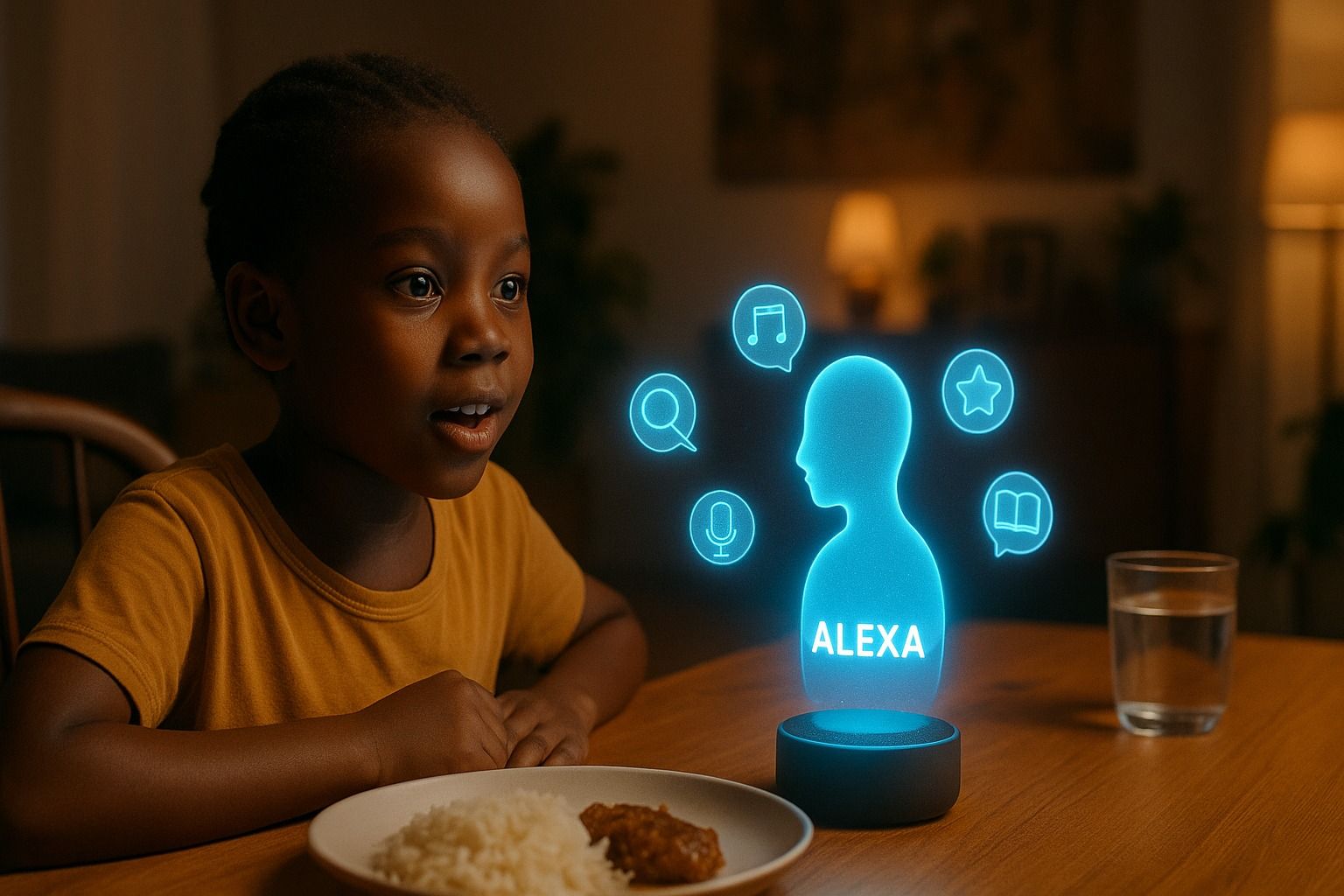
Dinner time is when her endless questions begin: “Why is the moon following us?” or “How do fish breathe in water?” Instead of leaving her curious mind hanging, she asks Alexa. The AI doesn’t just answer—it tells her stories, plays music, and even reminds her to brush her teeth. She loves it, and I love that I’m not the only one carrying the burden of every “why” and “how.”

Night: Safety Net
When she finally drifts to sleep, I check the reports from Qustodio, another app I use to monitor her online activity. It reassures me that she’s stayed in safe spaces all day.
Unlike my childhood, where my parents could watch everything I did, today I need these AI tools to be my extra set of eyes.
Why This Matters for African Parents
Parenting in Africa has always been rooted in protection and guidance. But the world has changed—our children are no longer just playing outside; they’re exploring vast digital worlds. AI doesn’t take away our cultural values; it extends them into this new age.
For busy parents like me, juggling work and family, AI makes it possible to protect our children, nurture their learning, and still hold on to a piece of our sanity.
A Call to Action
If you’re an African parent navigating the same challenges, it’s time to let AI lend you a hand. Try one tool—set up a content filter, install a monitoring app, or introduce an AI learning companion.
At GAiF, we believe AI is more than a business tool—it’s a family tool, a parenting tool, a future-shaping tool. Together, let’s make smart parenting the new normal in Africa.
Get Sasa by email
Generative AI, Africa now. One edition, no more than once a week.