Dear AI, Please Handle This: A Look at Smart Work in Africa
African offices get AI help
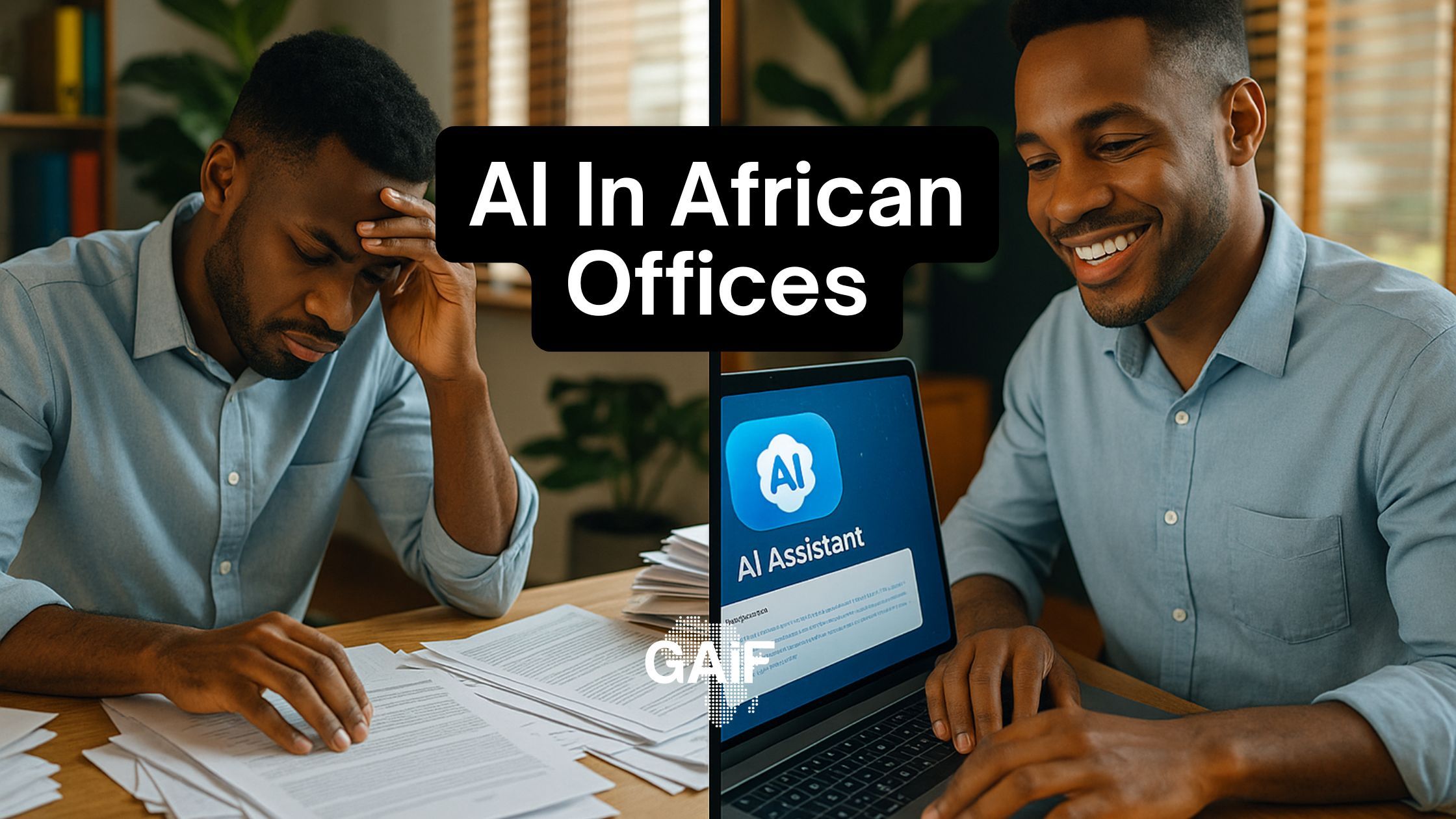
If you’ve ever thought, “I wish work was less stressful, here’s something for you.
Let’s face it—nobody wakes up excited to write another long-winded office email or wrestle with spreadsheets that look like digital spaghetti. And honestly, how many of those back-to-back meetings really needed to happen?"
Well, good news! AI is sliding into African offices like that helpful co-worker who never takes a break, never gossips, and somehow always knows what to do.
Welcome to your new office bestie.
Across Africa, AI is slowly but surely slipping into our office spaces, transforming boring tasks into quick wins and freeing up time for the work that truly matters. From email drafting to helping HR hire the best candidates, AI is proving it’s more than just hype. It's a hustle partner.
So grab your coffee (or sobolo), Let’s take a fun tour around the AI-powered African office, shall we?

1. Writing Emails Like a Pro (Without Actually Writing Them)
You know that awkward moment when you have to write a formal email, and your brain just… freezes? Yeah, we’ve all been there.
We’ve all stared at our screens thinking, “How do I start this email without sounding like a robot?” Ironically, AI is a robot, but it’s become surprisingly good at writing human-sounding emails.
Tools like ChatGPT, Copy.ai, GrammarlyGO or even Gmail’s Smart Compose now suggest subject lines, complete sentences, or entire messages based on your style—even suggesting greetings and the perfect closer (yes, better than “Kind regards”).
Instead of spending 30 minutes on “Dear Sir/Madam,” you can now just say what you want and let AI polish it up. Efficient? Yes. A little spooky? Also yes. But totally worth it.
In busy offices from Nairobi to Accra, this means less time stressing over formalities and more time for moving actual projects forward. Whether you're sending a proposal to a client or a quick update to your boss, AI’s got your back—minus the typos.
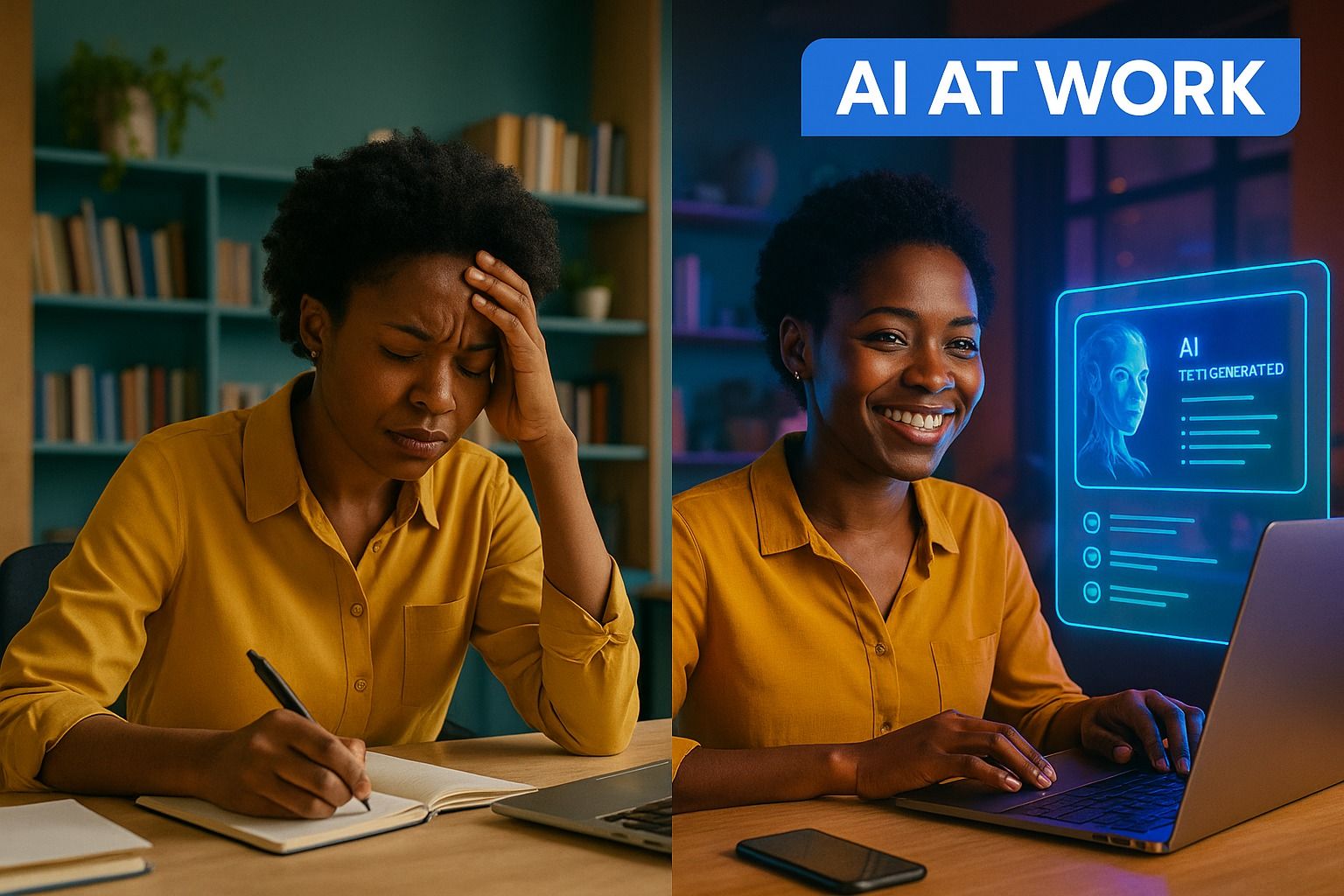
2. Meet Your Virtual Assistant (No, Not the Human Kind)
You don’t need to hire a full-time PA anymore. AI virtual assistants can now take notes during meetings, schedule appointments, remind you of deadlines, and even summarize those long team WhatsApp threads you muted two weeks ago. Tools like Otter.ai, Notion AI, and Microsoft 365 Copilot are doing all of this and more.
Imagine walking into a Monday morning Zoom call and by lunchtime, your assistant has already sent you a summary, scheduled your follow-ups, and cleared your calendar from last week’s chaos. That’s not magic—that’s AI doing the heavy lifting.
In small African startups where “everyone does everything,” this kind of help is a game changer. No need to hire five people when one AI tool can multitask like a champ.

3. Reports Without Tears
There’s something soul-crushing about spending your Friday evening tweaking bar charts for that end-of-week report. But AI doesn’t believe in suffering.
With platforms like Zoho Analytics, Power BI, and Google Looker Studio, you can automate your reports. These tools fetch data, analyze it, and present it in beautiful dashboards —while you sit back and sip some chilled malt. No formulas, no late-night Excel crashes—just insights at your fingertips.
African NGOs, SMEs, fintechs, and even government departments, are already hopping on this train. Who knew spreadsheets could actually be exciting?

4. HR with a Smart Twist
Now let’s talk HR. Hiring the right person can be tough—especially when you’re drowning in a hundred CVs and a thousand cover letters that all sound the same.
AI tools like Pymetrics, Manatal and HireVue are helping HR teams in Africa shortlist candidates faster and even identify who has the right personality for the job. These tools assess soft skills, run behavioral tests, and help reduce human bias.
So the next time that dreaded 'unfortunately, you were not selected' email lands in your inbox…”, just remember—it might’ve been written by a robot with a strong sense of fairness.
And for employees? AI is being used to predict burnout, suggest learning paths, and even track team morale. Yes, your HR Manager may be able to know when you’re stressed even before you do.

5. Productivity Analytics: The Good, the Useful, and the Not-Creepy
Okay, let’s address the elephant in the room: Nobody likes to feel watched at work. Don’t worry—AI isn’t here to spy on you. But it can help you understand how you work.
Apps like RescueTime, Clockify, or Toggl Track give you insights- They help you track how you spend your work hours, point out time wasters (hello, social media), and suggest better ways to manage your day.
For freelancers, entrepreneurs, side hustlers juggling multiple hustles or remote workers trying to stay focused at home, this is gold. It’s like having a coach who tells you, “Hey, you spend 2 hours daily on emails—let’s fix that.”
So… Should You Be Using AI at Work?
Absolutely! Whether you work in a bustling office in Lagos or run a small business in Kumasi, AI can help you work smarter, not harder. It’s typing our emails, helping with hiring, preparing reports, and reminding us to take breaks. It’s making our work lives smoother, faster, and maybe even a little more fun.
And the best part? Most AI tools are user-friendly, and many are free or affordable—perfect for growing businesses, busy professionals, and curious minds.
Join the AI Movement with GAiF
If this article got you curious or even a little excited about what AI can do in your life or workplace, then it’s time to take the next step. Think tutorials, networking, events, and endless support - Think GAiF! The Generative AI in Africa Forum is your go-to hub for learning, collaboration, and inspiration.
Final Thoughts (and Your AI To-Do List)
- Try an AI email tool
- Automate your next report
- Let AI take notes at your next meeting
- Join GAiF and connect with other smart folks
Get Sasa by email
Generative AI, Africa now. One edition, no more than once a week.