
The Rise of Robo-Realtors: Smarter Living for Africa’s Future
AI transforming real estate across Africa

The Struggle is Real
You spot a "3-bedroom, newly built, spacious, serene environment, affordable rent.” Sounds dreamy.
You call the agent—only to find out it was rented three weeks ago. Or worse, it never existed. Scam alert.
If it does exist, you’ll probably spend hours in traffic, only to arrive and find it’s not even close to what the photos promised.
Meanwhile, landlords are also dealing with their own headaches—unpaid rent, repairs they didn’t see coming, and the endless back-and-forth with tenants.
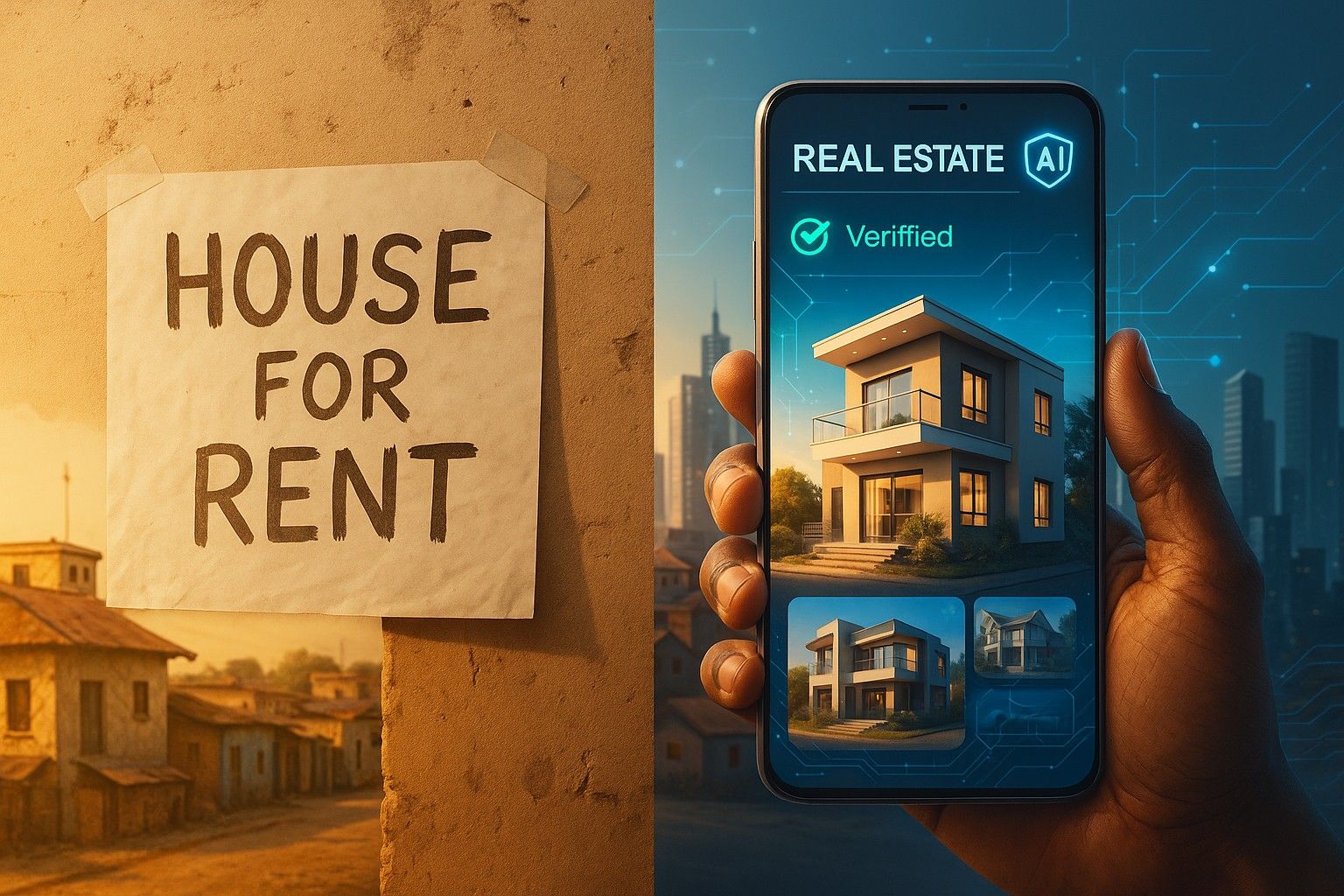
Finding a house in many parts of Africa means relying on handwritten signs, word-of-mouth referrals, or agents who may or may not show up. From fake listings to endless site visits and confusing paperwork, house hunting can feel like a full-time job—without pay.
Fast forward to today
Something exciting is happening in real estate. The “virtual landlord” isn’t a sci-fi character anymore—it’s a smart system that recommends homes, verifies property documents, predicts repairs, and simplifies transactions. It’s like we now have virtual agents who don’t ask for “consultation fees,” and won’t ghost you after a house tour.
It’s Already Happening in Africa
This isn’t just a “coming soon” story—AI in real estate is already alive and kicking:
Let’s spotlight some African innovators using AI to tackle housing problems head-on:
In Ghana, the home-buying process has often been filled with uncertainty. Fraudulent listings, unregulated agents, and murky land titles have made locals and diasporans think twice before investing. But AI is changing that. Platforms like Seso Global are using AI and blockchain to verify property documents and connect buyers with trustworthy listings. Even mPharma, a company known for healthcare, is piloting Mutti Homes, exploring AI-powered smart living communities. Thanks to these innovations, Ghanaians—both at home and abroad—can now make property decisions with more confidence.
Over in Nigeria, the country’s booming population and urban migration have created a huge housing demand. However, the market has struggled with poor property data and access to financing. AI-driven innovation is now stepping in through a growing proptech ecosystem. Startups are building smart tools like mortgage calculators, chatbot agents, and virtual home tours—especially useful for diaspora investors. PropertyPro.ng uses AI to recommend homes based on user behavior, while HouseAfrica combines AI with blockchain to verify land titles. Platforms like RentSmallSmall are even using AI to match tenants with homes based on predicted behavior. This means Nigerians can now rent or buy homes more easily, with less fear of scams or paperwork delays.
In Kenya, the fast growth of urban areas and a rising middle class have increased demand for safe, transparent housing. AI is helping meet that demand. Websites like BuyRentKenya use AI to suggest the best listings and improve visibility for sellers. Meanwhile, Safaricom’s Smart Estates project is experimenting with AI in everything from security systems to rent collection and maintenance. As a result, Kenyan cities—especially Nairobi—are becoming more organized and tech-savvy, giving residents more control over how they live.
South Africa presents a different challenge: a mature housing market with deep inequalities. Many first-time buyers lack formal credit histories, making it hard to access loans. That’s where AI-powered fintech comes in. Companies are using AI to assess alternative data and offer tailored home loans. Platforms like Flow Living use AI to help real estate agents find the right buyers and renters through precise ad targeting. Lightstone Property offers advanced property valuation tools powered by AI, and HouseME matches landlords and tenants while automating processes like credit scoring and repairs. These tools are helping close the gap between affordability and accessibility, giving more South Africans a fair shot at homeownership.
Finally, Rwanda is building the future now. With a young, growing real estate market, the country is blending its smart city ambitions with AI. In Vision City Kigali, AI is integrated into utility management and property systems. The Rwanda Land Management Authority is digitizing land records using AI, making ownership tracking faster and more transparent. And although not directly in real estate, Rwanda’s AI-enabled logistics systems like Zipline are inspiring smarter infrastructure planning across the board. The result is a country where digital innovation is literally laying the foundation for smarter cities.
Across these five countries, AI is doing much more than powering apps—it’s restoring trust, increasing transparency, and helping millions of Africans access safe and secure housing. From virtual tours to credit scoring, AI is becoming Africa’s most reliable landlord—and the future looks smart, indeed.
That said, as more African governments digitize land registries and as mobile penetration grows, the runway for AI in real estate will only expand.

Where Do We Go From Here?
AI is now handling rent reminders, lease renewals, property marketing, tenant screening, and even dispute resolution. This means more consistent income for property owners and smoother experiences for tenants. Whether you're a tenant in Tamale, a buyer in Johannesburg, or a startup founder in Nairobi, AI is opening doors—literally.
But to fully unlock this potential, we need:
More open data policies
Greater access to digital tools in rural areas
And more importantly, Localized AI talent and training
So, Ready to Be Part of the Change?
Join the Movement at GAiF (Generative AI in Africa)—a growing community of dreamers, builders, and believers making sure Africa doesn’t get left behind in the AI revolution.
You don’t have to be tech-savvy to benefit. The tools are already here, and more are on the way. All you need is curiosity—and maybe WiFi.
Welcome to GAiF.
Get Sasa by email
Generative AI, Africa now. One edition, no more than once a week.