Wispr Flow: Turning Speech Into Smart, Clear Text
The Best Speech-to-text AI Tool

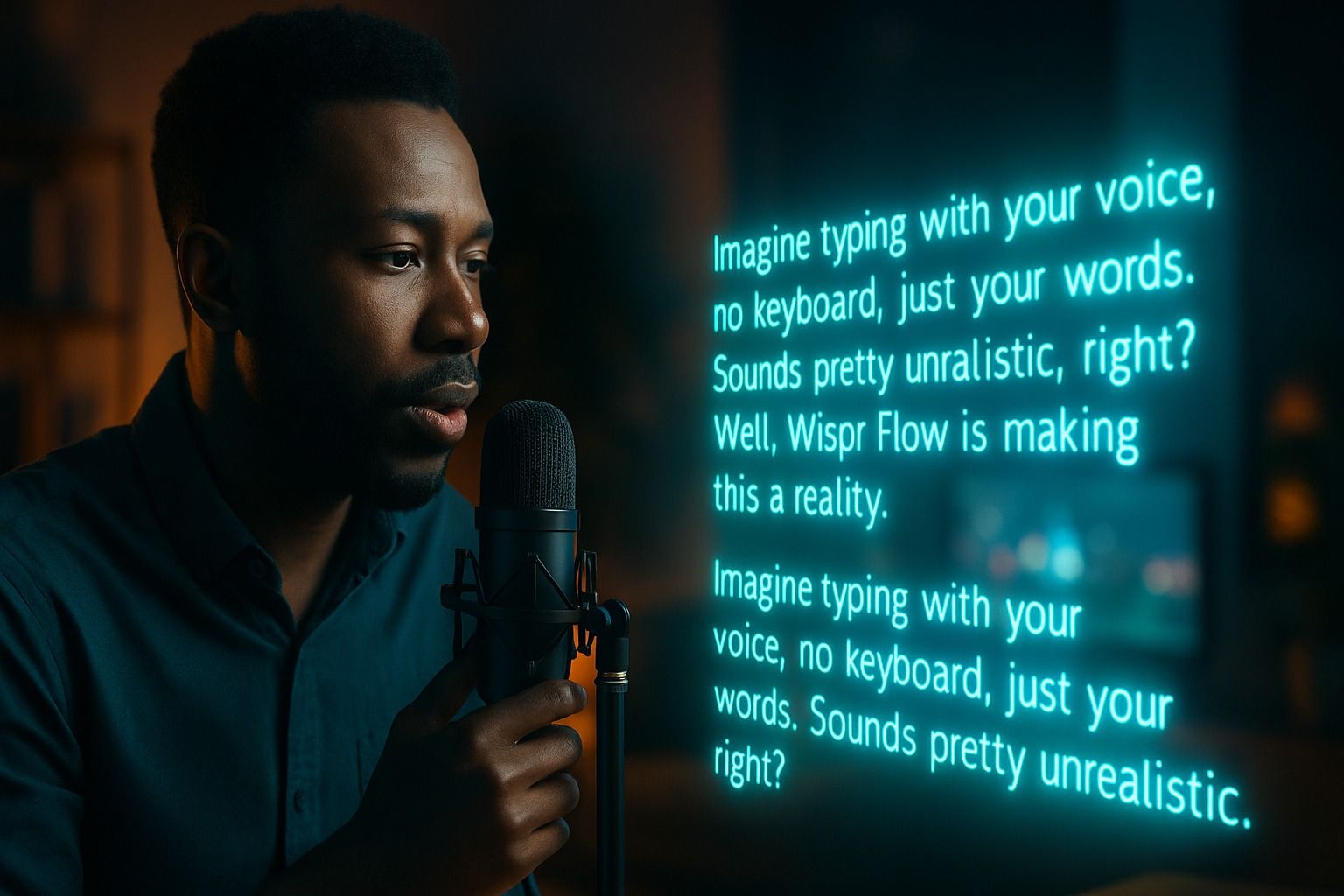
Imagine typing with your voice, no keyboard, just your words. Sounds pretty unrealistic, right? Well, Wispr Flow is making this a reality.
Unlike your typical voice-to-text tools that transcribe spoken words verbatim, Wispr Flow uses AI to understand what you’re trying to say - even when you ramble, pause, or change your mind mid-sentence. This AI tool is like a thinking partner, not just a note taker.
In this article, we’ll explore how this generative AI tool works, why it’s different from anything you’ve tried before, and how Africans in particular can benefit from its powerful features.
What is Wispr Flow?
Wispr Flow is an AI-powered voice dictation and transcription tool that lets you speak naturally and have your words appear as polished text. It was co-founded in 2021 by Tanay Kothari and Sahaj Garg. The former created one of the world’s first voice assistants, Evi, long before Siri or Alexa existed.
Flow was introduced to Windows and iOS this year. I’m a huge fan of the fact that it already supports some African languages. So if you speak Yoruba, Afrikaans, Swahili, or Hausa, you should consider signing up.

Key Features Of Flow
- Real-time transcription and auto-editing: Just speak naturally, and Flow will transcribe and correct filler words, typos, and punctuation as you go.
- Command Mode & AI commands: You can literally tell Flow to rewrite, shorten, or tweak your text hands-free.
- Multilingual: It currently supports over 100 languages worldwide.
- Customizable: You can add words to your dictionary.

How Wispr Flow Can Benefit Africans
1. Productivity boost for Creators & Professionals
Writers, Bloggers, Content Creators, Journalists, and other professionals can draft articles, responses, and scripts faster. Most of us type at around 40 words per minute, but when you're using Flow, you're speaking at about 120 words per minute. Imagine rambling your ideas to ChatGPT for it to work on.
2. Accessibility for Users with Disabilities
For people with mobility challenges or repetitive strain issues, this tool makes writing accessible. It gives more people the power to produce content, type research, or send accurate messages without typing.
3. Multilingual Support for Diverse Languages
The fact that Flow supports Yoruba, Afrikaans, Swahili, and Hausa is a huge positive. In time, more African languages will be included. This means it’s easier to send messages in these local languages. A major step forward.
4. Discreet and Flexible Usage
You know why this tool is called Wispr Flow? Well, you can whisper in quiet places, and it’ll pick up your words accurately. This stool is adaptable for various environments common in African urban and rural settings.

What’s next for Whispr Flow?
The fact that Wispr Flow launched on both Windows and iOS this year and already supports over 100 languages says a lot about its potential. I believe this is only the beginning. We’ll soon see even broader language support, including more African dialects and even greater accuracy in how it interprets our words.
The sky isn’t just the limit for Wispr Flow; it’s the starting point. I am the first African creator to cover this tool, and I know that I won’t be the last. Subscribe to GAiF to stay updated with the latest Generative AI tools.
Get Sasa by email
Generative AI, Africa now. One edition, no more than once a week.