Midjourney from My Perspective: The Good, the Game-Changing, and the Truth
Explore how Midjourney, an AI image generator, is revolutionizing graphic design
Once upon a time, before the days of Gen AI tools like Midjourney, creating visually appealing images meant mastering traditional graphic design tools. You had to spend months, if not years, learning the craft, and understanding technical elements such as composition, spacing, contrast, and branding principles. Let’s just say, some form of formal education was needed.
Then in 2013, tools like Canva were launched. They brought about a shift in the dynamics of graphic design. The average person without a design background could create visually appealing images just by dragging and dropping elements. I made over $200 in my first month using Canva as a graphic design tool. I had no prior training or background. This meant even more people could call themselves designers. Traditional tools like Adobe Photoshop and Illustrator were no longer the only gateway.
Fast forward through the evolution of Generative AI, the graphic design industry has completely turned on its head. With tools like Midjourney, you can generate images simply by writing prompts. These are not average-looking images, no…these are of incredible quality. I discovered Midjourney through GAiF, and my mind has been blown ever since. You can type anything you imagine and the AI will create a stunning image out of it. Normally, creating such images from scratch would take weeks, if not months. How does Midjourney do this? Well, let’s dive into the tool.
What Is Midjourney?
Midjourney is an independent research lab based in San Francisco, California, specializing in Artificial Intelligence (AI) to enable creativity. It offers an AI program that generates images from textual descriptions, similar to OpenAI's DALL-E and Stability AI's Stable Diffusion. The company benefits from the guidance of advisors such as Jim Keller (known for his work with Apple and AMD), Nat Friedman (former CEO of GitHub), Philip Rosedale (founder of Second Life), and Bill Warner (founder of Avid Technology).
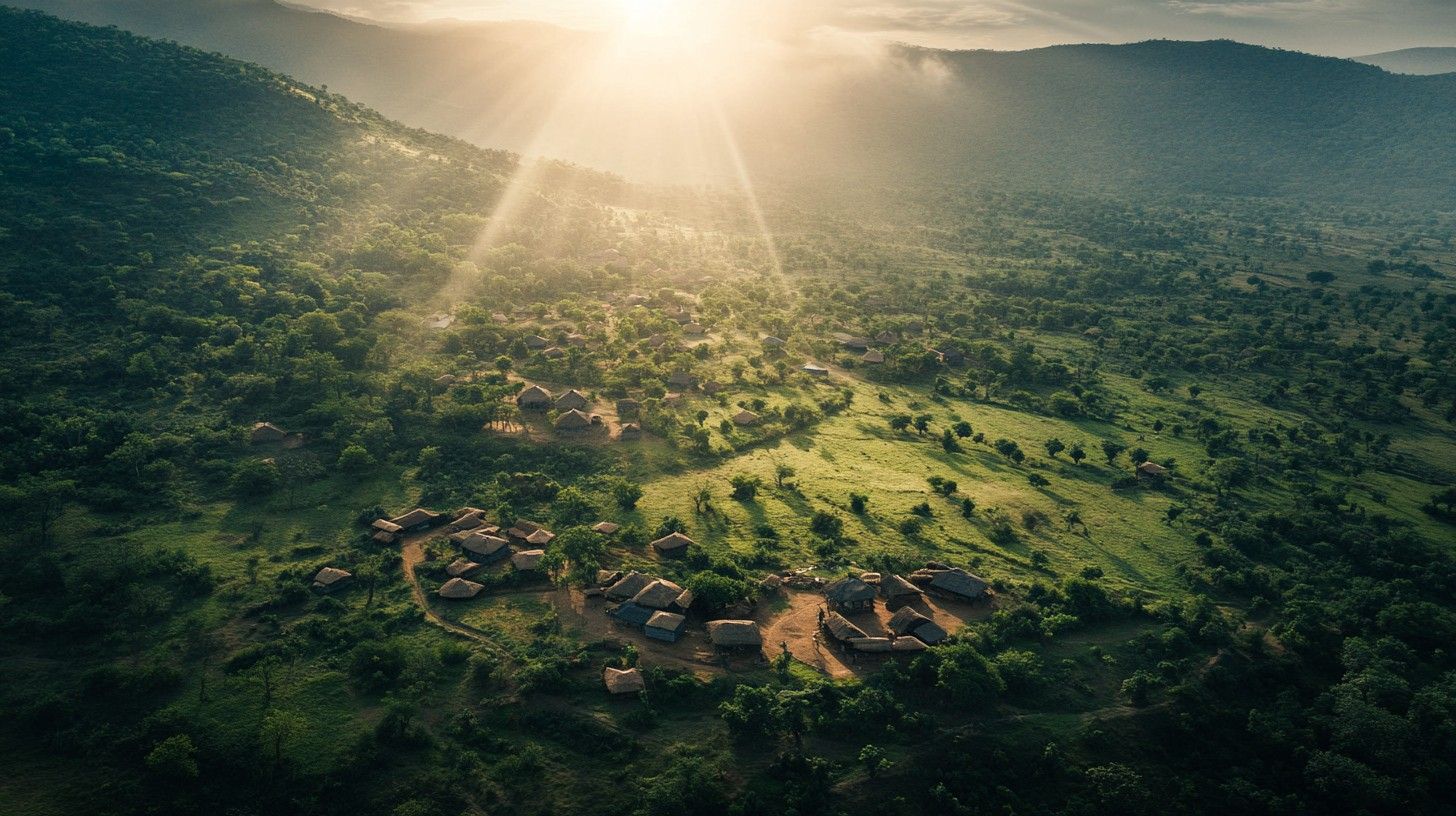
What truly makes this unique is being able to see your thoughts come to life. The barrier to entry for producing stunning visuals has dropped significantly. Let me demonstrate with a few examples below.
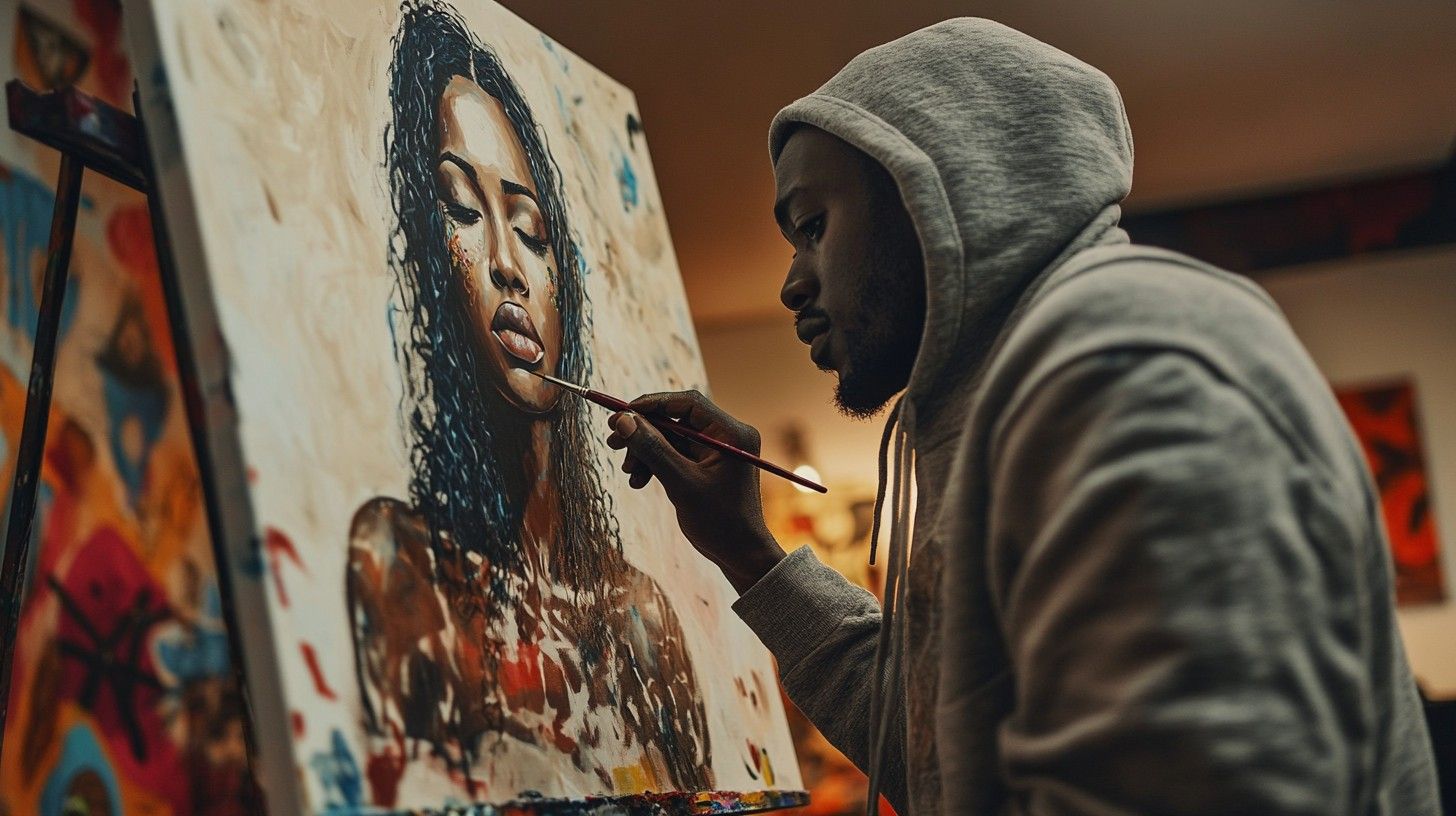
Prompt 1
A black man wearing a hoodie in a modern room with African themed designs on the wall holding a paintbrush and painting a beautiful woman on a canvas.
Prompt 2
Man typing an article on a laptop. He’s in a modern library.

Prompt 3
Aerial view of an African village at the bottom of a beautiful mountain and the sun shining.
My Thoughts
The shift from using traditional design tools to simply typing what you want to see is a clear sign of how far Generative AI has come. It's a huge advancement that has made design and creativity more accessible than ever. Digital Marketers, Graphic Designers, and the general public now have a powerful tool to use.
However, progress often comes with disruption. While there is much discussion about adapting to AI, the truth is that some professionals are facing displacement. I’ve seen talented graphic designers, skilled in traditional tools like Photoshop, struggle to find clients as businesses turn to faster, AI-driven alternatives. Personally, I’ve both gained and lost clients because of AI. It’s a double-edged sword. The winners adapt.
If you look at it carefully, this isn’t new. The evolution of technology has always caused this. For example;
- Automated manufacturing reduced the need for manual labor in factories.
- Streaming services like Netflix disrupted the DVD rental industry, pushing companies like Blockbuster out of business.
- The rise of word processors made typewriters obsolete, impacting typists and office support roles.
There are many more examples.
Midjourney is a giant step forward and it makes me wonder what changes it will inspire in the next 5 years.
My name is Richmond, you’ll be seeing my perspective on Gen AI tools, right here on GAiF.
Get Sasa by email
Generative AI, Africa now. One edition, no more than once a week.